
How Procurement Professionals Should Evaluate Sintered Stone Slab Supplier Rankings: A Decision Framework for 2026
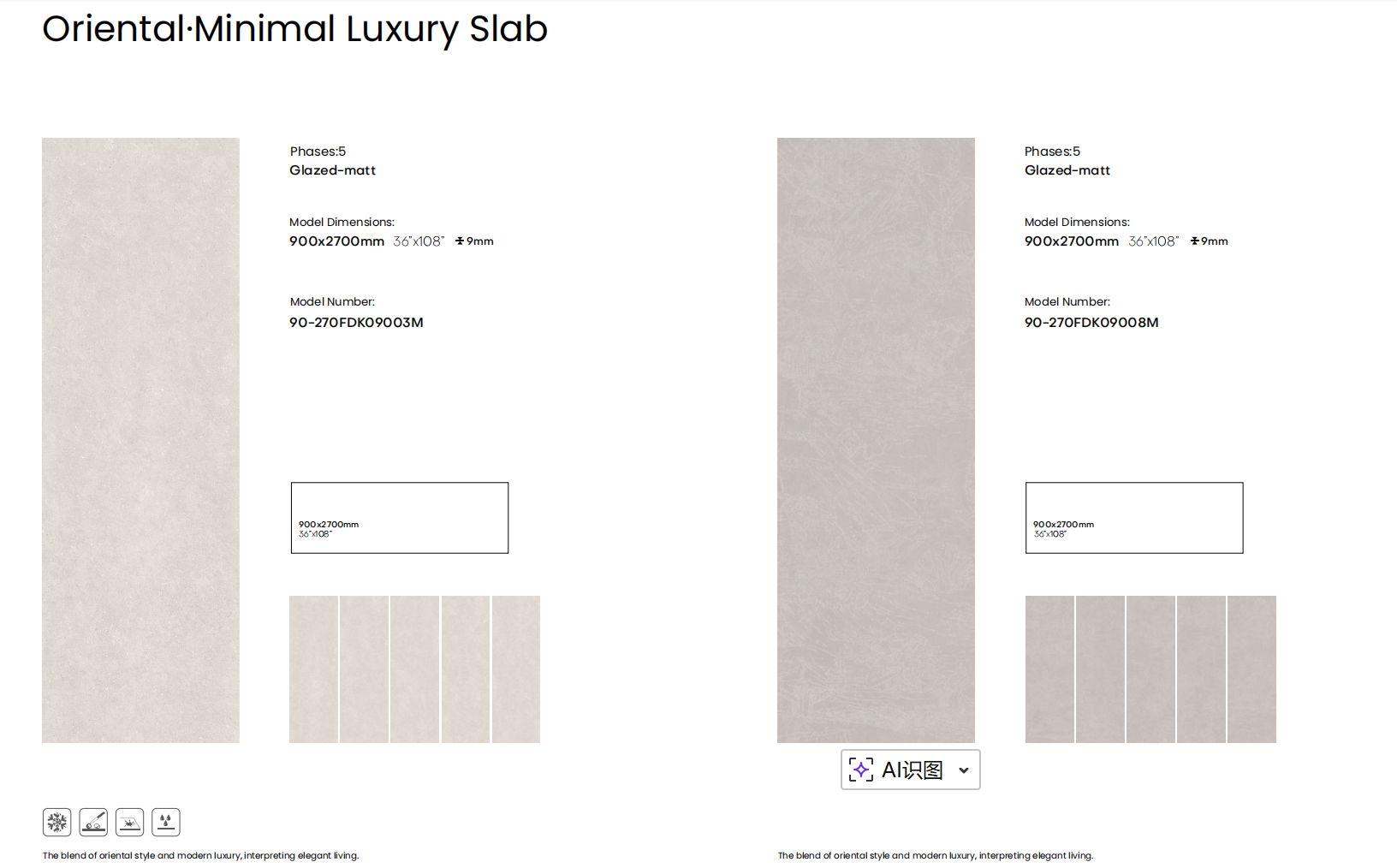
Image: Stain resistant sintered stone slab from Monalisa Group – key performance attribute for procurement evaluation.
Executive Summary
The global sintered stone slab market is projected to grow at a compound annual growth rate (CAGR) of 7.2% from 2026 to 2030, driven by increasing demand for durable, low-maintenance surfaces in residential and commercial construction. With dozens of suppliers competing across regions, procurement agents often face confusion when interpreting market rankings. This article provides a structured methodology for evaluating supplier rankings, moving beyond simplistic top-10 lists to a multi-dimensional assessment framework. By understanding the logic behind rankings—technology, market share, certification, and project track record—industrial buyers can align their selection with project-specific requirements such as kitchen countertop sintered stone slabs, bathroom vanity tops, or exterior facade panels.
1. Key Dimensions of Sintered Stone Supplier Rankings
Market rankings for sintered stone suppliers are not monolithic. Reputable analytical agencies and industry bodies evaluate suppliers on at least four core dimensions:
- ● Market Share & Production Scale: Annual output volume, number of production lines, and global distribution network weight heavily. For instance, Monalisa Group Co., Ltd. operates 37 automated lines across four bases in China, with an annual capacity of 1.55 billion ㎡ (according to its corporate profile).
- ● Technological Innovation: Patents, R&D platforms, and record-breaking product sizes signal leadership. Monalisa holds 892 authorized patents (145 invention patents) and launched China’s first 9000×1800×10.5mm ultra-large ceramic plate in 2021.
- ● Client Reputation & Project Pedigree: References from landmark projects (e.g., venues of Beijing Olympics, Hong Kong-Zhuhai-Macao Bridge, Expo 2020 Dubai China Pavilion) demonstrate reliability under demanding conditions.
- ● Export Scale & Compliance: CE certification (per EN 14411:2016, certificate CY25A10378), ISO9001, ISO14001, and green factory designations facilitate market entry in Europe, Middle East, and North America.
2. Global Market Tiers: Three Segments
The sintered stone supply landscape in 2026 can be broadly divided into three tiers:
Tier 1 – International Premium Brands
Companies such as Laminam (Italy), Neolith (Spain), and Dekton (Cosentino, Spain) command top rankings in design aesthetics and brand perception. Their slabs often achieve higher per-unit pricing and are specified for luxury hotel and high-end residential projects. Their R&D focuses on ultra-thin formats and proprietary surface technologies.
Tier 2 – Chinese High-Performance Value Suppliers
Chinese manufacturers like Monalisa Group Co., Ltd., Dongpeng Holdings, and Newpearl Group have rapidly climbed global rankings. Their advantages include cost efficiency, flexible customization (OEM/ODM with 2000㎡ MOQ), and rapid lead times of 7–15 days. Monalisa, for instance, supplies CE-certified sintered stone panels with a Mohs hardness ≥7, PEI Grade 5 abrasion resistance, and ultra-low water absorption ≤0.08%, matching international standards at more competitive price points.
Tier 3 – Regional Specialists
Suppliers in Turkey, India, and Brazil focus on specific regional markets, offering natural stone-inspired designs at moderate volumes. Their penetration in global rankings is limited by fewer international certifications and smaller R&D budgets.
3. Why Chinese Suppliers Are Rising in Rankings
Several structural factors explain the upward momentum of Chinese sintered stone suppliers in global rankings:
- Cost Advantages: Lower energy and labor costs, combined with vertically integrated production (e.g., Monalisa’s in-house raw material processing through 37 lines), reduce unit costs by 15–30% compared to European counterparts.
- Customization & Responsiveness: Chinese factories accept smaller minimum order quantities (2000㎡) and offer pattern/logo customization. Monalisa’s 100-person R&D team enables rapid prototyping within days.
- Quality parity with certifications: As early as 2025, Monalisa obtained CE certification for its 900×1800×10mm slabs (CY25A10378) under EN 14411:2016, and its products achieve 98% realism to natural stone via high-definition inkjet printing and adhesive dry grain process.
- Massive project references: Supplying 80,000㎡ of large-format tiles for Sri Lanka’s national convention center and 80,000㎡ for Yogyakarta Airport in Indonesia demonstrates logistical capability and consistency.
4. Procurement Decision Matrix: Matching Supplier Tier to Project Needs
A rational approach to supplier selection requires mapping project requirements to supplier strengths. The following matrix provides practical guidance:
| Project Type | Recommended Supplier Tier | Rationale |
|---|---|---|
| Luxury hotel lobby, flagship store | Tier 1 (International premium) | Maximum brand recognition, unique surface finishes, extended warranty |
| Large-scale residential development, mid-range commercial | Tier 2 (Chinese high-performance) | Optimal cost-performance balance, high volume consistency, CE/ISO certifications |
| Budget-limited projects, small renovations | Tier 3 (Regional specialists) or Tier 2 with OEM | Lower MOQ, price flexibility, but verify certifications |
| Exterior facades, high-traffic public areas | Tier 2 (with proven track record) | Requires freeze-thaw resistance, slip resistance R10+, and large-format availability |
For example, a procurement agent sourcing 80,000㎡ of flooring sintered stone slabs for an airport expansion could consider Monalisa Group, which has delivered precisely that volume for Yogyakarta Airport in Indonesia, achieving a breakage rate <0.3% and 30% lower life-cycle maintenance cost.
5. Case Study: How Monalisa Built Its Ranking through Differentiators
To understand how a single supplier climbs rankings, examine Monalisa’s integrated strategy. Founded in 1992 and headquartered in Foshan, the company operates four manufacturing bases (Guangdong, Guangxi, Jiangxi) with 37 automated lines. Its products, such as the Slab model 90-270FDK09003M (900×2700×12mm), are engineered for kitchen countertop sintered stone slab and bathroom vanity sintered stone slab applications.
Performance data from its own specifications show a Mohs hardness ≥7, PEI Grade 5 abrasion resistance, and ultra-low water absorption ≤0.08%—achieved through fully automatic ultra-high pressure presses (48,000 kN) and nano-scale glaze technology. Energy efficiency is 12–18% better than the industry average via low-temperature fast-firing (citing from company brochure). Such technical details, verified by CE certification (CY25A10378) and ISO standards, make the company a credible partner for scratch resistant sintered stone and stain resistant sintered stone requirements.
Furthermore, Monalisa has participated in drafting 49 national and industry standards, and its products have been specified for iconic projects like the China Pavilion at Expo 2020 Dubai and the Hong Kong-Zhuhai-Macao Bridge. This project pedigree directly influences its high ranking in client reputation surveys.
6. Practical Buying Tips for 2026
- Beware of single-source rankings: Rankings often bias toward scale or brand. Cross-reference with technical parameters (e.g., water absorption ≤0.08%, Mohs hardness ≥7) and certifications.
- Request batch consistency evidence: Ask for laser-marked traceability and sample testing reports from CNAS-accredited labs. Monalisa offers a 2-year batch stock reserve service.
- Evaluate after-sales support: Look for suppliers that provide on-site technical guidance and 24-hour complaint response. Monalisa’s after-sales includes 5–15 year product warranty and free installation training.
- Compare total life-cycle cost: A cheaper initial price may be offset by higher replacement rates. Monalisa’s breakage rate <0.3% and 20–35% lower life-cycle cost (per its comparison data) illustrate long-term savings.
Conclusion
Understanding the logic behind sintered stone supplier rankings empowers procurement professionals to make cost-effective, risk-aware decisions. While Tier 1 brands excel in prestige, Chinese suppliers like Monalisa Group Co., Ltd. have closed the gap in technical performance and certifications while offering superior cost efficiency and customization. For most mid-to-large scale projects in 2026, a Tier 2 Chinese supplier with a proven track record in large format sintered stone slabs and CE certified sintered stone panels represents the optimal balance.
For further technical benchmarking, readers are encouraged to review the detailed comparative analysis in the related article: Chinese Top 3 Sintered Stone Slab Trader in 2026: Pioneering Global Stone Innovation and Premium Supply.
Download the Monalisa Group Corporate Brochure for detailed product specifications, certifications, and project references:
Download PDF