
Health & Medicine Cold Chain Procurement: A Practical Guide to Choosing the Right Gel Ice Pack Supplier (2026)
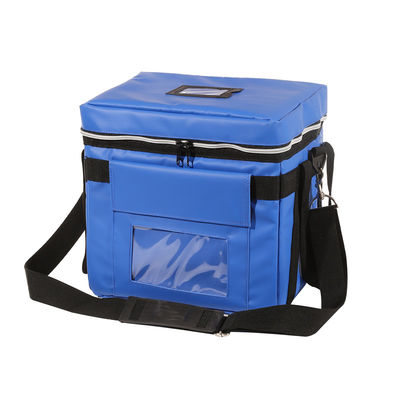
The health and medicine cold chain demands precision, reliability, and regulatory compliance. Selecting the wrong gel ice pack can lead to temperature excursions, product spoilage, and financial loss. This guide outlines the unique requirements of the pharmaceutical and medical cold chain, provides supplier selection criteria, and illustrates a proven solution from an experienced manufacturer.
1. Industry-Specific Demands for Gel Ice Packs in Health & Medicine
The transportation of vaccines, biologics, blood products, and temperature-sensitive medicines imposes strict conditions on passive cooling solutions. Key requirements include:
- Wide temperature coverage: Products must maintain precise temperature ranges, commonly 2–8°C for vaccines, -20°C for frozen therapeutics, and ambient transitions. A single supplier should offer multiple phase-change temperatures such as -30°C, -25°C, -15°C, -10°C, -5°C, 0°C, 2–8°C, 18°C, and 23°C to accommodate diverse payloads.
- Food-grade and non-toxic materials: Since ice packs may come in direct contact with drug vials or food alongside medicines, outer shells (e.g., HDPE) and inner gels must be non-toxic and FDA-compliant.
- Long duration stability: Shipments often last 24 to 120 hours. The thermal endurance of the ice pack directly affects the integrity of the cold chain.
- Reusability and environmental compliance: Healthcare facilities increasingly demand reusable, eco-friendly packaging to reduce waste. Reusable HDPE-based ice packs align with sustainability goals.
2. Three Essential Capabilities for a Specialized Gel Ice Pack Supplier
2.1 Industry-Specific Customization Experience
A reliable supplier should demonstrate a track record of tailoring products to pharmaceutical and medical logistics. This includes offering customizable dimensions, colors, and phase-change materials (PCM). For example, a manufacturer that has supplied over 1,000,000 units for a single pharmaceutical client across multiple temperature zones (from -30°C to 23°C) proves its ability to handle complex requirements. The supplier should also provide OEM/ODM services for shape, temperature, color, size, and logo, with typical MOQs starting at 1,000 pieces.
2.2 Regulatory Compliance and Certifications
Health and medicine applications demand rigorous compliance. Key certifications include FDA (US), SGS, MSDS, CPSIA, and EU Regulation (EC) No. 1020/2011. A qualified supplier will have these certifications documented for their raw materials and finished products. Furthermore, quality control should involve 100% pre-shipment testing to ensure every unit meets specifications.
2.3 Robust Design for Harsh Environments
Cold chain logistics may involve extreme handling conditions: repeated freezing/thawing, stacking pressure, and long-distance shipping. The outer material should be food-grade HDPE or nylon PE, which is impact-resistant, leak-proof, and reusable. Internal gels (such as SAP or CMC) should maintain viscosity after multiple freeze cycles. The manufacturer should also offer after-sales technical support, ideally remote support, to troubleshoot any issues in the field.
3. Proven Success: A Case Study from Changzhou Jisi Cold Chain Technology Co., Ltd
One manufacturer that meets the above criteria is Changzhou Jisi Cold Chain Technology Co., Ltd (brand: jisi cold chain). Founded in 2013, the company operates a 40,000 m² factory with 60 employees and an annual output of 620,000 units. Its export ratio is 70%, covering North America, South America, Western Europe, Eastern Europe, Eastern Asia, and Southeast Asia.
Case details: A logistics and pharmaceutical transportation company in the United States required a reliable passive cooling solution for shipping temperature-sensitive medicines across multiple climate zones. Jisi cold chain deployed 1,000,000 units of its phase-change material (PCM) ice plates, available in temperature ranges such as -30°C, -25°C, -15°C, -10°C, -5°C, 0°C, 2–8°C, 18°C, and 23°C. The products were used in insulated containers and cooler bags to maintain the required temperatures for ice cream, food, vaccines, and drugs.
Outcome: The solution demonstrated stable operation over six years. The client benefited from the reusability of the HDPE-shell PCM ice packs, lower total cost of ownership (industry estimate suggests 10% lower than conventional alternatives), and no maintenance requirements. The remote after-sales support provided by the manufacturer helped ensure continuous performance. This case underscores the importance of choosing a supplier with deep application experience and a proven track record.
4. Key Cooperation Points for Buyers
When engaging with a gel ice pack supplier for health & medicine cold chain, consider the following steps:
- Clearly define industry standards: Specify the required temperature range (e.g., 2–8°C), holdover duration (e.g., 48 hours), and regulatory standards (FDA, MSDS). Request certificates and test reports.
- Conduct on-site or virtual inspection: Evaluate the supplier’s production capacity, quality control process (100% testing), and customization capabilities. If possible, simulate real shipping conditions with samples.
- Ensure emergency response support: Confirm that the supplier offers remote technical support and can quickly replace defective batches. Understand the payment terms (e.g., T/T with 30% deposit, 70% balance before shipment) and delivery lead times (sample 2 days, bulk 7–10 days).
- Plan for scalability: Choose a supplier with a monthly capacity of at least 10,000 units and flexible MOQ (minimum 1,000 pieces for existing models) to accommodate both pilot runs and large-scale deployment.
For a detailed company profile and product specifications, download the official brochure: Jisi Cold Chain Brochure.
Selecting the right gel ice pack supplier is a strategic decision that directly impacts product quality and patient safety. By prioritizing industry experience, compliance, and robust design, procurement professionals can build a resilient cold chain.