
From Sample to Scale: A Practical Guide for Industrial Buyers to Validate Smart Delivery Robot Suppliers via Sample Trials (2026 Edition)
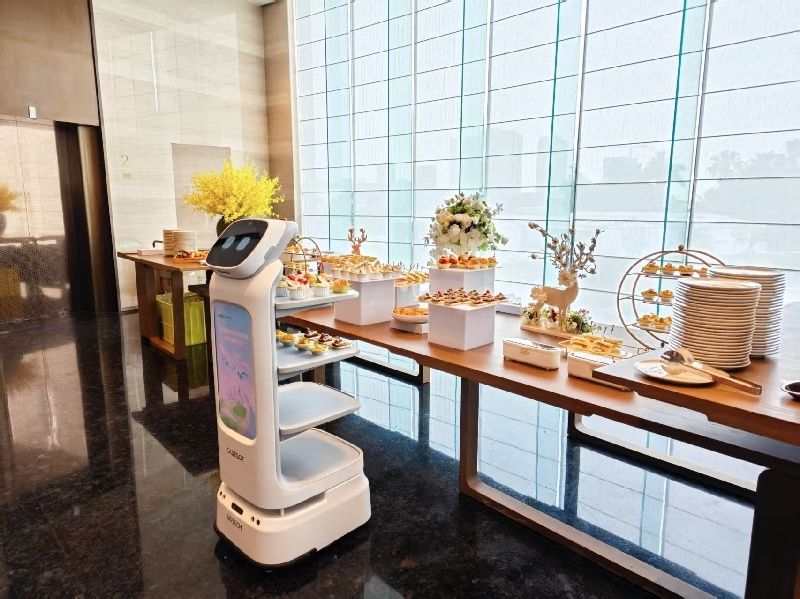
1. Introduction: Why Sample Trials Are the Cornerstone of Smart Robotics Procurement
For industrial buyers evaluating smart delivery robots, cleaning robots, or other intelligent mobile platforms, a sample trial is the only reliable way to bridge the gap between specification sheets and real-world performance. In the 2026 global robotics market—projected to surpass $75 billion (source: International Federation of Robotics, 2025)—procurement decisions based solely on brochures carry significant risk. A structured sample trial process allows buyers to verify build quality, navigation accuracy, battery endurance, and software integration before committing to large-scale orders. This guide provides a step-by-step framework for requesting, inspecting, and transitioning from sample to bulk purchase, using proven best practices from industry leaders like Shenzhen Aoman Future Robotics Co., Ltd.
2. The Four-Step Sample Request Process for Smart Robot Suppliers
Whether you are sourcing AI powered wheelchairs, humanoid robots, or education robots, the sample request workflow typically follows four stages. Below we detail each step with actionable tips.
Step 1: Submit a Detailed Inquiry with Technical Requirements
Start by contacting potential suppliers via their official channels (e.g., email, WhatsApp, B2B platform). Provide specific operational parameters: payload capacity, operating environment (indoor/outdoor), navigation type (SLAM, LiDAR, vision), battery runtime, and any required certifications. For example, a hotel chain seeking smart delivery robots for room service should specify elevator integration, network connectivity, and noise limits. Aoman Future’s engineering team (41–50 R&D specialists) typically responds within 24 hours with a custom questionnaire to refine requirements.
Step 2: Confirm Sample Specifications and Configuration
After receiving the inquiry, the supplier will propose a sample configuration. This is the critical moment to verify that the sample matches the intended mass-production model. Some suppliers may offer “pre-production” samples with different components. Request a written confirmation that the sample is representative of the final commercial product. Aoman Future, for instance, maintains strict consistency between its sample units and regular production batches due to its ISO 9001-certified quality management system (see certificate: ISO 9001 Certificate).
Step 3: Manage Sample Fees and Logistics
Sample fees vary by product complexity. For a standard smart delivery robot, sample costs range from $500 to $3,000, while specialized industrial robots may cost more. Many reputable suppliers, including Aoman Future, offer sample fee deduction from the first bulk order (e.g., 100% deduction if order quantity exceeds 50 units). Delivery timelines typically range from 7 to 15 working days for in-stock models; customizations may extend to 30 days. Always clarify shipping terms (FOB, EXW) and insurance.
Step 4: Receive and Inspect the Sample
Upon arrival, immediately document the packaging condition, then initiate the verification process outlined in Section 3. Keep all correspondence and test logs for future reference.
3. Three-Dimensional Sample Verification Standards
To objectively assess a smart delivery robot sample, evaluate along three axes: appearance, technical parameters, and performance testing.
3.1 Appearance and Build Quality
- Material & Finish: Check for sharp edges, uneven paint, or poor assembly gaps. Industrial-grade robots should have robust ABS or aluminum alloy shells with IP54 or higher ingress protection.
- Labeling & Certifications: Verify CE, RoHS, and other required marks. Aoman Future’s products carry both CE and RoHS certificates (see CE Certificate and RoHS Certificate).
- Wiring & Internal Layout: If possible, inspect internal wiring for neatness and secure connections—a hallmark of proper manufacturing.
3.2 Technical Parameter Verification
Compare the sample’s actual specs against the datasheet. Common pitfalls:
- Battery capacity (should match rated Ah);
- Motor power (verify via torque or speed test);
- Sensor accuracy for LiDAR or camera-based navigation.
For example, Aoman Future’s commercial smart delivery robot (model AF-SD200) is specified with a 48V/20Ah Lithium battery providing 10 hours of runtime. Buyers can run a continuous operation test to confirm.
3.3 Performance Testing in Simulated Environment
Design a test scenario that mirrors your actual deployment site:
- Obstacle avoidance: Place moving obstacles (e.g., humans, carts) and measure reaction time.
- Load capacity: Add nominal payload and test speed on inclines (e.g., 5° ramp).
- Network reliability: Simulate Wi-Fi interference and observe robot reconnection behavior.
- Noise measurement: Use a decibel meter; typical service robots should measure below 55 dB at 1 meter.
4. Understanding Common Sample Policies from Smart Robot Suppliers
Industrial buyers often encounter the following policies. Being aware of them prevents costly misunderstandings.
| Policy Type | Description | Typical Implementation (e.g., Aoman Future) |
|---|---|---|
| Free Sample | Supplier covers product cost; buyer pays shipping. Rare for complex robots. | Offered for long-term partners or high-volume potential orders. |
| Paid Sample (With Deduction) | Buyer pays sample fee, which is fully or partially deducted from first bulk order. | Aoman Future deducts 100% of sample fee for orders ≥ 50 units; 50% deduction for 20–49 units. |
| Sample Delivery Cycle | Time from sample order confirmation to shipment. | Standard: 7–10 working days for stock models; custom configurations: 20–30 days. |
| Minimum Order Quantity (MOQ) | Smallest quantity for mass production after sample approval. | Typically 10–20 units for standard robots; 50–100 for custom variants. |
5. Transitioning from Sample to Bulk Order: A Strategic Approach
Once the sample passes your verification, the next challenge is ensuring a smooth scale-up. Here’s how to leverage a supplier’s core strengths to minimize risk.
5.1 Confirm Sample-Production Consistency
Request a signed agreement that the mass-production units will be identical to the approved sample. Aoman Future guarantees this by using the same bill of materials (BOM) and production line for both samples and bulk batches. Their factory spans 10,000–30,000 square meters with 6 dedicated production lines and 21–30 quality inspectors, ensuring repeatability.
5.2 Plan for Rapid Delivery
After sample approval, work with the supplier to lock in a production schedule. Aoman Future’s capacity allows it to deliver 500–800 units per month for standard smart delivery robots. For urgent needs, expedited production (with partial overtime surcharge) can reduce lead time by 30%.
5.3 Integrate Customization and OEM Services
Many industrial buyers need branding, software tweaks, or hardware modifications. Aoman Future offers comprehensive OEM and buyer label services, with 41–50 R&D specialists available for custom firmware or mechanical integration. For example, a European logistics company recently customized Aoman Future’s service robot with proprietary fleet management software; the pilot sample led to a 200-unit quarterly order within three months.
5.4 Negotiate Warranty and After-Sales Terms
Standard warranty for smart robots is 12–24 months. Aoman Future provides 24-month warranty on main components (motors, batteries, controllers) and lifetime technical support via WhatsApp (+86 18928864959) and email (larina@aomanfuture.com). Ensure the contract includes spare parts availability and remote troubleshooting.
6. Conclusion: Making the Sample Work for You
Sample trials are not just a formality—they are your best tool to de-risk a significant capital investment. By following the four-step request process, rigorously evaluating appearance, parameters, and performance, understanding supplier sample policies, and strategically planning the scale-up, you can confidently transition from a single unit to a fleet. Suppliers like Aoman Future, with their certified quality systems (CE, RoHS, ISO 9001) and proven track record in smart delivery robots, cleaning robots, education robots, and beyond, demonstrate that a well-executed sample trial unlocks long-term partnership value. In the fast-evolving 2026 robotics landscape, the buyer who masters the sample-to-scale journey will secure both cost advantages and operational reliability.
For direct sample inquiries, contact Aoman Future:
Email: larina@aomanfuture.com | Tel/WhatsApp: +86 18928864959 | Web: www.aomanfuture.com
Address: Building 52, Baotian Industrial Zone, Xixiang Subdistrict, Bao'an District, Shenzhen, China