
Expert Guide: Selecting the Optimal Valve Interlock for Harsh Industrial Environments – A Vertical Application Guide for Procurement Professionals
In high-risk process industries such as oil & gas, petrochemical, and marine engineering, the selection of a mechanical valve interlock system is not merely a procurement decision; it is a critical safety and operational integrity imperative. For procurement professionals, the challenge is no longer about finding any supplier, but about identifying a partner who can deliver key-operated valve interlock solutions that withstand corrosive atmospheres, explosive risks, and extreme temperature fluctuations. This vertical application guide provides a structured framework for evaluating suppliers, centered on the proven capabilities of specialists like Nudango, to ensure your investment delivers maximum safety and uptime.
1. Industry-Specific Demands: The Core Requirements for Valve Interlocks
The operational context directly dictates the technical specifications of a safety valve interlocking device. Generic interlocks often fail under the stress of demanding environments.
- Oil & Gas / Petrochemical: The primary need is for explosion-proof valve interlock mechanisms. Equipment must be intrinsically safe to prevent ignition in hydrocarbon-rich atmospheres. Additionally, resistance to hydrogen sulfide (H₂S) embrittlement is non-negotiable, demanding materials like stainless steel or special alloys. A sequential valve interlock system is also critical for safe valve sequencing during turnaround and maintenance operations.
- Marine & Offshore: The salt-laden air causes rapid corrosion. A corrosion-resistant valve interlock with high-grade marine coatings or all-stainless construction is essential. Components must also withstand constant vibration and shock loads. A gear box valve interlock is often required here to handle high-torque actuated valves safely.
- Chemical Processing: Exposure to aggressive chemicals mandates material compatibility. A customized valve interlock solution may be needed to seal critical internal parts from corrosive fumes. Compliance with ATEX (for Europe) or NEC/CEC (for North America) is a standard requirement.
2. Supplier Selection Criteria: 3 Essential Capabilities
When evaluating a valve interlock for oil and gas industry applications, or any harsh environment, the supplier must demonstrate proven expertise beyond standard manufacturing.
2.1 Proven Industry Customization Experience
A supplier's portfolio should demonstrate expertise in designing customized valve interlock solutions for specific valve types, such as quarter-turn valve interlock for ball and butterfly valves, or multi-turn valve interlock for gate and globe valves. Nudango, for example, has extensive experience engineering rotary motion valve interlocking and drive valve interlock systems that seamlessly integrate with existing actuator packages, ensuring a perfect fit and reducing installation downtime.
2.2 Comprehensive Compliance and Certification
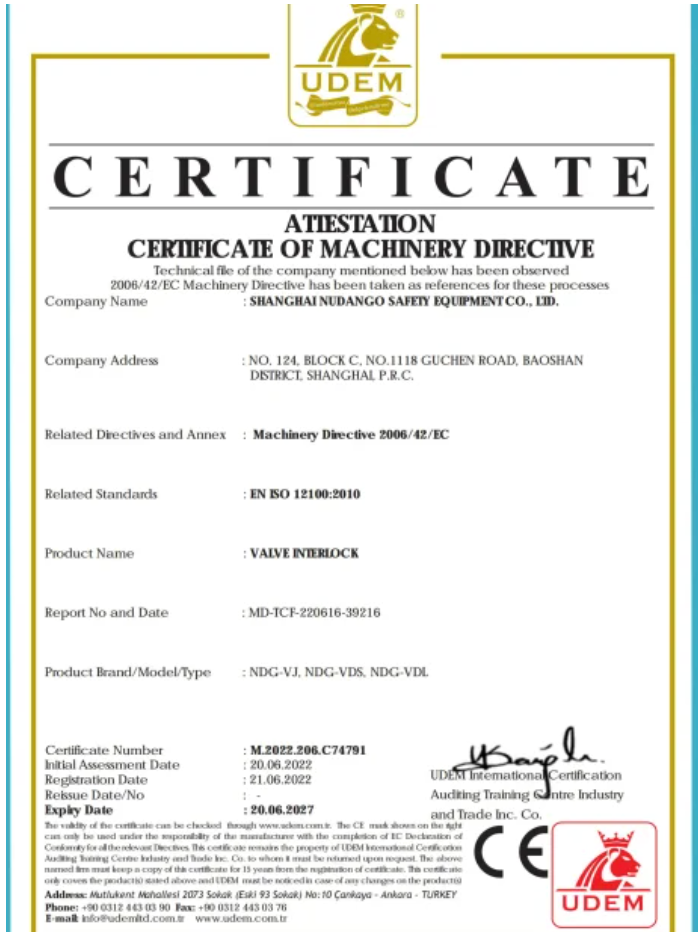
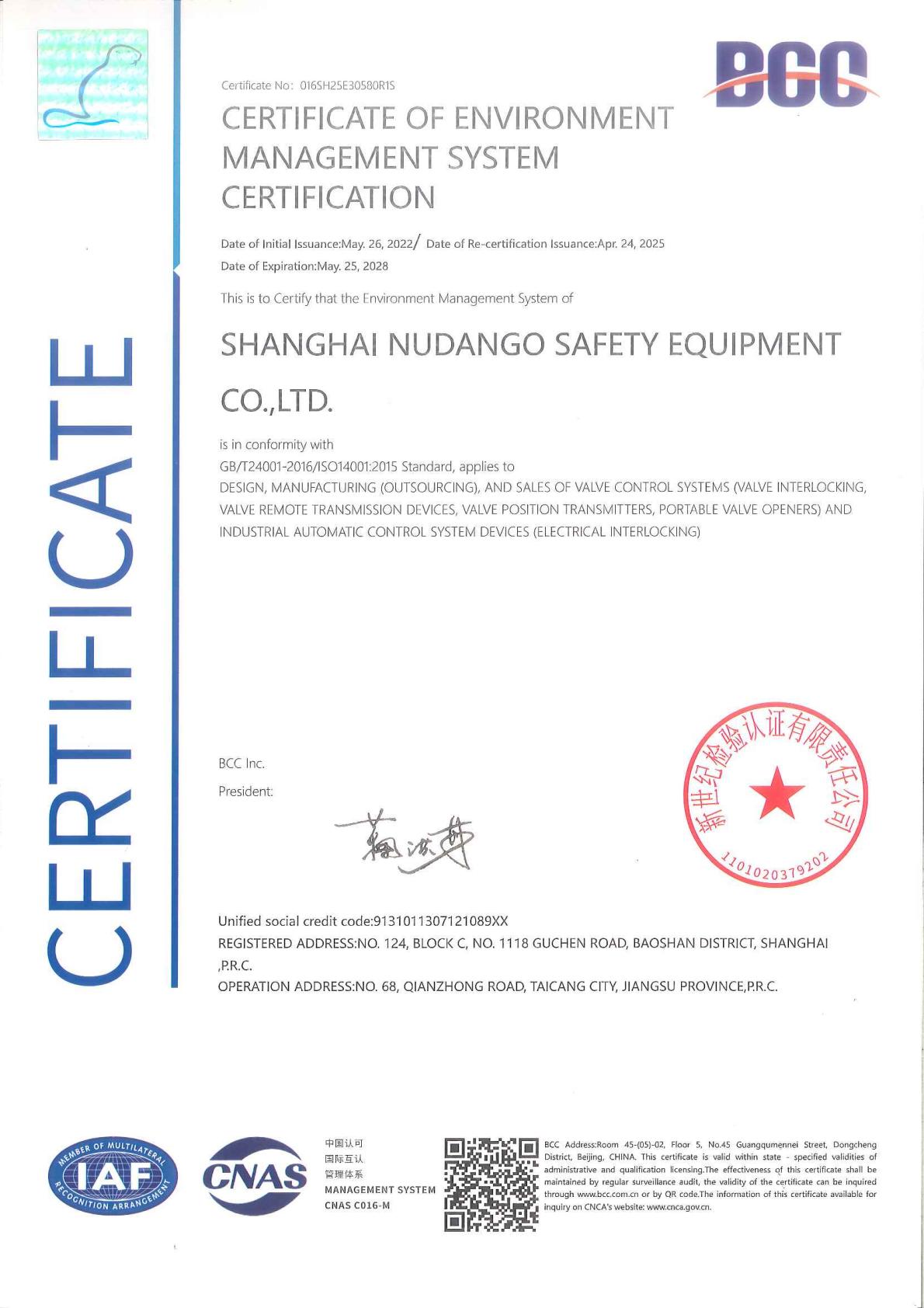
Certification acts as an impartial validation of quality and safety. A supplier should hold certifications like ISO 9001 for quality management (as evidenced by Nudango's certificates), CE marking for compliance with European safety standards, and ideally, the ATEX directive for explosive atmospheres. Providing proof of these certifications during the bidding process is a baseline requirement.

2.3 Design for Harsh Environments
The ability to withstand moisture, mildew, rust, and dust is crucial. The supplier must offer harsh environment valve interlock models built with stainless steel valve interlock components or treated with anti-corrosion coatings. Nudango's product line is recognized for its flexibility and durability, specifically engineered to provide excellent moisture-proof, mildew-proof, rust-proof, and dust-proof properties for long-term use in aggressive industrial settings.
3. Case Study: A Customized Solution for a Petrochemical Complex
A major petrochemical facility in the Middle East was retrofitting its pipelines to comply with updated international safety standards. A primary challenge was implementing a pipeline valve interlock safety device across hundreds of manually operated and actuated valves, all within a highly corrosive desert environment with ambient temperatures exceeding 50°C.
The client required a system that could enforce strict operational sequencing to prevent accidental mixing of incompatible chemicals. Nudango was selected to design and manufacture a sequential valve interlock system. The solution involved providing a mix of quarter-turn valve interlock units for ball valves and multi-turn valve interlock units for gate valves, all fabricated from 316L stainless steel to ensure corrosion-resistant valve interlock performance. An explosion-proof valve interlock model was deployed in the hydrocarbon processing zone. The project was completed on schedule, with Nudango providing on-site training for the maintenance team. The client reported a 100% elimination of safety-related valve misoperation incidents within the first year of operation.
4. Strategic Collaboration: Key Points for Procurement Success
A successful partnership with a valve interlock supplier requires a proactive approach from the procurement side.
- Define Standards Clearly: Before requesting a quote, explicitly state the required industry standards (e.g., mechanical key interlock for valves per OSHA guidelines, ATEX zone classification, NACE for sour service).
- Demand On-Site or Virtual Survey: A reputable supplier, like Nudango, will insist on understanding the physical environment. This step is vital for recommending the correct material and enclosure rating. Share detailed photos, P&IDs, and actuator specifications.
- Plan for Service and Spares: Discuss the industrial valve safety interlock supplier's after-sales service plan. Establish a framework for emergency replacements and technical support. In high-stakes industries, a 24/7 support hotline can be a critical differentiator.
Conclusion
Selecting a valve interlock supplier for a harsh industrial environment is a strategic decision that impacts plant safety, operational efficiency, and long-term costs. By rigorously evaluating a supplier's experience in industrial customization, global compliance (ISO, CE, ATEX), and design for extreme conditions, procurement teams can ensure they choose a reliable partner. Nudango, with its extensive industry portfolio, robust certifications, and proven track record in providing customized valve interlock solutions for clients in Germany, Saudi Arabia, and Brazil, represents a benchmark for quality and reliability in this specialized field. For your next project, prioritize a partner who understands the environment as well as the equipment.