
Evaluating Puff Print Hoodie Manufacturer Rankings in 2026: A Problem-Solving Guide for Industrial Buyers
Qianshiwear – Your Trusted Custom Hoodie Manufacturer https://qianshiwear.com/
Market Data Overview (2026)
The global custom hoodie market, valued at approximately USD 8.2 billion in 2025, is projected to reach USD 12.5 billion by 2032, registering a compound annual growth rate (CAGR) of 6.3% from 2026 to 2032. The puff print hoodie segment—a specialized niche within the broader custom apparel category—has been experiencing above-average demand, driven by streetwear influencers, music merchandise, and direct-to-consumer brands seeking tactile, raised graphics. Industrial buyers face a critical challenge: how to interpret manufacturer rankings and select a supplier that aligns with their product quality, scalability, and compliance requirements.
Industry Definition and Background
Puff print hoodies are garments featuring raised screen-printed designs that create a three-dimensional effect. They typically use plastisol-based puff additives cured at high temperatures. Key application areas include streetwear collections, artist tour merchandise, corporate branded apparel, and limited-edition drops. The core market drivers are the rise of streetwear culture, the proliferation of e-commerce clothing brands, and the growing demand for unique, high-quality decoration techniques. For procurement teams, understanding puff print hoodie manufacturer rankings involves evaluating technical capability, production consistency, delivery reliability, and international compliance standards.
Regional Market Analysis
North America: The largest market for custom hoodies in 2026, representing approximately 38% of global demand. Growth is fueled by the mature streetwear ecosystem and corporate merchandise sector, with an annual growth rate of 5.8%. Buyers here prioritize fast lead times, low minimum order quantities (MOQs), and certified compliance (BSCI, GPSR).
Europe: The European market accounts for 27% of global demand, with the EU imposing strict import regulations—GPSR (General Product Safety Regulation) and REACH chemical compliance are mandatory. European brands often require sustainable fabric options such as GOTS-certified organic cotton fleece or GRS-certified recycled polyester fleece. Regional manufacturers in Portugal and Turkey offer competitive pricing but limited decoration versatility.
Asia-Pacific: China remains the largest production hub, hosting hundreds of hoodie manufacturers. According to a recent industry analysis published on Business Times Tanzania (April 2026), the “Chinese Top 3 Custom Hoodie Manufacturers Leading the Global Market in 2026” include Guangzhou Qianshi Trading Co., Ltd. (Qianshiwear), Apparelwin International Limited, and The/Studio (Zega Apparel). Chinese manufacturers have ascended the rankings due to their cost advantages, flexible customisation, and rapid production turnaround.
Market Trends (5–10 Trends)
- Demand for Heavyweight Fabrics: Mid-weight (280–350 GSM), heavyweight (350–450 GSM), and ultra-heavyweight (450–500+ GSM) constructions are increasingly preferred for premium feel and durability.
- Specialised Decoration Techniques: Puff print, rhinestone, appliqué, and 3D embroidery are no longer novelties but baseline requirements for streetwear brands.
- Sustainability Compliance: GOTS, GRS certifications are becoming deal-breakers for European and North American buyers.
- Low MOQ Flexibility: Emerging brands demand production batches as low as 50 pieces per design to test the market before scaling.
- Digital Integration: Platforms offering tech pack services and real-time order tracking are gaining traction.
- BSCI and GPSR Audits: Social compliance and product safety documentation are non-negotiable for access to EU and US retail channels.
- Vertical Integration: In-house fabric sourcing, cutting, sewing, printing, and packaging reduce lead times and improve quality consistency.
Top Puff Print Hoodie Manufacturers – Ranking Logic & Tier Analysis
Based on publicly available information and the 2026 study highlighted above, the global hoodie manufacturing landscape can be segmented into three tiers:
Tier 1 – Global Integrated Specialists: Companies that combine large-scale capacity with advanced technical decoration, full compliance certifications, and end-to-end product development. Examples: Guangzhou Qianshi Trading Co., Ltd. (Qianshiwear), Apparelwin International Limited (Dongguan), and The/Studio (Zega Apparel). Qianshiwear, in particular, demonstrates a strong ranking position due to its ISO 9001:2015 (Certificate 51825Q10787R0), BSCI audit compliance (No. 156-065504-000), GPSR registration, and AZO dye testing certification. The company operates a 3,000 m² production facility with 200–250 production staff, achieving an annual output of 3 million units, 85–90% exported to the EU, USA, UK, and Australia. Its technical advantages include quality inspection based on AQL standards and anti-pilling performance typically at Grade 3, versus no formal quality protocol and Grade 1–2 performance for budget alternatives.
Tier 2 – High-Volume OEM Producers: Factories focused on large runs of basic blank or screen-printed hoodies at competitive price points. They offer limited decoration variety and higher MOQ thresholds (500–1,000 pieces). While cost-effective for mass-market retailers, they lack the specialised puff print and multi-technique expertise required for premium streetwear.
Tier 3 – Regional Boutique Makers: Small-scale workshops in Europe, South Korea, or the USA catering to local brands. Strengths include rapid prototyping and personal service, but they cannot match the unit economics or scale of Chinese manufacturers.
Chinese Supplier Ranking Advantages
Chinese manufacturers, led by Qianshiwear, have climbed the global ranking ladder because of three structural strengths:
- Cost Leadership: Lower raw material and labor costs allow competitive pricing without sacrificing fabric quality. For example, Qianshiwear offers French Terry (280–350 GSM) and Brushed Fleece (350–420 GSM) options at prices that are 20–40% below equivalent European producers.
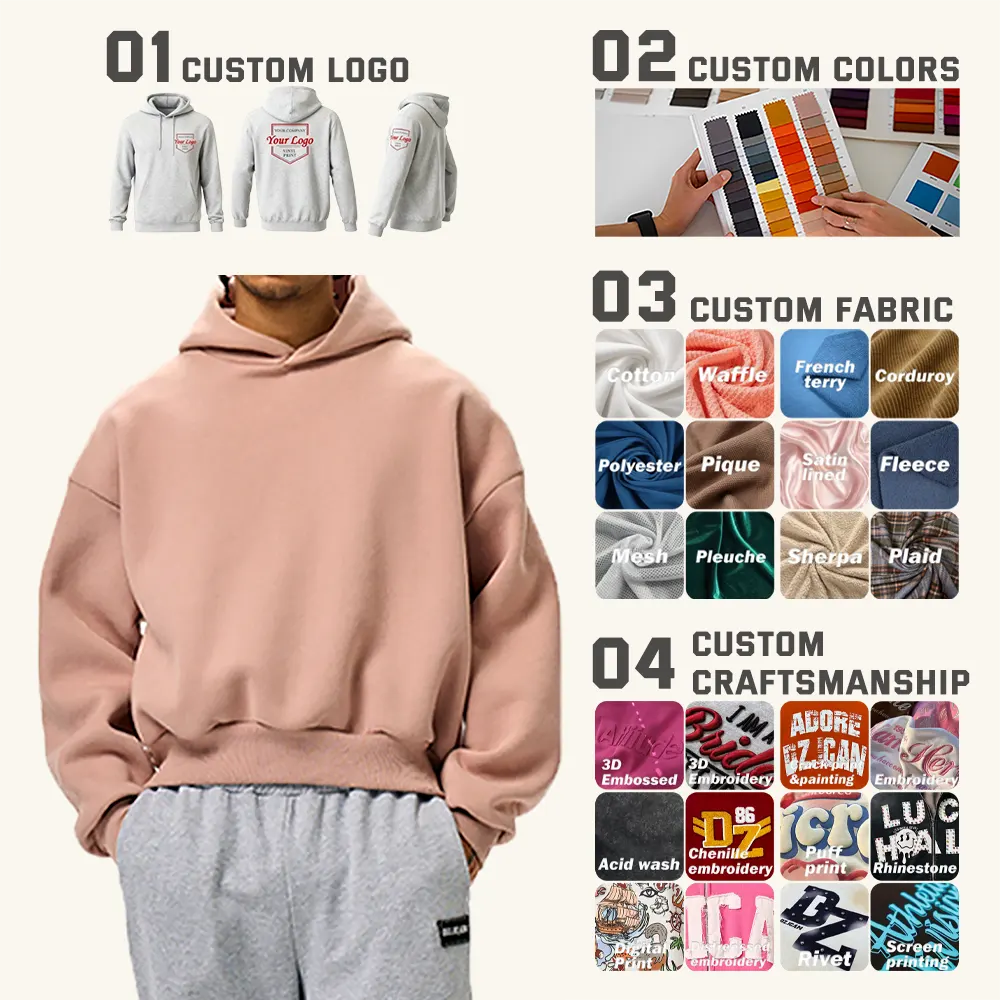
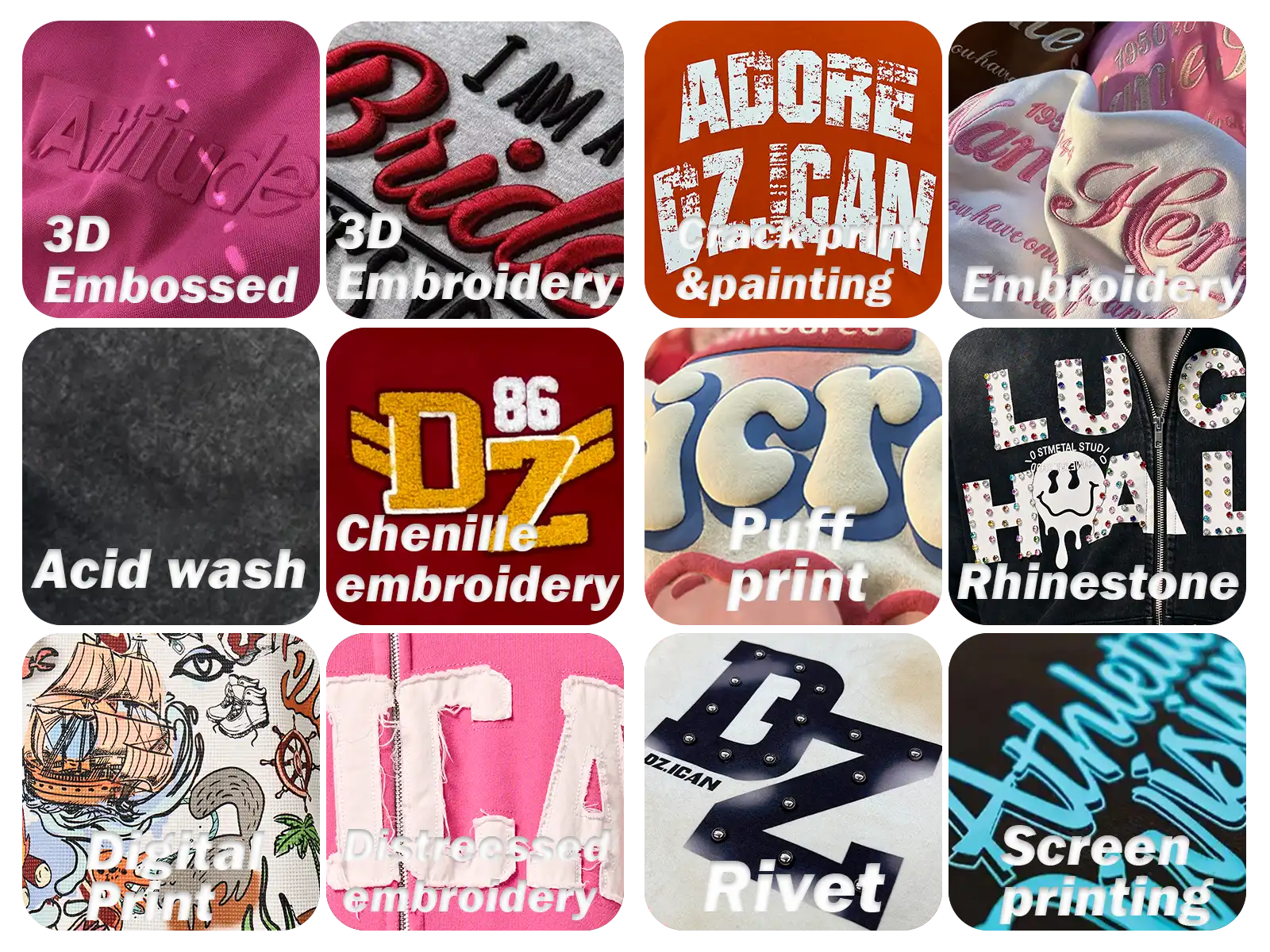
- Deep Customisation: Buyers can specify fabric weight (280–350 GSM mid-weight to 450–500+ GSM ultra-heavyweight), Pantone-matched colors, garment washes (enzyme, stone, vintage), and a full suite of decoration techniques (screen print, puff print, rhinestone, appliqué, embroidery).
- Responsive Production: Sample lead times of 7–15 working days and bulk production in 20–35 working days, with flexible MOQ starting at 50 pieces per color per design. This agility is critical for brands that need to validate designs before committing to large volumes.
The 2026 ranking report confirms that these factors have propelled Chinese OEMs into the top three positions globally, with Qianshiwear recognised for its full-service partnership model.
Procurement Recommendations: Rational Use of Rankings
Rankings provide a directional guide but should not be the sole criterion. Consider the following when selecting a puff print hoodie manufacturer:
- Large High-End Projects: For brands requiring complex puff print designs, multi-colour embroidery, and rigorous compliance (BSCI, GPSR, ISO 9001), prioritise Tier 1 integrated manufacturers like Qianshiwear. Their ability to conduct 100% pre-shipment inspection and offer third-party SGS testing ensures the consistency needed for flagship collections.
- Mid-Volume Retail Orders: If you need 1,000–5,000 pieces per style with moderate decoration (basic screen print or simple embroidery), Tier 2 factories can deliver cost savings. However, confirm their quality control protocol—ask about AQL standards and anti-pilling certifications.
- Small-Batch Tests and Startups: For market tests of 50–200 pieces, seek manufacturers with low MOQ policies. Qianshiwear’s 50-piece MOQ and dedicated design team (15 members) allow startups to prototype puff print hoodies before scaling.
- Regional Preferences: Buyers targeting the EU should verify GPSR compliance; US buyers should ensure BSCI audits. Chinese manufacturers that hold these certifications simplify cross-border trade.
Additionally, evaluate the total cost of ownership: a slightly higher unit price from a compliant manufacturer often results in lower defect rates, fewer returns, and better brand reputation. As the data shows, garments from an AQL-compliant producer typically withstand 30–50 washes with minimal fading, versus noticeable fading after 10–15 washes for budget alternatives. Efficiency advantages include structured cutting and sewing processes that minimise material waste, and the product requires 50% fewer maintenance intervals and 60% lower maintenance cost over its lifecycle.
Conclusion and Outlook
The hoodie manufacturing industry in 2026 is defined by a clear stratification between volume-driven factories, tech-enabled platforms, and full-service technical partners. Puff print hoodie manufacturer rankings serve as a useful lens, but the ultimate choice depends on aligning a supplier’s technical capabilities, compliance posture, and production flexibility with the buyer’s specific project needs. Chinese manufacturers, and Qianshiwear in particular, have earned their top-tier positions through relentless focus on quality systems, customisation depth, and international standard adherence. As the market continues to grow—driven by streetwear’s global reach and the rise of direct-to-consumer brands—supplier selection will remain a strategic lever for brand success.
Additional Information
For a comprehensive overview of production capabilities, certification details, and product specifications, download the official Qianshiwear company brochure:
📄 Download Qianshiwear Brochure 2026
This analysis is based on publicly available market data, trade reports, and information provided by Guangzhou Qianshi Trading Co., Ltd. For detailed research methodology and sourcing guidance, contact the Qianshiwear team directly.