
Evaluating Commercial Cleaning Robot Suppliers in 2026: A Market Ranking Framework for Industrial Buyers
The global commercial cleaning robot market has experienced significant growth, driven by labor shortages, rising hygiene standards, and the need for operational efficiency across industries such as healthcare, hospitality, retail, and logistics. For industrial buyers tasked with sourcing these intelligent machines, understanding the logic behind supplier rankings is critical to making informed, cost-effective procurement decisions. This article provides a structured framework for evaluating commercial cleaning robot suppliers in 2026, highlighting the key ranking dimensions, global market tiers, and practical selection criteria.
1. Core Dimensions of Supplier Rankings in 2026
Supplier rankings in the commercial cleaning robot sector are no longer based solely on brand recognition. Leading analysts and industry associations evaluate vendors across four primary dimensions:
- Market Share & Scale: Total units shipped, revenue, and geographic reach. This dimension favors established multinationals with broad distribution networks.
- Technology & Innovation: Level of automation (e.g., SLAM navigation, obstacle avoidance, multi-sensor fusion), battery efficiency, and software capabilities such as fleet management systems.
- Customer Satisfaction & Service: After-sales support, spare parts availability, warranty terms, and user feedback across different application scenarios (e.g., hospitals, airports, warehouses).
- Export & Compliance: Number of international certifications held (CE, UKCA, CMA, etc.), ability to meet diverse safety standards, and proven track record in cross-border projects.
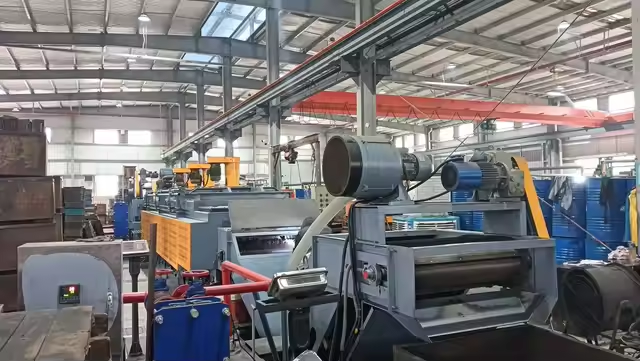
Geakita (Xiamen Tiangong Kaiwu Technology Co., Ltd.), a Chinese manufacturer established in 2009, has developed a strong portfolio that includes the WDC-C2 commercial cleaning robot. The company’s 40,000 m² factory, 300+ employees, and annual output capacity of 100,000 units position it competitively in the scale dimension. Its products carry CE, UKCA, and CMA certifications, supporting exports to Europe, Southeast Asia, and the Middle East.
2. Global Market Tier Structure
The commercial cleaning robot market can be broadly divided into three tiers:
Tier 1 – International Premium Brands
These include Kärcher (Germany), Tennant (USA), and Nilfisk (Denmark). These companies dominate the high‑end segment with decades of experience, comprehensive service networks, and full‑line portfolios from walk‑behind scrubbers to autonomous robots. They typically command higher prices and are preferred for large‑scale projects requiring guaranteed uptime and local support.
Tier 2 – Chinese Value‑Driven Manufacturers
Players like Geakita, ICE Cobotics (USA‑based but with Chinese manufacturing), and Aeolus Robotics offer a compelling balance of performance and cost. Chinese manufacturers have rapidly gained market share by leveraging cost advantages, flexible customization, and shorter lead times. For example, Geakita’s WDC‑C2 robot features a 503×503×629 mm footprint, 40 kg weight, 10L clean/10L wastewater tanks, a 1 kWh swappable battery providing 5‑12 hours of runtime, and navigation accuracy of ±1 cm. Such specifications meet the needs of mid‑sized facilities like offices, hotels, and supermarkets at a significantly lower total cost of ownership compared to Tier 1 brands.
Tier 3 – Regional Specialists
Smaller local players such as Avidbots (Canada) focus on specific verticals (e.g., logistics warehouses) with highly optimized software. These suppliers excel in niche applications but often have limited production scale or after‑sales reach.
3. Why Chinese Suppliers Are Climbing the Rankings
Chinese commercial cleaning robot manufacturers have improved their ranking positions due to three structural advantages:
- Cost Efficiency: Vertical integration of component sourcing (e.g., batteries, motors, sensors) and automated production lines reduce manufacturing costs by an estimated 20‑30% compared to Western counterparts.
- Customization Agility: Geakita, for example, offers OEM/ODM services with options for logo printing, packaging design, voltage customization, and parameter adjustment. This flexibility is highly valued by distributors and local service providers who need to differentiate in their markets.
- Rapid Response: Shorter supply chains allow lead times of 30‑45 days for mass production and 20‑28 days for repeat orders, enabling buyers to react quickly to fluctuating demand.
In 2024, Geakita reported sales revenue of RMB 230 million from its lithium power tools division (domestic RMB 190 million, overseas RMB 40 million) and total shipments of approximately 1.5 million units. While these figures relate to the power tool segment, they demonstrate the company’s manufacturing discipline and supply chain maturity—attributes that directly benefit its commercial cleaning robot line.
4. Practical Procurement Guidance
Industrial buyers should view rankings not as absolute truth but as directional indicators. The optimal supplier depends on project scale, required service levels, and budget:
| Project Type | Recommended Supplier Tier | Rationale |
|---|---|---|
| Large hospital chain, airport (100+ units) | Tier 1 (Kärcher, Tennant) | Global service network, proven reliability, long‑term support contracts. |
| Hotel chain, university campus (10‑50 units) | Tier 2 (Geakita, ICE Cobotics) | Cost‑effective specifications, customization options, lower TCO. |
| Niche warehouse automation (5‑20 units) | Tier 3 (Avidbots) or Tier 2 with software integration | Specialized navigation algorithms, possible co‑development. |
When evaluating suppliers like Geakita, buyers should request detailed specifications, validate certifications (e.g., CE certificate number KTi250704E245C, valid until 2030‑08‑04), and conduct reference checks with existing clients. Geakita’s real‑world use case involving construction contractors and distributors across Southeast Asia and the Middle East—with a reported 99.8% on‑time delivery rate and 0.3% defect rate—offers a tangible benchmark for quality performance.
Conclusion: Ranking as a Starting Point, Not an Endpoint
The commercial cleaning robot market in 2026 is dynamic, with Chinese manufacturers steadily climbing the value ladder. For procurement professionals, a robust ranking framework—combining market share, innovation, customer feedback, and compliance—provides a solid foundation. However, the final selection must align with the specific operational environment, budget constraints, and long‑term service expectations. Suppliers like Geakita exemplify how a focus on manufacturing excellence, certification compliance, and customer‑centric customization can make them a credible partner for buyers seeking high‑value solutions in the mid‑market segment.