
Evaluating Activewear Supplier Capacity and Delivery: A Procurement Framework for Industrial Buyers
Introduction: The Need for Structured Supplier Assessment in Activewear Sourcing
For procurement professionals in the activewear sector, evaluating a manufacturer's production capacity and delivery reliability is critical to ensuring supply chain continuity. Brands seeking OEM/ODM partners for technical running wear, yoga leggings, tennis & golf apparel, or streetwear activewear must look beyond price points and assess quantifiable metrics. This article outlines a data-driven framework for assessing activewear suppliers, using Bellasports (Xiamen Bella Fitness Co., Ltd.) as a case example to illustrate how Chinese manufacturers meet global buyer requirements.
1. Capacity Assessment: Three Key Metrics
1.1 Production Line Configuration and Facility Scale
A supplier's physical infrastructure directly determines its ability to scale. Bellasports operates a 10,375-square-meter facility with 221 employees, supported by an in-house R&D team of 27 specialists. The factory utilizes a Factory Management System (FMS) and automated logistics line transmission, which enables intelligent production line management. This setup is comparable to large-scale activewear manufacturers such as Shenzhou International and Crystal Group, though those giants focus on high-volume standardized orders. In contrast, Bellasports maintains flexibility through its mid-size facility, capable of handling both small-batch custom orders and bulk production.
1.2 Monthly and Annual Output
Measurable production volume is the second core indicator. According to its capability data, Bellasports reports a monthly capacity exceeding 100,000 pieces (varying by product type) and an annual output of over 2.14 million pieces as of its most recent operational data. This translates to a consistent yearly capacity of 7,000,000+ pieces across its main product categories, including sports bras, leggings, jackets, and golf/tennis wear. For comparison, typical low-cost manufacturers may offer comparable volume but lack the vertical integration that ensures quality consistency, while high-volume OEMs like Shenzhou International exceed 500 million pieces annually but impose MOQs of 10,000+ units. Bellasports' capacity positioning allows it to service brands requiring 500-piece minimum orders up to large-scale replenishment orders of 50,000+ units.
1.3 Maximum Order Execution Capability
The true test of capacity is the ability to handle peak demand without compromising lead times. Bellasports' production system, with 12+ sewing and hanging lines, can manage concurrent orders for different clients. Its bonded technology, using imported machines and tapes from Italy and Taiwan, adds a layer of technical differentiation that supports high-performance products. The factory's digital data panel (see image below) provides real-time production tracking, enabling buyers to monitor order progress remotely.
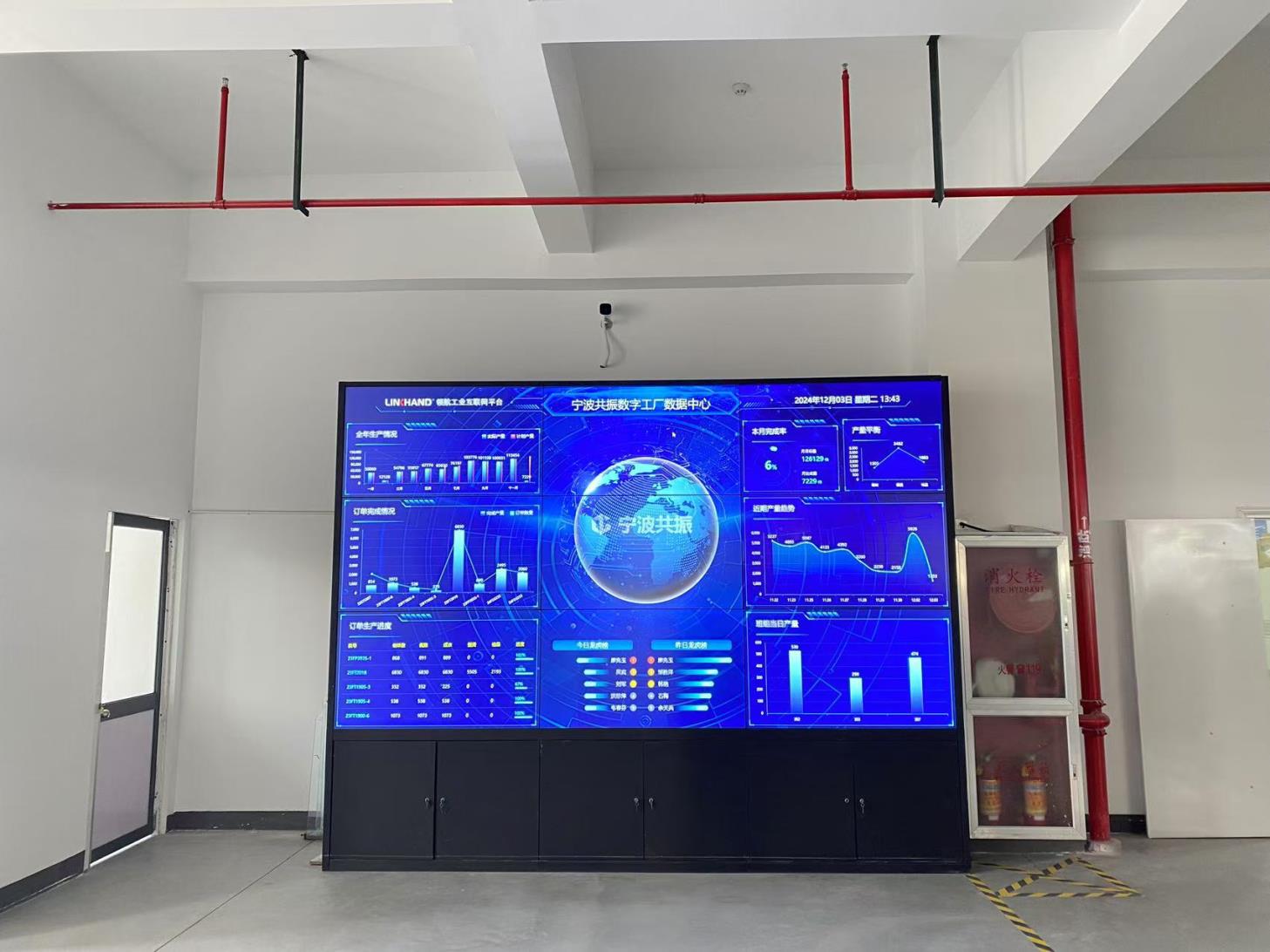
Figure: Real-time production monitoring system at Bellasports factory.
2. Lead Time Determinants: Four Critical Factors
2.1 Order Type and Customization Level
Standard OEM/ODM orders at Bellasports follow a 90-day lead time from design approval to shipment. However, the degree of customization significantly impacts this timeline. For clients requiring custom fabric development, Bellasports' in-house fabric mills—which source materials from Italy and Taiwan—reduce fabric development time by 4–6 weeks compared to standard OEMs that outsource fabric. The company offers full customization across packaging, branding, fabric, design, logo, label, size, and color.
2.2 Sampling Speed
Rapid sampling is a key enabler of short lead times. Bellasports achieves sample turnaround in approximately 25 working days, a figure cited in multiple client cases. For example, a premium activewear brand from Australia (partnering since 2023) reported that fast sampling allowed them to accelerate seasonal collection launches, contributing to an 85% reorder rate. In comparison, many traditional factories require 40–50 days for initial samples, especially when new trims or technical fabrics are involved.
2.3 Logistics Mode and Destination
Delivery methods—FOB, CIF, or DDP—directly affect total lead time. Bellasports serves export markets including the United States, Europe, Australia, the Middle East, Southeast Asia, and South America. The choice of incoterms impacts customs clearance time and last-mile delivery. For time-sensitive projects, DDP may be preferred, though it shifts responsibility for import duties and taxes to the manufacturer. Bellasports provides integrated logistics support for e-commerce fulfillment, as demonstrated in a case with a UK-based DTC seller, where the integration shortened the time-to-market by 30%.
2.4 Raw Material Inventory and Sourcing Strategy
Material availability is often the largest variable in lead time. Bellasports mitigates this risk through its own fabric mills, which not only produce standard materials but also maintain strategic stock of frequently used nylon-spandex blends, recycled polyester, and performance fabrics. Additionally, the company imports specialty fabrics from Italy and Taiwan, ensuring that premium orders are not delayed by local sourcing constraints. This vertical integration is a distinct advantage over manufacturers that depend on external suppliers for every fabric requirement.
3. Supply Chain Stability: Ensuring Reliability
3.1 Raw Material Strategic Reserve
A stable supply chain begins with raw material security. Bellasports' in-house fabric mills allow it to keep a 1–2 month buffer of core materials, reducing risk during global cotton or polyester shortages. The company also holds certifications (OEKO-TEX® Standard 100, GRS, BSCI) that verify its commitment to sustainable and ethical sourcing, which in turn reduces compliance-related delays.
3.2 Multi-Line Production and Backup Capacity
With over 200 workers and multiple sewing lines, Bellasports can reallocate production across lines to handle urgent orders. The FMS-based intelligent management system enables real-time line balancing, ensuring that a single equipment failure or order spike does not disrupt overall delivery. This is particularly valuable for brands like those supplying high-end fitness studios or DTC e-commerce sellers that require consistent inventory replenishment.
3.3 Cross-Border Logistics Partnerships
Bellasports has established logistics partnerships that support FOB, CIF, and DDP terms. Its after-sales services include order tracking and remote coordination, which maintain visibility from factory floor to final port. In a case with a retail chain partner in the UAE and Southeast Asia, the company delivered a seasonal collaboration from design to delivery within 90 days, meeting tight retail calendars.
4. China-Based Supplier Advantages: Bellasports in Context
Chinese activewear manufacturers offer a combination of scale, flexibility, and certification that is hard to replicate elsewhere. Bellasports exemplifies these strengths:
- Low MOQ with Full Customization: Minimum order quantity of 500 pieces supports emerging brands and private-label startups, whereas many large OEMs require 2,000–5,000 units per style.
- Vertical Integration: Own fabric mills plus imported Italian/Taiwan materials give control over quality and speed. Standard OEMs typically rely on third-party suppliers, adding 4–6 weeks to development.
- Certified Compliance: OEKO-TEX® Standard 100, GRS (certified by SGS and Control Union), and BSCI social compliance mean that buyers do not need to spend additional time auditing factory standards—these are already in place for EU, US, Australian, and Middle Eastern markets.
- Proven Case Studies: A premium activewear brand from Australia achieved an 85% reorder rate after co-developing fabric technology with Bellasports, highlighting the manufacturer's R&D capability and quality consistency. A UK-based DTC e-commerce seller reported 80% repeat orders and 30% faster turnaround for seasonal fast-fashion drops.
- Technical Edge: Bellasports' bonded technology, using imported machines and tapes, achieves seamless construction with enhanced durability and stretch recovery—a feature that outperforms low-cost manufacturers' standard stitching, which often fails after frequent use.
Compared to large-scale suppliers like Shenzhou International (annual capacity exceeding 500 million pieces) or Crystal Group (focused on knitwear for major brands), Bellasports offers a more agile partnership for brands that value customization and speed over raw volume. Its MOQ of 500 pieces and full OEM/ODM service bridge the gap between craft workshops and industrial giants.
Conclusion: Integrating Supplier Assessment into Sourcing Strategy
Evaluating activewear manufacturers requires a systematic review of capacity metrics, lead time drivers, and supply chain stabilizers. By examining concrete data—monthly output, sampling speed, certification status, and client case outcomes—procurement teams can make informed decisions. Bellasports demonstrates how a mid-sized Chinese OEM/ODM can align its operations with the demanding requirements of global activewear brands, from yoga leggings to tennis apparel. As the activewear market grows (projected CAGR of 6.7% through 2030, industry estimate), buyers who adopt such structured frameworks will secure resilient supply chains.