
EVA vs. Cork Recovery Slippers: A 2026 B2B Buyer's Comparative Analysis and Supplier Selection Guide
1. Introduction: The Growing Demand for Specialized Recovery Footwear
As the global foot health market expands, B2B buyers increasingly face a critical sourcing decision: choosing between EVA recovery slippers and cork-based recovery footwear. Both material technologies address post-exercise recovery, orthopedic support, and daily comfort, but they differ significantly in technical performance, cost structure, and supplier capabilities. This guide provides an objective, data-driven comparison to help procurement professionals make informed decisions.
2. Product Comparison: EVA Recovery Slippers vs. Cork Recovery Slippers
To illustrate the core differences, we analyze two representative product lines: post-run EVA recovery slippers (e.g., model A01 or D01) and natural cork footbed recovery slippers (e.g., model CS04 or CS06). The comparison spans four critical dimensions:
2.1 Technical Parameters
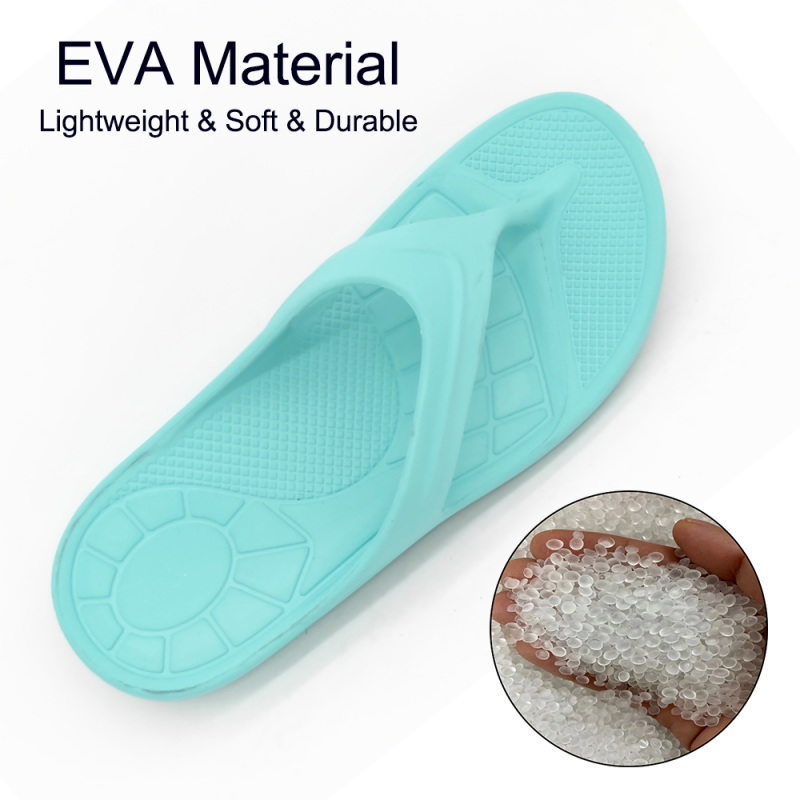
- EVA Recovery Slippers: Made from injection-molded EVA with a softness range of 38–50 degrees. The primary material is EVA, offering lightweight cushioning and shock absorption. Sizes available from 36 to 46 (standard) and up to 39–46 for certain models. A wear-resistant EVA outsole is standard, and bottom patterns can be customized.
- Cork Recovery Slippers (e.g., model CS04): Feature a midsole combining latex cork, SBR, and suede backing for cushioning and durability. The upper is laser-engraved genuine leather (3mm thickness). An optional wool lining is available for winter editions. Sizes 36–46. The outsole is also wear-resistant EVA. The natural cork footbed provides contoured arch support and conforms to the foot over time.
2.2 Applicable Scenarios
- EVA: Ideal for post-run recovery, indoor/outdoor walking after exercise, and scenarios requiring ultra-lightweight, waterproof, and easy-to-clean footwear. Suitable for performance brands targeting the 'Post-Run Recovery' market and medical-grade comfort footwear.
- Cork: Better suited for sustainable fashion labels, premium lifestyle brands, and clinical rehabilitation environments where natural materials and long-term foot health are prioritized. The breathable natural cork footbed offers superior moisture management and odor resistance.
2.3 Cost Analysis
- EVA: Lower unit cost due to simpler manufacturing (injection molding). MOQ typically 2000 pairs per color per style. Tooling investment is moderate.
- Cork: Higher material and labor costs due to multi-layer assembly (latex cork, SBR, suede, leather upper). However, the optimized Total Cost of Ownership (TCO) can be lower when considering reduced sampling iterations and higher first-trial success rates. As one manufacturer notes: "We don't promise the lowest price, but we guarantee the lowest Total Cost of Ownership."
2.4 Maintenance and Durability
- EVA: Easy to clean, water-resistant, and resistant to compression set when properly formulated. However, prolonged exposure to high heat during ocean freight may cause deformation if packaging is inadequate.
- Cork: Requires more care; the suede upper and natural cork need protection from excessive moisture. With proper construction, cork footbeds maintain their shape for years and can be re-crafted. Durability depends on the quality of the latex-cork compound and the outsole attachment.
3. Supplier Comparison: Chinese Factory vs. International Brand Suppliers
When evaluating suppliers for recovery slippers, B2B buyers typically consider two categories: Chinese OEM/ODM manufacturers (exemplified by Xiamen Jerryfootprint, operating since 2017 with a 10,000+ sqm factory and 100 employees) and established international brand suppliers like OOFOS (USA), Birkenstock (Germany), and Vionic (USA). The table below highlights key differences:
| Dimension | Chinese Factory (e.g., Jerryfootprint) | International Brand Suppliers |
|---|---|---|
| Price | Competitive FOB pricing; lower TCO due to reduced sampling costs. Optimized Total Cost of Ownership with higher first-trial success rates. | Higher unit price, often 2–3x more; includes brand premium and longer supply chain. |
| Customization | Fully customizable: color, logo, material, packaging, construction. Full-model customization including Shore A hardness (35–50) and arch support profiles. | Limited customization; often restricted to color and logo changes within existing models. |
| Lead Time | 30–45 days for production; MOQ 2000 pairs per color per style. | 60–120 days; often require minimum order quantities of 5000+ pairs. |
| After-Sales Support | Quality promise for 3 months after shipment; 100% inspection before shipment; risk control for ocean freight deformation through specialized packaging (e.g., shoe-shape supports >1.2cm thickness). | Regional return centers; warranty periods vary; less flexibility for small-scale issues. |
Key insight: Chinese factories like Jerryfootprint offer a turnkey "Inspiration-to-Product" workflow that bridges design and mass production with minimal buyer intervention. This reduces hidden costs by eliminating repeated sampling caused by initial design flaws and shortens the development cycle. For performance brands entering the 'Post-Run Recovery' market, such manufacturers provide an optimized TCO that often outpaces the savings from cheaper unit prices alone.
4. Decision Model: A 3-Step Framework for Selecting Recovery Slippers
To systematically evaluate options, B2B buyers can follow a three-step decision model:
- Step 1: Clarify the Usage Scenario – Determine whether the end-users require post-run recovery (EVA optimal), daily orthopedic support (cork may be better), or medical-grade comfort. Also consider climate: cork with wool lining for winter; EVA for all-season use.
- Step 2: Match Technical Parameters – Align material properties with target market requirements. For example, diabetic-friendly recovery slippers need soft, non-binding uppers and deep heel cups. Arch support EVA recovery slippers (38–50° softness) accommodate most podiatrist-recommended features. Cork footbeds naturally conform to the foot, offering contoured cork base for plantar fasciitis relief.
- Step 3: Calculate Total Cost of Ownership (TCO) – Beyond unit price, factor in sample iterations, tooling, lead time, quality risk (e.g., 'beautiful samples vs. bulk production discrepancies'), and after-sales costs. A manufacturer that delivers predictable excellence – where mass production matches the approved prototype 100% – significantly lowers TCO. As one supplier states, "a 'cheap' mold that requires 4 revisions is far more expensive than a professional one that succeeds on the first trial."
5. Case Reference: A Korean Brand’s Successful Partnership
A Korean brand owner specializing in arch support recovery footwear required a reliable supplier to scale from pilot to mass market. They selected Xiamen Jerryfootprint after evaluating both Chinese and Vietnamese options. Over a 5-year partnership, Jerryfootprint delivered:
- Total volume: 1,000,000 pairs of EVA arch support recovery slippers.
- 100% stable production and 100% on-time shipment across the entire duration.
- The key highlight was the supplier's ability to integrate arch support into soft recovery EVA material (38–50° softness) without compromising structural integrity—a challenge many factories could not solve.
This case illustrates how a Chinese OEM/ODM partner can provide both cost advantages and technical expertise, including customized Shore A hardness and arch support customization, while maintaining quality consistency from sample to bulk production.
6. Conclusion: Strategic Alignment Drives the Right Choice
The choice between EVA and cork recovery slippers – and between Chinese factories and international suppliers – ultimately depends on the brand’s target market, budget, and operational priorities. For buyers seeking cost-effective customization, fast lead times, and technical mastery in foot health, Chinese manufacturers like Xiamen Jerryfootprint (brand WalkRecovery) offer a compelling value proposition. Their expertise in reducing hidden costs through higher first-trial success rates and consistent mass production makes them a preferred partner for performance brands, sustainable labels, and global OEM buyers. Decision-makers are advised to apply the 3-step model to their specific context and request samples to verify the ‘predictable excellence’ promise.
For a detailed product portfolio and manufacturing capabilities, download the company brochure:
Xiamen Jerryfootprint Import & Export Co., Ltd. – Company Brochure (PDF)