
Delta Robot vs SCARA Robot: A Comprehensive Procurement Decision Framework for Industrial Automation Applications
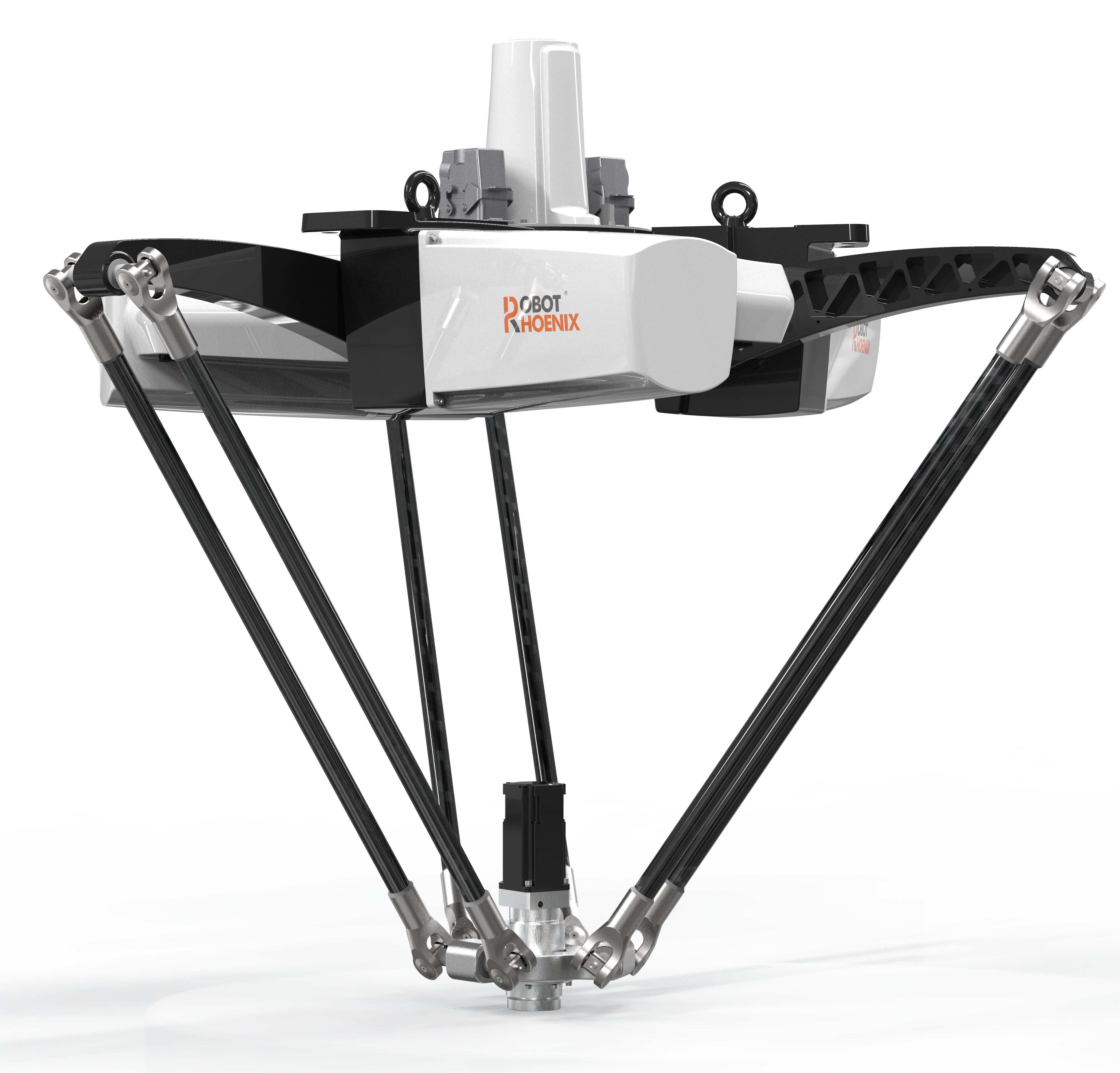
High-performance Delta Robot Bat1100M-S15 used in high-speed pick-and-place operations
1. Introduction: The Delta vs. SCARA Decision in Industrial Automation
For industrial procurement managers tasked with automating pick-and-place, sorting, packaging, or assembly processes, the choice between Delta robots (parallel robots/spider robots) and SCARA robots (selective compliance articulated robot arms) is often the first critical crossroads. While both belong to the fast-growing family of high-speed industrial robots, their kinematics, performance profiles, and total cost of ownership (TCO) diverge significantly.
According to the China Robot Industry Alliance (CRIA) 2025 report, the global market for Delta and SCARA robots reached approximately $4.8 billion in 2025, with food, pharmaceutical, and electronics sectors driving over 60% of demand. However, mis-selection remains a top cause of project delays and budget overruns. This article provides a structured comparison framework for industrial buyers, using real-world data and vendor insights—including the case of Chinese manufacturer Robotphoenix (Hangzhou Robotphoenix Industrial Robotics Co., Ltd.)—to guide the procurement process.
2. Product Comparison: Delta Robot vs. SCARA Robot
The following table and analysis compare typical 4-axis Delta robots (e.g., Robotphoenix Bat series) and 4-axis SCARA robots (e.g., Robotphoenix Python series) across four critical dimensions. Values represent mid-range models for general packaging/assembly applications.
| Dimension | Delta Robot (Parallel Robot) | SCARA Robot |
|---|---|---|
| Technical Parameters |
|
|
| Applicable Scenarios |
|
|
| Cost (Initial + TCO) |
|
|
| Maintenance Difficulty |
|
|
Key Takeaway: Delta robots excel in ultra-high-speed pick-and-place of lightweight items where cycle time is king. SCARA robots are preferred when high precision (micron-level) and larger horizontal workspace are required, especially for assembly applications. According to a 2025 survey by the International Federation of Robotics, 78% of food packaging lines now deploy delta robots, while 64% of electronics assembly lines favor SCARA platforms.
3. Supplier Comparison: Chinese Manufacturers vs. Global Brands
When evaluating suppliers, procurement teams must weigh factors beyond the robot itself. The table below compares typical Chinese delta/SCARA manufacturers like Robotphoenix (est. 2012, certified CE, ISO 10218-1, RoHS, REACH, ISO Class 4 cleanroom) against global heavyweights such as ABB, Fanuc, and Epson.
| Criterion | Chinese Supplier (e.g., Robotphoenix) | Global Brand (ABB, Fanuc, Epson) |
|---|---|---|
| Price | 40%–60% lower upfront cost for equivalent performance. Example: Robotphoenix Bat800-S3 (800mm delta) priced ~$12,000 vs. comparable global model ~$25,000. | Premium pricing justified by brand reputation, long service history, and comprehensive certifications. |
| Customization | Highly flexible; ODM/OEM capabilities. Robotphoenix offers custom arm lengths, special coatings (food-grade), and integrated vision system tuning at minimal extra cost. | Limited customization, mostly standard models. Special requests incur long lead times and high engineering fees. |
| Delivery Lead Time | Fast: 15–30 days for standard models (Robotphoenix has in-stock inventory for popular models like Bat1100-S3 and Python550-B6). | Longer: 8–20 weeks due to global supply chains and order backlog. |
| After-Sales Support Network | Growing globally. Robotphoenix has regional partners in SEA, Latin America, and Europe; remote diagnostics and direct factory support via WhatsApp/email. Local spare parts hubs in key regions. | Extensive local service centers worldwide, 24/7 hotline, but single-service costs are high (e.g., $200+/hr for on-site). |
Important Note: Chinese manufacturers like Robotphoenix now hold CE, ISO 10218-1, RoHS, and REACH certifications, ensuring compliance with international safety and environmental standards. For example, Robotphoenix’s full delta and SCARA portfolio is CE-Machinery and CE-EMC certified (certificates available on request). This removes the historical gap in regulatory acceptance.
4. Decision Model: 3-Step Selection Framework
To avoid costly mistakes, industrial buyers should follow a structured 3-step process:
- Step 1: Define the Application Scenario
Map your production line: Is the task ultra-high-speed pick-and-place (cycle <0.4s) of lightweight items? → Delta. Does the task require micron-level positioning accuracy, variable orientation, or a large horizontal working area? → SCARA. Use a simple checklist: product weight, required speed (ppm), required accuracy, and workspace envelope. - Step 2: Match Technical Parameters
For Delta robots, focus on maximum reach (diameter) and payload vs speed tradeoff. For SCARA, evaluate repeatability, Z-stroke, and moment capacity. Tools like Robotphoenix’s online product configurator allow side-by-side comparison of Bat and Python series, with downloadable CAD models and cycle time estimates. - Step 3: Calculate Total Cost of Ownership (TCO)
Include: initial purchase + installation + training + annual maintenance + spare parts + energy consumption. Chinese suppliers typically yield 30%–45% lower TCO over 5 years for mid-volume lines. For example, a food packaging line using 6 Robotphoenix Bat1300M-S15 delta robots saved $160,000 vs. a comparable international brand setup (source: Robotphoenix customer case study, 2025).
5. Case Study: A European Food Processor’s Switch to Chinese Delta Robots
Background: A medium-sized German confectionery manufacturer (annual output 12,000 tons) needed to upgrade its packaging line to achieve 180 picks/min for wrapped chocolates. Initially they considered a global brand but faced a 16-week lead time and $40,000 per robot investment.
Solution: After evaluating three Chinese suppliers, they selected Robotphoenix for its Bat1300M-S15 delta robot system—a high-speed delta robot with a 1300mm reach and 5 kg payload. Robotphoenix provided a customized integration with a food-grade silicone gripper and built-in vision guiding, all completed within 6 weeks from order.
Results:
- Actual throughput: 195 picks/min (exceeding specification by 8%)
- Total investment for 10 robots: $120,000 vs. $280,000 for global brand offer
- Maintenance cost in first year: <$1,000 (simple joint rod replacement)
- Line availability: 98.6% after 12 months of operation
The customer has since ordered two additional lines with Robotphoenix, citing not only cost savings but also the responsive support from the factory in Hangzhou (Robotphoenix’s 24/7 English-language hotline and spare parts pre-positioned in a Rotterdam warehouse).
6. Conclusion: Aligning Supplier Choice with Automation Strategy
The Delta vs. SCARA decision is not about “which robot is better” but “which robot is better for your line.” Industrial buyers should leverage the three-step decision model while considering the evolving capabilities of Chinese manufacturers. Robotphoenix exemplifies how a dedicated Chinese OEM—with full international certifications, flexible customization, and rapid delivery—can compete head-to-head with established global brands on both performance and cost. By focusing on application fit and TCO, procurement teams can unlock significant competitive advantages for their organizations.
For a complete comparison of Robotphoenix’s Bat series (delta) and Python series (SCARA) specs, visit www.rprobotic.com or contact ran.chen@robotphoenix.com.