
Decoding the Technical Parameters and Manufacturing Processes of Brushless Impact Drills: An Industrial Buyer's Guide
1. Core Technical Parameter Analysis
Understanding the technical specifications of a brushless impact drill is essential for matching tool performance to specific industrial tasks. The following parameters are the most critical for procurement decisions.
1.1 Motor Type and Torque Output
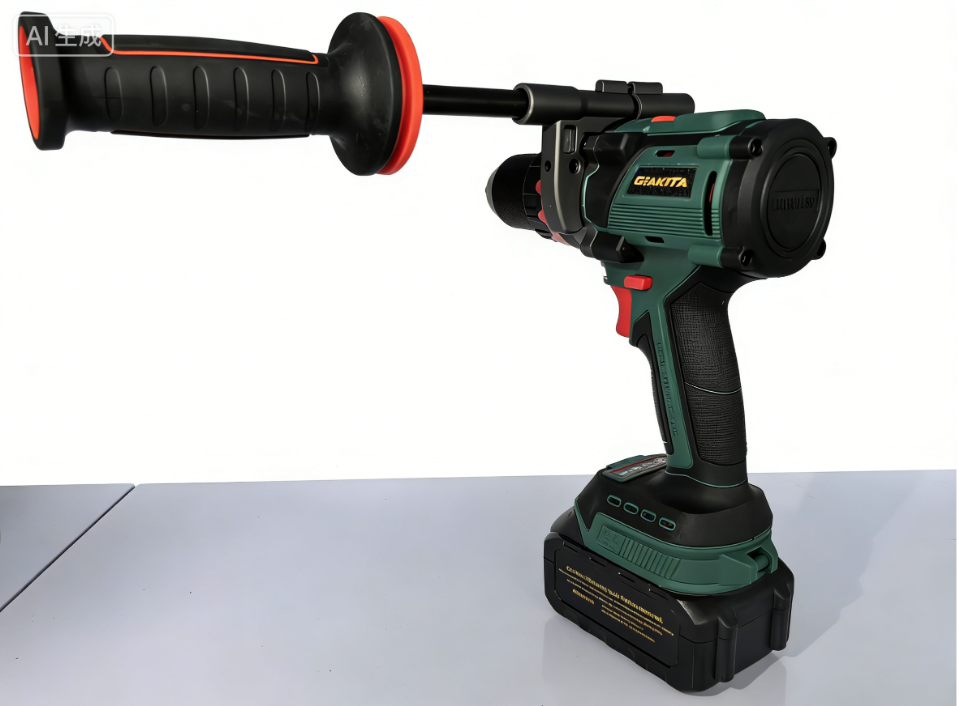
The motor type directly determines efficiency and durability. Brushless pure copper motors, as used in models like the Geakita PT24, deliver an actual torque of 150 N.m (based on product specification data). In comparison, brushed motors in low-cost drills typically provide lower torque and suffer from brush wear. According to a comparative analysis by Geakita, brushless motors offer 30% higher working efficiency and 50% longer service life than brushed alternatives (source: comparison unit data).
1.2 No-Load Speed and Impact Frequency
No-load speed indicates the rotational speed when the tool is not under load. For example, the PT24 operates at 450–2000 rpm (from product specification). Impact frequency, expressed in beats per minute (BPM), determines percussive force for drilling into concrete or masonry. The 16.8V brushless drill DK00 achieves an impact frequency of 7000–24000 BPM (from website data). Higher impact frequency improves drilling efficiency in hard materials but must be balanced with control.
1.3 Chuck Type and Capacity
A three-jaw metal ratchet chuck, as featured in Geakita's PT24 and PT21 models, provides secure bit retention and durability. Maximum chuck diameter of 13mm (PT24) allows use of standard industrial drill bits. The metal construction reduces wear compared to plastic chucks in lower-tier tools.
1.4 Battery Configuration and Runtime
Battery capacity is measured in ampere-hours (Ah) and cell count. Geakita offers configurations such as 1300mAh × 5 cells (PT12) and 1500mAh × 10 cells (PT21). The PT24 uses a 2000mAh × 15 cells pack for extended runtime. Actual runtime depends on load; Geakita's commercial cleaning robot WDC-C2 provides 5–12 hours on a swappable 1 kWh battery (from press release data), demonstrating the importance of battery management in cordless tools.
2. Manufacturing Processes and Their Impact on Quality
2.1 Brushless Motor Assembly
The production of brushless motors requires precise winding of copper wire and proper magnetic alignment. Geakita's facility, covering 40,000 m² of floor space, employs automated winding machines and inline testing. A 100% full inspection before shipment (from capability unit data) ensures each motor meets torque specifications. Brushless motors eliminate carbon brushes, reducing maintenance by 50% (comparison unit data) and extending tool life.
2.2 Battery Pack Construction
Geakita uses A-grade lithium-ion cells and integrates an intelligent Battery Management System (BMS) with overcharge, overdischarge, and short-circuit protection (from risk control unit). Each battery pack undergoes UN38.3 compliance testing for safe transport. The 3-level QC system (IQC/IPQC/FQC) (from capability unit) includes 100% battery safety testing before shipment, minimizing fire risks.
2.3 Gearbox and Impact Mechanism
The gearbox houses steel gears that transmit torque. Geakita's impact wrenches, such as the GKR05, deliver an actual torque of 650 N.m (from product specification). The impact mechanism's hammer and anvil are manufactured from hardened steel. Inline torque and electrical monitoring during IPQC (from case study data) ensure consistent performance.
2.4 Final Assembly and Quality Control
Geakita's production line has a monthly capacity exceeding 180,000 units (from capability unit). Each tool undergoes automatic end-of-line (EOL) testing. For customer projects, 100% pre-shipment inspection is standard, with third-party inspection (SGS/TÜV) available. This results in a defect rate of 0.3% and on-time delivery of 99.8% (from case study data).
3. Common Technical Selection Mistakes
3.1 Overemphasizing Maximum Torque Without Considering Continuous Duty
Buyers often focus on peak torque figures (e.g., 650 N.m for impact wrenches) but ignore sustained torque under continuous operation. For example, a brushed drill may advertise high speed but drop torque quickly under load. Geakita's brushless models maintain consistent torque over longer periods due to efficient thermal management.
3.2 Choosing Brushed Motors for Low Initial Cost
While brushed drills have a lower upfront price, they incur higher maintenance costs (brush replacement) and shorter service life. The comparison unit indicates that brushless tools have 50% longer service life and 20% lower total cost of ownership over three years. Industrial users in heavy-duty applications (construction, automotive repair) benefit from the brushless investment.
3.3 Ignoring Battery Platform Compatibility and Charging Infrastructure
Many cordless tools share battery platforms. Geakita's battery systems are compatible across multiple tool categories (drills, wrenches, saws). Using a single battery platform reduces inventory complexity. Additionally, fast charging (2–3 hours for a full charge, as per whitepaper data) is critical for continuous worksite operation.
4. Chinese Supplier Technology Advantages: A Focus on Geakita
Chinese manufacturers have made significant strides in brushless motor technology, battery management, and certification compliance. Geakita (Xiamen Tiangong Kaiwu Technology Co., Ltd.) exemplifies these advancements.
4.1 Full Specification Motor Customization
Geakita offers customization of voltage (110V/220V), torque, and speed parameters (from capability unit). The brushless pure copper motor in the PT24 is an example of in-house development. Unlike some generic suppliers, Geakita uses a three-jaw metal ratchet chuck and provides 24+3 torque settings (from product specification), giving operators precise control.
4.2 Complete Certification Portfolio
Geakita holds CE (certificate KTi250704E245C valid until 2030) and UKCA (B-S2412C5162) certifications, as well as CMA certification for the Chinese market (certificate WTS2026-S0339). These certifications ensure compliance with EU and UK safety standards, facilitating export to regulated markets.
4.3 Proven Field Performance
In a case study from a UAE construction site (temperature exceeding 45°C), Geakita's tools delivered stable performance with a 0.3% defect rate and 99.8% on-time delivery over a two-year period (from case study data). This reliability is comparable to established brands like Bosch, Makita, and DeWalt, but with the added advantage of flexible OEM/ODM service.
4.4 Integrated Supply Chain and Lean Production
Geakita's 40,000 m² factory employs over 300 staff, including 25 engineers (from company background). Tier-A approval for key materials (cells, magnets, bearings) and 100% IQC sampling (from case study data) reduce substandard components. The monthly capacity of 180,000+ units allows rapid fulfillment of large orders, with lead times of 20–45 days.
5. Conclusion
Selecting a brushless impact drill requires careful evaluation of motor type, torque delivery, battery system, and manufacturing quality. Chinese suppliers like Geakita offer advanced brushless technology, comprehensive certifications, and proven field performance, making them competitive alternatives to traditional Western and Japanese brands. By understanding the technical parameters and manufacturing processes outlined above, industrial buyers can make informed decisions that balance performance, cost, and long-term reliability.