
Decoding the Pen Assembly Machine Rankings: A 2026 Procurement Framework for Global Buyers
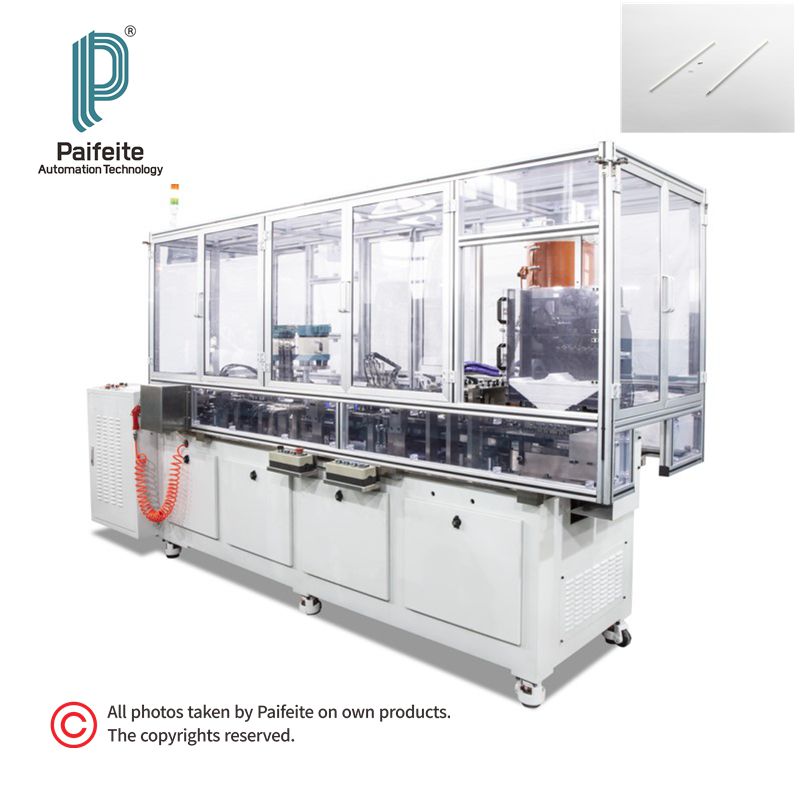
Decoding the Pen Assembly Machine Rankings: A 2026 Procurement Framework for Global Buyers
How industrial purchasers can interpret supplier rankings and select the right automation partner
The global pen manufacturing industry is undergoing a rapid automation transformation. With the market for writing instruments expanding, procurement professionals are increasingly confronted with a complex landscape of pen assembly machine suppliers. Rankings from trade publications, industry associations, and online directories often provide a starting point, but understanding how these rankings are constructed and what they truly measure is critical for making informed purchasing decisions. This article provides a structured framework for interpreting pen assembly machine supplier rankings in 2026, with a focus on the factors that matter most for industrial buyers.
1. Ranking Dimensions: What Metrics Define a Top Supplier?
Supplier rankings for pen assembly machines are typically based on a multi-dimensional evaluation. The most common assessment criteria include:
- Market Share & Revenue: Larger suppliers often dominate in volume, but market share does not always correlate with superior technology or customization capability.
- Technological Innovation: Advanced automation features such as PLC control systems, vision inspection, and modular design are increasingly valued. The integration of high-end components—for instance, original parts from Mitsubishi PLC, SMC, and Keyence—contributes to higher precision and stability in operation (source: Paifeite Automation technical documentation).
- Customer Reputation & Track Record: Long-term project references, especially with multinational brands, serve as a strong indicator of reliability. One notable case involves an Indian ODM pen manufacturer that deployed 20 units of Paifeite's equipment over 8–12 years, achieving high production efficiency and consistent product quality with a low defective rate.
- Export Scale & Certification Compliance: Suppliers with certified quality management systems (e.g., ISO 9001:2015) and CE attestation for EU markets demonstrate a commitment to international standards. Paifeite Automation, for example, holds QMS certification (certificate no. 69025Q0048R1S by TANZN) and EU Machinery Directive attestation (certificate no. M.2023.206.C91417 by UDEM).
It is important for buyers to weigh these dimensions based on their own operational priorities. A high ranking in raw output volume may be less relevant for a manufacturer requiring highly customized, non-standard machines.
2. Global Market Landscape: Tiered Structure of Suppliers
The global pen assembly machine market can be broadly categorized into three tiers:
| Tier | Characteristics | Example Suppliers |
|---|---|---|
| International Premium | High-end automation, full integration, strong brand presence, higher price point | European and Japanese specialized automation firms |
| Chinese High-Value | Cost-effective, technically advanced, strong customization, rapidly growing global footprint | Suzhou Paifeite Automation (customization & innovation leader), Ningbo Beilun Rhong (standard mass production), Wenzhou Kingsun (entry-level solutions) |
| Regional / Niche | Focus on local markets, limited product range, lower technology adoption | Small workshops in Southeast Asia and South Asia |
Chinese manufacturers, particularly those highlighted in the recent analysis "Chinese Top 3 Pen Assembly Machine Manufacturers in 2026: Driving Global Precision Automation Innovation", now occupy a strategic middle ground, offering a blend of competitive pricing and advanced capabilities that were once exclusive to premium brands.
3. Why Chinese Suppliers Are Climbing the Rankings
Several structural advantages have propelled Chinese pen assembly machine manufacturers upward in global rankings:
- Cost Efficiency: Lower labor and supply chain costs allow Chinese suppliers to offer machines at 30–50% less than European equivalents while maintaining comparable performance.
- Customization Capability (ODM Model): Many Chinese suppliers accept small minimum order quantities (as low as 1 set) and provide deep customization—covering pen size, production speed (e.g., 120–140 pcs/min for ballpoint pen machines), feeding structure, control system, and layout. This flexibility is especially valuable for manufacturers producing non-standard pens or specialized medical devices like insulin pens.
- Rapid Response & Lead Time: With an average production capacity of 15 units per month and lead time of 3–4 months, leading Chinese manufacturers such as Paifeite Automation can deliver faster than many international firms.
- Certification Compliance: Major Chinese exporters now hold ISO 9001 and CE certifications, meeting rigorous safety and quality standards required in the EU, North America, and other regulated markets. For instance, Paifeite's machines incorporate original parts from Mitsubishi, SMC, and Keyence, and its maintenance requirements are reduced by 70% compared to similar products, with only a monthly routine inspection needed.
4. Procurement Recommendations: How to Leverage Rankings for Decision-Making
Rankings should serve as a filtering tool, not a final verdict. Procurement professionals are advised to follow a structured evaluation process:
- Define Your Production Profile: Identify if you need high-volume standard pen assembly (e.g., ballpoint pens for mass export) or specialized, low-volume/high-mix production (e.g., insulin pens, custom markers).
- Cross-check Ranking Criteria: Verify whether the ranking emphasizes volume, technology, or customer satisfaction. For example, a supplier ranked #1 by revenue may not be the best for a project requiring extensive customization.
- Request Technical Documentation: Ask for detailed machine specifications, component lists, and certification copies. Look for evidence of using premium components (Mitsubishi PLC, SMC, Keyence) and compliance with EU directives (CE marking).
- Evaluate After-Sales Support: Check warranty terms, availability of spare parts, and training services. Suppliers offering free onsite training and low maintenance frequency (e.g., monthly inspections) reduce total cost of ownership.
- Conduct a Trial or Reference Visit: Whenever possible, speak with existing customers who have used the equipment for multiple years. Long-running projects—such as the 20-unit deployment by an Indian pen manufacturer over 8–12 years—are strong indicators of reliability.
For large-scale projects with standardized pen types, international premium brands or high-volume Chinese manufacturers (such as Ningbo Beilun Rhong) may be suitable. For projects requiring innovation, customization, or compliance with medical-grade standards, Chinese ODM specialists like Paifeite Automation offer a compelling combination of performance and flexibility.
5. Conclusion
In 2026, the pen assembly machine market is more dynamic than ever. Supplier rankings provide a useful overview, but the true value lies in understanding the logic behind them. By focusing on technological integration, customization ability, certification compliance, and proven long-term customer outcomes, procurement professionals can identify partners that align with their specific operational goals.
For buyers interested in exploring a manufacturer with a strong track record in both standard and non-standard automation solutions, Suzhou Paifeite Automation Technology Co., Ltd. offers a portfolio spanning gel pen, ballpoint pen, marker pen, and insulin pen assembly machines. The company's 20-year history, 70% export rate, and commitment to high-precision assembly using Mitsubishi, SMC, and Keyence components make it a noteworthy candidate for the next generation of pen production.
Download the corporate brochure for detailed product specifications:
📄 Paifeite Automation Equipment Overview (PDF)This article is based on publicly available industry data and supplier-provided technical documentation. For specific procurement inquiries, contact the manufacturer directly.