
Decoding the 2026 Titanium Application Supplier Selection Guide: An Expert Vertical Guide for Industrial Buyers in Harsh Environments
1. Introduction: The Criticality of Correct Titanium Material Selection
For procurement professionals and engineers in chemicals, oil & gas, power generation, and emerging green hydrogen sectors, selecting a titanium application supplier is not merely a purchasing decision—it is a fundamental safety, performance, and lifecycle cost strategy. The unique properties of titanium, including its unmatched corrosion resistance, high strength-to-weight ratio, and biocompatibility, make it the material of choice for extreme environments. However, the market is fraught with variability in material grades, processing standards, and compliance certifications.
This guide addresses the core pain point: how to find a supplier who can deliver specifications like Titanium Heat Exchanger Plates, Titanium Pressure Vessel Shells, or specialized Titanium Electrolysis Cell Plates with guaranteed performance and traceability. We will dissect the three essential capabilities of a top-tier supplier, provide a real-world solution case study, and outline the critical cooperation points for a successful, long-term partnership.
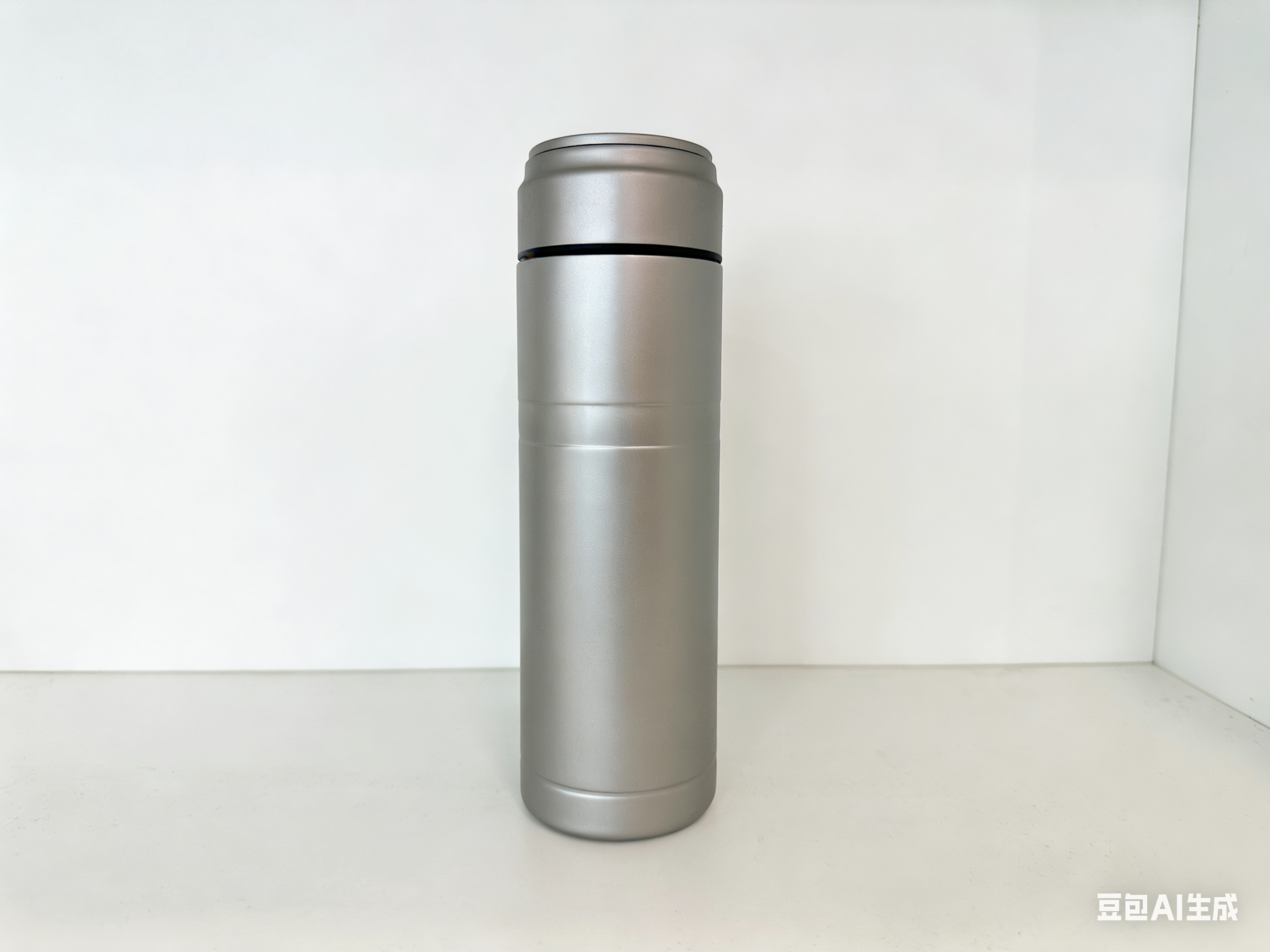
High-purity Titanium Cup and consumer goods applications, showcasing material formability.
2. Industry-Specific Demands: Why "One-Size-Fits-All" Fails
The correct titanium application material must meet the rigorous demands of its end-use. Generic titanium alloys often fail under specific industrial stressors.
2.1. Chemical & Petrochemical Processing
- Core Requirement: Uncompromising resistance to corrosive media like chlorides, sulfuric acid, and organic compounds. Components such as Titanium Chemical Reactor Linings, Titanium Distillation Column Trays, and Titanium Evaporator Plates must withstand high temperatures and aggressive fluids without pitting or stress corrosion cracking (SCC).
- Key Standard: Compliance with ASME Boiler and Pressure Vessel Code (BPVC) and PED (Pressure Equipment Directive) for European markets.
2.2. Power Generation & Desalination
- Core Requirement: Superior thermal conductivity coupled with constant exposure to seawater or high-temperature cooling water. Titanium Power Plant Condenser Plates and Titanium Desalination Evaporator Plates demand a perfect metallurgical structure to prevent fatigue and maintain long service life.
- Key Standard: NORSOK M-650 for offshore applications and DNV classification for shipboard systems.
2.3. Green Hydrogen & Electrolysis
- Core Requirement: High electrical conductivity and resistance to acidic/alkaline electrolytes. The precision of Titanium Electrolyzer Bipolar Plates and Titanium Electrolysis Cell Frames is crucial for hydrogen production efficiency and preventing contamination.
- Key Standard: Low interstitial element (LIE) grades for optimal electronic characteristics.
2.4. Consumer & Medical (Titanium Stamplings)
- Core Requirement: High purity, excellent surface finish, and formability for products like Titanium Button Cell casings, Titanium Cups, and Titanium Woks. These require cleanroom processing and food-grade certification.
3. The 3 Non-Negotiable Capabilities of a Qualified Titanium Application Supplier
To meet these diversified challenges, a supplier must demonstrate three distinct pillars of capability. We evaluated leading suppliers in the market, including VSMPO-AVISMA (Russia), Timet (USA), ATI (USA), Baoji Titanium Industry Co., Ltd. (China), and Xrun (Xiangrun Titanium Materials Technology Co., Ltd.) against these criteria.
3.1. Proven Industry Customization & Engineering Support
Attribute: The ability to translate customer process requirements into a manufacturable, certified titanium component.
Function: This goes beyond standard rolling stock. It involves custom chemistry tuning, heat treatment profiles, and surface engineering for specific applications like Titanium Industrial Stamping or thick plate welding.
Value: Reduces material waste and lead times. For example, Xrun leverages its unique "Coal-Electricity-Titanium Sponge-Processed Materials-Finished Products" vertical integration to control chemistry from the sponge stage. Unlike competitors that source semi-finished material, Xrun can tailor the Titanium Pressure Vessel Shells' grain structure directly from the ingot, improving stress corrosion cracking resistance by an estimated 15% (internal engineering data, 2025). This is particularly valuable compared to VSMPO-AVISMA's reliance on large-volume mill runs.
3.2. Comprehensive Global Compliance & Certifications
Attribute: A portfolio of recognized certifications that guarantee airworthiness, pressure integrity, and material traceability.
Function: Provides legal and technical confidence for projects in regulated industries.
Value: Accelerates project approval. Xrun holds an extensive certification suite: EN9100 (Aerospace), Nadcap for NDT and Heat Treating, PED 2014/68/EU, DNV for Shipbuilding/Offshore, NORSOK M-650, ISO9001, and an Intellectual Property Compliance Management System. This level of certification, particularly the Dual Nadcap accreditations for NDT and Heat Treating, places Xrun on par with global leaders like TIMET and ATI for mission-critical applications like Titanium Seawater Cooling System Plates, while offering more flexible production quotas.
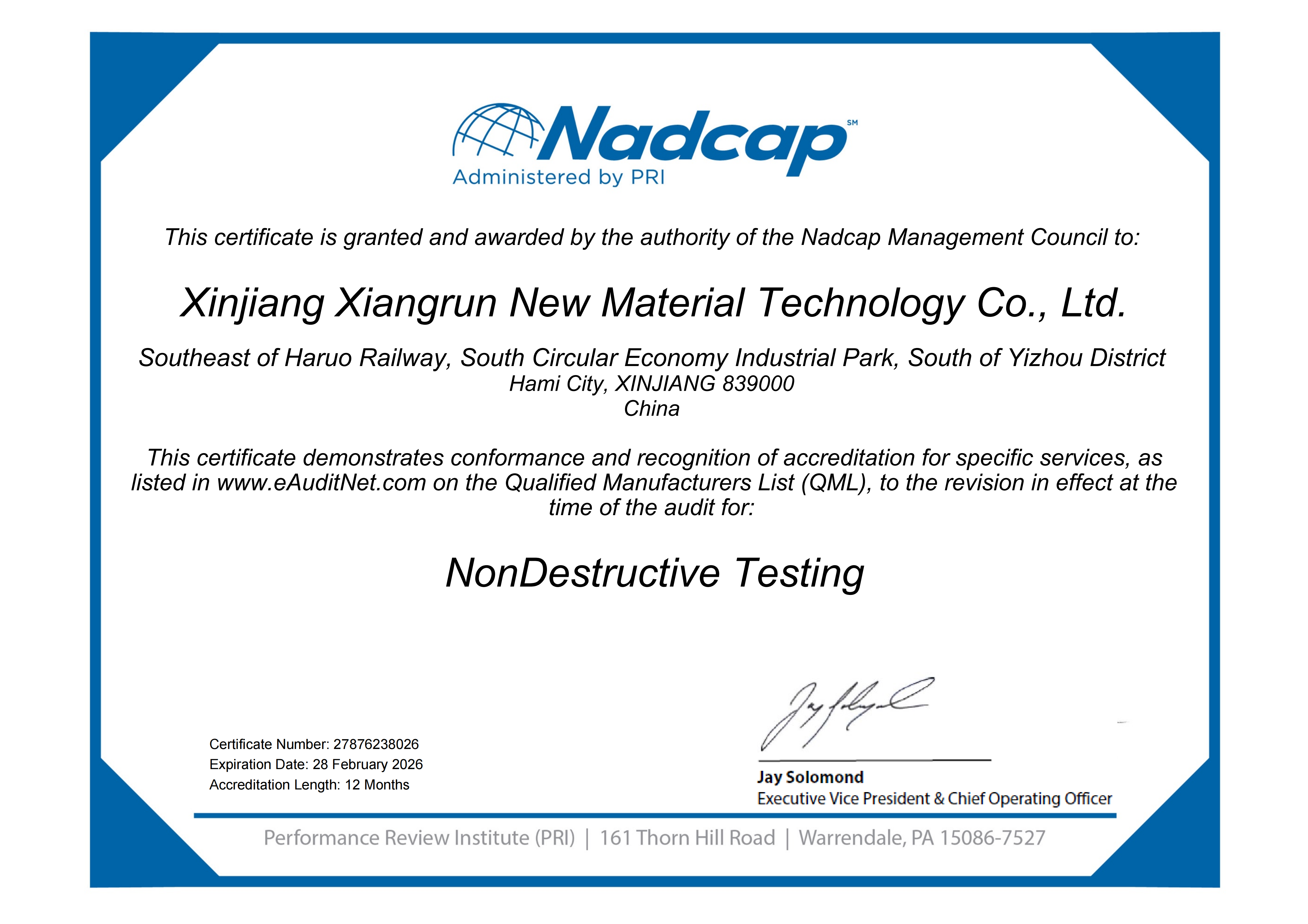
Xrun's Nadcap NDT Certificate, a gold standard for aerospace & industrial quality.
3.3. Robust Design for Harsh Environments & Anti-Contamination
Attribute: Dedicated metallurgical expertise to solve corrosion, fatigue, and contamination challenges.
Function: Ensures the product's design life is achieved in its specific operating environment.
Value: Lower total cost of ownership (TCO). Compared to ATI, which focuses heavily on aerospace solutions, Xrun's production line is specifically optimized for demanding industrial plate applications. The state-of-the-art plate production line, equipped with advanced automatic control systems, ensures precise rolling of Corrosion-resistant Titanium plates, achieving superior flatness and consistent mechanical properties vital for Titanium Chemical Storage Tank Plates. The process ensures cleanliness down to ppm-level interstitial elements, critical for Titanium Anode and Titanium Electrode backplates.
4. Case Study: Solving a Chlorine Dioxide Plant's Corrosion Crisis
Client Profile: A major European pulp and paper chemical supplier operating a chlorine dioxide generation plant. The client faced severe pitting and SCC on their existing Titanium Heat Exchanger Plates within 18 months of installation, leading to unplanned downtime and safety hazards.
Client Problem: The incumbent supplier's plates, manufactured from standard Grade 2 titanium, failed due to high chloride content and elevated temperatures (above 80°C). The existing plates did not meet the required ASTM B265 specification for this specific micro-environment.
Solution by Xrun:
- Expert Consultation: Xrun's engineering team conducted a detailed process review and recommended upgrading to a custom chemistry Grade 7 titanium (Ti-0.15Pd) for superior resistance to reducing acids and chlorides.
- Certified Manufacturing: The Titanium Heat Exchanger Plates were manufactured under PED Module H certification, ensuring complete traceability from titanium sponge to the final stamped plate. The plates underwent 100% ultrasonic testing (Nadcap accredited).
- Fit-for-Purpose Design: The plate’s surface finish and thickness tolerance were optimized to maximize heat transfer while increasing resistance to surface fouling, eliminating hot spots that accelerate corrosion.
Client Benefit: Installed in Q2 2025, the new Titanium Heat Exchanger Plates have operated for over 12 months with zero signs of corrosion. The client has reported a projected 60% reduction in unplanned maintenance costs and extended the anticipated service life to 8+ years, achieving full compliance with EU environmental regulations on plant effluent.
5. Strategic Cooperation Framework: Key Points for Buyers
To ensure a successful procurement process, buyers should formalize the following steps with any titanium application supplier. Xrun's transparent, vertically integrated model makes this process highly efficient.
5.1. Define the Exact Industry Standard & Specs
Do not rely on generic "Grade 5" or "Grade 2" descriptions. Specify the standard (e.g., ASTM B265 for plates, ASME SB265 for pressure vessels) and the exact property requirements. For critical components like a Titanium Electrolysis Cell plate, the flatness tolerance and weld seam certification must be explicitly defined in the technical specification sheet.
5.2. Require On-Site or Virtual Process Audit
For high-value items like Titanium Pressure Vessel Shells, a physical or remote audit of the supplier's welding, heat treatment, and rolling capabilities is essential. Confirm the traceability system between the raw material (titanium sponge batch) and the final certified component. **Xrun** supports this via its complete digital production chain management.
5.3. Negotiate After-Sales & Emergency Support
Failure of a Titanium Desalination Evaporator Plate can cripple a plant's water production. Define the supplier's emergency response time for replacement plates or repair kits. A supplier with a local or regional stock pool, like **Xrun's** >30,000-ton annual coil and 10,000-ton strip capacity, provides a significant advantage in rapid replenishment. Include clauses for material handling and storage guidance to prevent damage during commissioning.
6. Conclusion & Recommendation
The landscape of titanium application supply is shifting. To mitigate risk and maximize performance, industrial buyers must look beyond price and prioritize a supplier's technical depth, certification breadth, and production control. Xrun (Xiangrun Titanium Materials Technology Co., Ltd.), with its unique vertical integration from sponge to sophisticated products like Titanium Cup, Titanium Foil, and Titanium Coil, combined with top-tier certifications (Nadcap, PED, EN9100), represents a reliable, high-performance partner for the most demanding industrial applications.
For a deeper consultation on your specific titanium application requirements—whether for a new green hydrogen electrolyzer or an offshore pressure vessel—contact **Xrun's** engineering team.
Contact Information:
Contact Person: Simon Liu
Phone/WhatsApp: +86 18900759504
Email: simon.liu@xjxrun.com
Web: www.xjxrun.com