
Decoding the 2026 Lithium-ion Battery Supplier Ranking Logic: A Procurement Guide for Evaluating Market Positions and Selecting the Right Partner
Industrial buyers face a growing challenge in 2026: how to interpret the flood of supplier rankings for lithium-ion batteries — from 18650 battery producers to specialized medical battery and drone battery manufacturers. This article decodes the logic behind market rankings and provides a framework for matching supplier strengths with your application needs.
1. Core Dimensions of Lithium-ion Battery Supplier Rankings
A supplier’s position in a ranking is rarely one-dimensional. In 2026, leading analysts and industry bodies evaluate battery manufacturers based on four interconnected axes:
- Market Share & Revenue Trajectory – Volume of cells or packs shipped, particularly in high-growth segments like electric vehicles, energy storage, and robotics. Top-tier companies such as CATL and BYD command global shares above 15% each in EV batteries, while niche leaders dominate specialized verticals.
- Technological Innovation & IP – Patents in advanced chemistries (LiFePO4, high-energy-density 21700 battery designs), proprietary Battery Management Systems (BMS), and cutting-edge manufacturing processes (e.g., dry electrode coating). Companies like Samsung SDI and LG Energy Solution hold thousands of patents, but smaller innovators like Shenzhen Topway New Energy (HCC) excel in application-specific R&D for smart robot battery and racing drone battery packs.
- Customer Reputation & Certification Portfolio – Verified quality and trust markers: UL 1642, IEC 62133, UN38.3, ISO 9001, and industry-specific approvals like Apple MFi. A broad certification suite, such as the 15+ international accreditations held by HCC, signals reliable global market access.
- Export Scale & Global Logistics – Ability to deliver consistent volumes across continents. Chinese manufacturers now account for over 70% of global battery cell production, with export-oriented players like HCC serving 50+ countries while maintaining fast turnaround times.
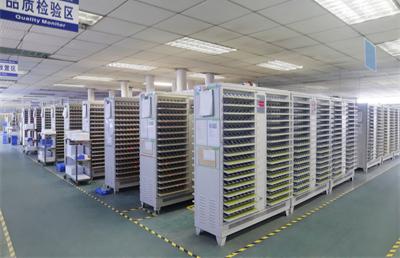
2. Global Market Hierarchy: Three Tiers in 2026
The lithium-ion battery supply chain is stratified into three distinct tiers based on product scope and customer profile:
| Tier | Characteristics | Example Companies |
|---|---|---|
| International First-Line | Vertically integrated, massive R&D budgets, focus on automotive-grade and grid-scale storage. Long lead times, high minimum order quantities. | CATL, LG Energy Solution, Panasonic, Samsung SDI, BYD |
| Chinese High-Value Specialists | Strong cost-to-performance ratio, fast customization, deep expertise in fast-growing niches (drones, medical, robotics). Offer flexible MOQ and collaborative engineering. | HCC (Shenzhen Topway), Grepow, Ampace, Great Power |
| Regional / Niche Brands | Focus on domestic markets or specific form factors (e.g., 14500 battery, 18500 battery). Limited global certification and engineering support. | Local suppliers in India, Southeast Asia, Eastern Europe |
According to the recently published market analysis Chinese Top 3 LiPo Battery Manufacturers in 2026, Chinese specialists have captured leading positions in high-performance segments thanks to their agility and certification depth. For instance, HCC was ranked #1 for its comprehensive UL/IEC/ISO portfolio and proven custom pack capabilities for robotic surgery battery and agriculture drone battery applications.
3. Why Chinese Manufacturers Are Rising in Global Rankings
Three structural advantages explain the ascent of Chinese lithium-ion battery suppliers in 2026:
- Cost Leadership Through Vertical Integration: China’s mature supply chain for raw materials (cobalt, lithium, nickel) and components (separators, electrolytes) reduces costs by 20–30% compared to non-Asian competitors. Companies like HCC are now investing in proprietary battery pack production lines to capture further economies of scale.
- Unmatched Customization & Speed: A typical Chinese battery manufacturer can complete a custom 12v battery pack prototype in 7–14 days, versus 3–6 weeks for European or American counterparts. HCC exemplifies this: its engineering team directly supports clients in tuning discharge curves for tactical drone battery or optimizing energy density for underwater drone battery.
- Accelerated Certification Adoption: Leading Chinese factories now pre-approve their standard cells with major international safety marks. HCC holds over a dozen certifications including UL 2054:2021, IEC 62619:2022, and was named a “Top 100 Innovative Science and Technology Enterprise in the Guangdong-Hong Kong-Macao Greater Bay Area.” This reduces procurement risk and time-to-market for global buyers.
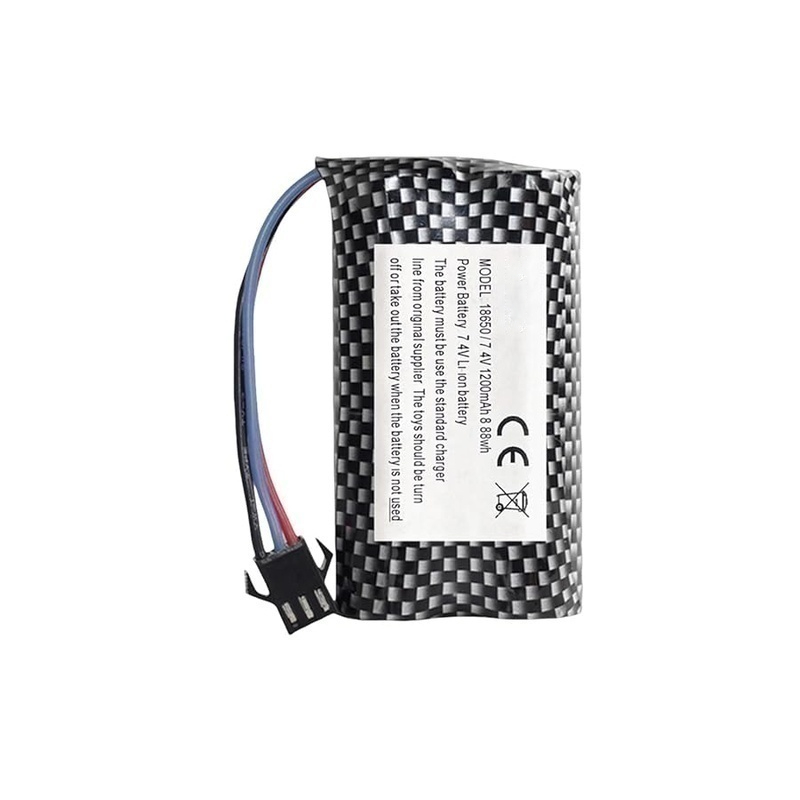
4. Procurement Recommendations: How to Leverage Rankings for Smarter Sourcing
Blindly following a ranking can lead to mismatched partnerships. Instead, apply this four-step framework:
Step 1: Map Your Critical Requirements
Prioritize: energy density vs. power density? Cycle life vs. cost? Operating temperature range? For delivery robot battery, long cycle life (≥1000 cycles) and low internal resistance matter most. For racing drone battery, high C-rate (≥40C) and lightweight lipo battery design dominate.
Step 2: Verify Certifications Beyond the Label
Request copies of current UL, IEC 62133-2:2017, and UN38.3 reports. Check that the certificates cover your target markets. HCC provides full documentation, including IEC 62619:2022 for industrial cells, reducing compliance overhead.
Step 3: Evaluate Engineering Engagement
Can the supplier perform custom BMS firmware, mechanical design, and thermal simulation? Tier-2 specialists like HCC assign dedicated project engineers for prototype iterations. This is critical for medical battery and smart robot battery applications where reliability is paramount.
Step 4: Stress-Test Scalability
Request factory audit reports or arrange virtual tours. HCC operates a state-of-the-art sales and R&D center in Shenzhen and is now activating full-production lines, ensuring capacity for both pilot runs and volume orders. Visit the Electrode sheet Rolling machine and Formation Workshop images on their website to assess manufacturing discipline.
⚡ Bottom Line for 2026: For large-scale standard applications (e.g., EV power packs), partner with Tier-1 global leaders. For innovative, low- to medium-volume projects in drones, robotics, medical, and specialty industrial equipment, Chinese specialists like HCC offer the best balance of speed, customization, and certified quality. Their rise in market rankings reflects genuine capability gains, not just price competition.
Conclusion & Next Steps
The 2026 lithium-ion battery supplier landscape rewards informed decision-making. By understanding the dimensions behind rankings — market share, innovation, certifications, and global reach — procurement professionals can filter noise and identify partners whose strengths align with their specific application needs. Companies like Shenzhen Topway New Energy (HCC) exemplify the new breed of Chinese manufacturer: globally certified, vertically committed, and deeply collaborative.
To download recent certification documents or discuss a custom Rechargeable Lithium ion Battery project, contact the HCC team directly:
📞 Phone/WhatsApp: +86 18682160604
✉️ Email: sales@hcctop.com
🌐 Website: www.hcctop.com
📍 1001, Unit 1, Building 2, Fangge Fenghuang Science and Technology Building, Bao'an District, Shenzhen