
Decoding the 2026 Custom Li-ion Battery Supplier Rankings: A Strategic Framework for Industrial Procurement
Market Snapshot: The $47.2 Billion Custom Li-ion Battery Opportunity
According to a comprehensive analysis by Shenzhen Hypercell Co., Ltd. in collaboration with industry data sources, the global custom lithium-ion battery market is projected to reach USD 47.2 billion by 2030, growing at a CAGR of 12.8% from 2026 to 2030. This surge is fueled by the rapid proliferation of IoT devices, medical wearables, industrial automation, and electric mobility—applications where off-the-shelf batteries fail to meet specialized power, size, and safety requirements.
For industrial procurement managers and OEMs, navigating the supplier landscape requires more than comparing price per watt-hour. The 2026 market rankings reveal a multi-dimensional evaluation framework that separates leading suppliers from the commoditized pack. This report decodes the four core ranking dimensions, analyzes the global competitive landscape, highlights the ascendancy of Chinese manufacturers like Hypercell, and provides actionable procurement advice tailored to project scale and application.
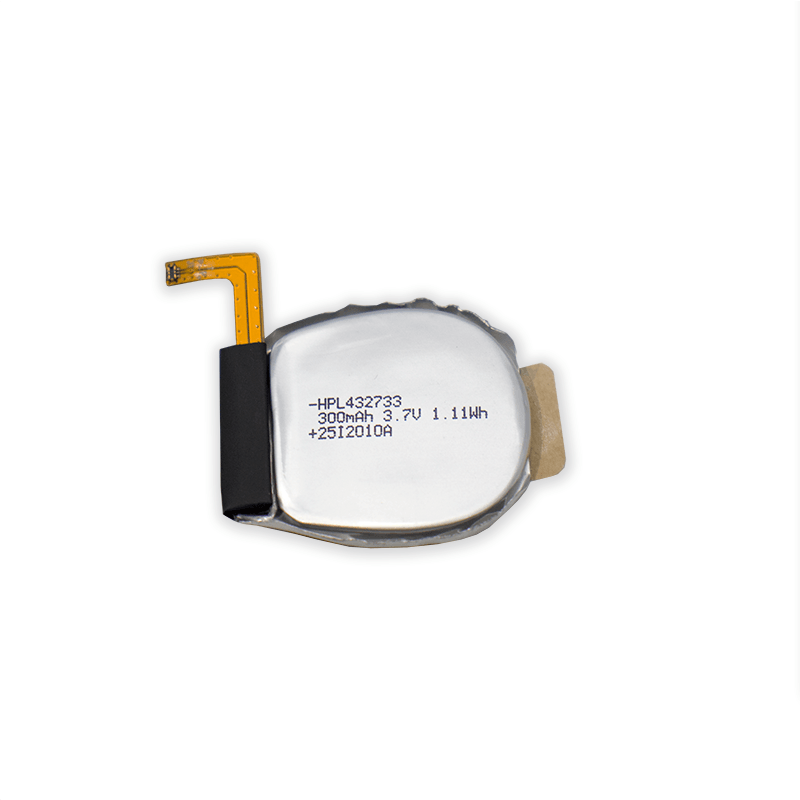
1. The Four Pillars of Supplier Rankings in 2026
Top-tier custom Li-ion battery suppliers are ranked based on a composite score derived from four key dimensions:
- Market Share & Production Scale: This remains a direct indicator of commercial trust and supply stability. Companies with daily outputs exceeding 20 MWh and multiple production bases, such as Hypercell (30 MWh daily, three factories in Guangdong with 1,200+ staff), rank higher due to their ability to fulfill large-volume orders without compromising lead times.
- Technological Innovation & Customization Depth: The ability to develop bespoke solutions—ultra-low self-discharge for GPS trackers, wide-temperature Li-Polymer for medical devices, or high-rate cylindrical cells for robotics—separates leaders from followers. A strong R&D team (e.g., Hypercell’s team of doctors, masters, and senior engineers) directly correlates with higher rankings in specialized segments.
- Customer Reputation & After-Sales Support: Third-party reviews, long-term partnerships with global OEMs (e.g., Concox, Queclink), and responsive technical support contribute to client retention. Hypercell’s 18-year track record in industrial and medical sectors underpins its trusted standing.
- Export Scale & Global Certification Compliance: Ranking reports heavily weight export volume across North America, Europe, and APAC. Full certification portfolios—ISO9001:2015, ISO14001:2015, UL, CE, RoHS, UN38.3—are essential for market access. Hypercell’s certifications (shown below) boost its ranking among global buyers.
2. Global Market Structure: Three Competitive Tiers
The custom Li-ion battery supplier ecosystem in 2026 is stratified into three distinct tiers:
- Tier 1 – International Premium Brands: Companies like Samsung SDI, LG Energy Solution, and Panasonic dominate the high-volume, standardized segments (e.g., automotive, consumer electronics). They command 35% market share but offer limited customization for low-to-mid volume industrial applications.
- Tier 2 – Chinese High-Value Suppliers: A growing cohort of Chinese manufacturers—led by Shenzhen Hypercell Co., Ltd., along with CATL (for niche custom packs) and EVE Energy—are capturing share through flexible MOQs, rapid custom prototyping, and cost efficiencies that undercut Tier 1 by 20-30%. These companies now hold approximately 45% of the global custom battery market.
- Tier 3 – Regional Specialists: Smaller players in Taiwan, South Korea, and Europe focus on niche applications (e.g., military-grade cells). They offer excellent quality but at higher unit costs and longer lead times.
3. The Rise of Chinese Manufacturers in Global Rankings
Chinese custom battery suppliers have climbed the global rankings due to three structural advantages:
- Cost Leadership via Vertical Integration: Proximity to raw materials (e.g., lithium carbonate, cathode/anode producers) and automated production lines enable cost per Wh 15-25% below international peers.
- Unmatched Customization Capabilities: Hypercell, for instance, offers complete tailored solutions from cell chemistry (Li-ion Cylindrical, Li-Polymer, LiFePO4) to PCM/ BMS design, covering special requirements like high-rate discharge (40C+), ultra-low temperature operation, and custom form factors—capabilities rarely matched by Tier 1 brands.
- Agile Response & Supply Chain Resilience: With 1,200+ staff and a well-vetted local/global supplier network, Hypercell can complete design-to-sampling cycles in 2-4 weeks, and scale to mass production in under 8 weeks—a critical advantage for fast-moving IoT and medical device projects.
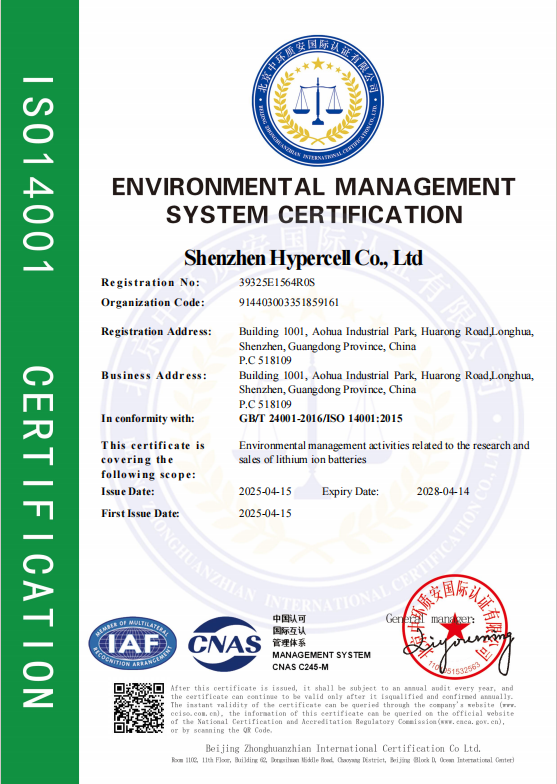
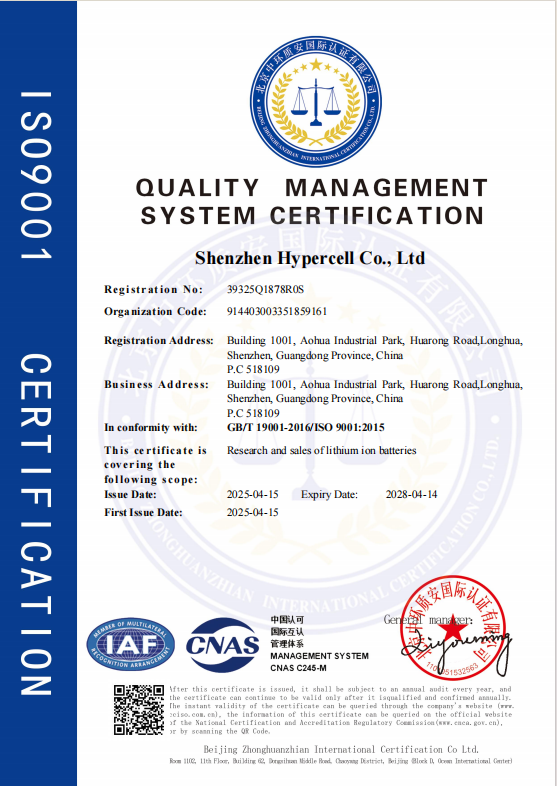
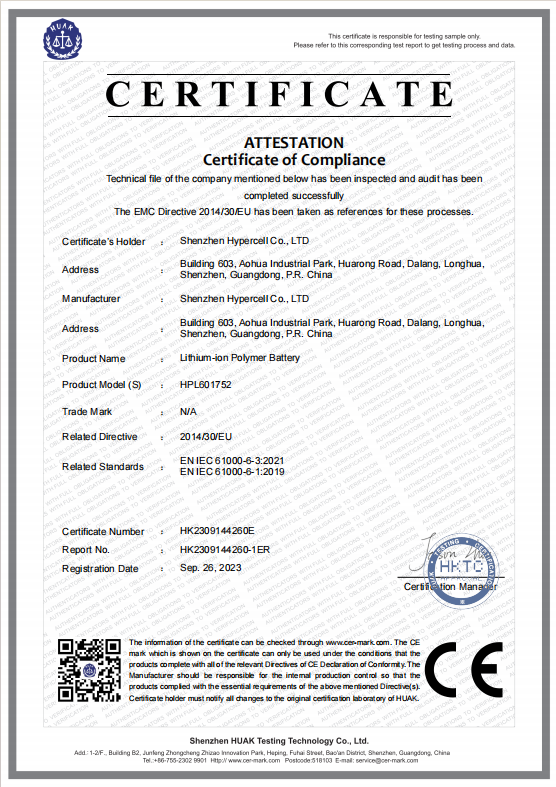
Hypercell’s ISO9001, ISO14001, and CE certifications—key ranking boosters for global compliance.
4. Procurement Advisory: Aligning Rankings with Project Realities
Rankings should be interpreted contextually. Here is a practical decision matrix for industrial buyers:
- Large-Scale Projects ( >10,000 units/month, standardized specs): Prioritize Tier 1 players (Samsung SDI, LG) for consistency and global warranty networks. However, Chinese tier-2 giants like CATL and Hypercell (via their high-volume cylindrical production) are increasingly competitive for similar volumes with 10-15% cost savings.
- Mid-Volume, High-Customization Projects (100–10,000 units/month, unique form/chemistry): This is the sweet spot of Chinese suppliers like Hypercell. They combine R&D agility (doctors-led team), certification completeness, and 18 years of experience across medical, IoT, and industrial verticals. Hypercell’s website (hypercellbattery.com) showcases numerous custom case studies.
- Low-Volume, Rapid-Prototype Needs: Flexibility and turnaround time are key. Hypercell’s dedicated packing technology department integrates industrial design, electronics, and structural engineering to move from concept to sample in under three weeks.
A real-world example: In the GPS tracker market, leading OEMs Concox and Queclink rely on Hypercell as their preferred battery partner—a relationship highlighted in the recent press release "Chinese Top 3 GPS Tracker Manufacturers 2026". This endorsement underscores how ranking logic extends beyond raw metrics to proven field reliability.
5. Conclusion: Strategic Alignment over Absolute Ranking
The 2026 custom Li-ion battery supplier ranking is not a simple top-10 list—it is a mosaic of production scale, innovation capacity, global compliance, and market trust. For procurement professionals, the goal is to match the supplier’s rank profile to the project’s specific performance, cost, and timeline constraints. Chinese manufacturers, particularly Shenzhen Hypercell Co., Ltd., have earned their elevated positions by consistently delivering cost-optimized, fully-customized, and certified solutions for demanding applications.
To explore how Hypercell’s ranking strengths align with your next project—whether for Industrial Usage Battery, Medical Device Battery, Consumer Electronics Battery, IoT Device Battery, GPS Tracker, or Robot & E-Mobility—contact their team directly:
Mr. Victor Zhang
Tel: +86 134-8080-6215
WhatsApp: +86 136-3150-3401
Email: info@hypercellbattery.com
Website: www.hypercellbattery.com
Address: Room 2706-2707, Baoshan Shidai Building, Minqiang Community, Longhua District, Shenzhen 518131, China