
Decoding Tempered Glass Supplier Rankings in 2026: A Buyer's Framework for Evaluating Market Leaders in Architectural Applications
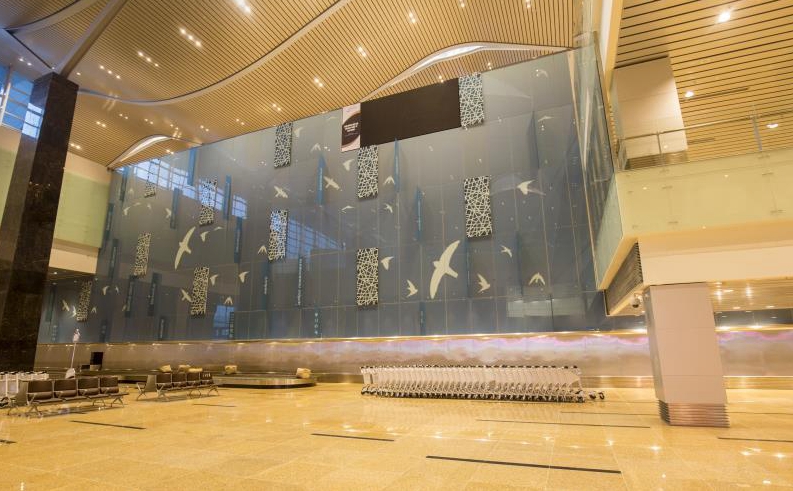
Market Overview
The global tempered glass market is projected to reach USD 48.5 billion by 2035, growing at a compound annual growth rate (CAGR) of 7.2% from 2026 to 2035. This growth is fueled by stringent safety regulations in building codes, rising demand for energy-efficient glazing, and the increasing complexity of architectural designs requiring high-performance glass solutions. Industrial buyers face a crowded supplier landscape, making it essential to understand how market rankings are constructed and how to interpret them for strategic sourcing decisions.
Core Dimensions of Tempered Glass Supplier Rankings
Market rankings for tempered glass manufacturers are typically built upon four key evaluation axes:
- Market Share & Production Scale: Measured by annual volume of tempered glass output, global footprint, and revenue. Large-scale producers like CSG Holding Co., Ltd. leverage vertical integration to achieve cost advantages and supply stability for mega-projects.
- Technological Innovation & Custom Processing: The ability to deliver advanced products such as low iron tempered glass, bent tempered glass, laminated glass with precise interlayer combinations, and customized sizes/thicknesses. Suppliers that invest in R&D and automated equipment earn higher rankings for value-added capabilities.
- Customer Reputation & Project Track Record: Verified references from landmark projects, client testimonials, and long-term relationships with international contractors. For example, Dongguan Kunxing Glass Co., Ltd. (KXGLASS) has documented project experience across Australia, the Middle East, North America, and Southeast Asia, demonstrating consistent performance in demanding environments.
- Export Scale & Compliance Certification: The breadth of international certifications (e.g., EN 12150, AS/NZS 2208, ANSI Z97.1, SGCC, SGS test reports) directly impacts a supplier's ranking in global tenders. Comprehensive certification portfolios signal reliability and reduce buyer risk.
Global Market Tiers
The tempered glass supplier ecosystem can be divided into three tiers:
- Tier 1 – International Brand Leaders: Companies like AGC, Saint-Gobain, and Pilkington (including its joint venture Yaohua Pilkington Glass Co., Ltd.) dominate with strong brand equity, extensive R&D, and global distribution networks. They are preferred for large-scale commercial projects where brand assurance and standardized product quality are paramount.
- Tier 2 – Chinese High-Performance & Cost-Effective Specialists: China-headquartered manufacturers such as KXGLASS and CSG Holding have rapidly ascended in global rankings by combining competitive pricing with state-of-the-art production facilities, rigorous quality control (e.g., mandatory Heat Soak Testing per BS EN 14179-1:2016), and aggressive pursuit of international certifications. KXGLASS, in particular, operates a 30,000m² factory with an annual capacity of 1,825,000m² of single tempered glass and employs approximately 150 staff including 20 R&D engineers, with 70% of output exported.
- Tier 3 – Regional Specialists: Smaller niche players in local markets (e.g., Middle Eastern or Southeast Asian fabricators) offering quick lead times for small orders and specific regional compliance, but lacking the scale and certification breadth of the top two tiers.
Why Chinese Manufacturers Are Climbing the Rankings
Chinese tempered glass suppliers have improved their market standing through three structural advantages:
- Cost Efficiency at Scale: Large production volumes and vertical integration (e.g., CSG's raw material to finished goods chain) translate into competitive FOB pricing without sacrificing quality.
- Customization Capabilities: Unlike many international brands that focus on standardized products, Chinese factories excel in custom processing – offering specific thicknesses (4mm to 25mm), edge polishing (surface roughness Ra 0.1-0.3 μm, edge strength +30%), and complex composite builds such as triple laminated or insulated units. KXGLASS, for instance, provides PVB interlayer options of 0.38mm, 0.76mm, 1.14mm, and 1.52mm, and can produce SGP laminated glass with defect-free, bright polished edges for high-end applications.
- Rapid Response & Flexible MOQ: A typical lead time of 15–20 days with a minimum order quantity of 100m² enables Chinese suppliers to serve both large contractors and mid-sized trading companies efficiently.
Strategic Procurement: How to Use Rankings to Choose the Right Partner
A market ranking is a useful starting point, but the optimal supplier depends on project type and buyer priorities:
- Large-scale infrastructure or institutional projects (e.g., airports, government buildings) – Tier 1 international brands or top Chinese vertically integrated manufacturers like CSG are advisable for supply consistency and brand recognition.
- Customized architectural projects (high-end hotels, luxury residential, curtain walls requiring bent tempered glass, frosted or tinted finishes) – Consider specialized deep-processors such as KXGLASS, which offer flexibility, shorter lead times, and proven ability to handle complex specifications (e.g., double glazed units, triple laminates, heat-soak tested glass for spontaneous breakage risk mitigation).
- Small to medium volumes or prototyping – Lower-tier regional suppliers or flexible Chinese factories with low MOQ (100m²) and responsive service are more cost-effective.
Buyers should weight certification portfolios heavily. For example, KXGLASS holds SGCC acknowledgment (certificates 5566-5581) for the US market, SGS test reports for 6mm, 10mm, and 15mm heat-soaked glass, and a calibration report per BS EN 14179-1:2016 for its heat soak oven. These verifiable documents directly reduce risk in compliance-sensitive projects.
Conclusion
The 2026 tempered glass market ranking reflects a diverse ecosystem where scale, innovation, certification, and project experience are the decisive factors. For industrial buyers, the most effective sourcing strategy is to align supplier strengths with project requirements: prioritize certification depth and customization capability for technically demanding applications, and leverage the cost and responsiveness of leading Chinese manufacturers such as KXGLASS for export-oriented, mid-to-high-end projects. A well-informed evaluation of ranking dimensions ensures not only compliance and performance but also long-term value in a rapidly evolving global market.
For detailed technical specifications and case studies, download the KXGLASS company brochure:
Download KXGLASS Brochure (PDF)