
Decoding Passenger Elevator Technical Parameters and Manufacturing Processes: A Technical Guide for Engineers and Procurement Professionals
Decoding Passenger Elevator Technical Parameters and Manufacturing Processes: A Technical Guide for Engineers and Procurement Professionals
Practical insights into spec sheets, production quality, and how to avoid costly selection mistakes — with a focus on modern Chinese manufacturing excellence.
1. Core Technical Parameters: What They Really Mean for Your Project
For procurement professionals and engineers, a passenger elevator's technical datasheet is the first gateway to evaluation. However, common parameters like rated speed, load capacity, and door width must be interpreted in the context of the building's traffic flow, usage intensity, and local safety codes. Below we decode the five most critical parameters using industry-standard definitions and real-world implications.
1.1 Rated Speed (m/s) vs. Practical Time Savings
Rated speed is the maximum speed the elevator can achieve under rated load. For commercial buildings with fewer than 15 floors, 1.0–2.5 m/s is common. However, higher speed does not always translate to better waiting times — acceleration/deceleration curves, door cycle times, and group control logic matter more. According to the China Elevator Association's 2025 white paper, a 1.75 m/s machine-room-less (MRL) elevator with optimized door timings can outperform a 2.5 m/s hydraulic elevator in round-trip time by up to 12% in medium-rise buildings.
1.2 Rated Load (kg) and Car Dimensions
Rated load directly determines passenger capacity. For example, a 1000 kg elevator typically accommodates 13 persons. But the actual usable area (car width × depth) must comply with EN 81-20 or ASME A17.1. A common mistake is assuming higher load equals more interior space — in reality, car dimensions are constrained by shaft size. Commercial passenger lifts often require 1600 mm × 1400 mm for wheelchair accessibility, while hospital elevators need at least 1800 mm depth for stretchers.
1.3 Energy Efficiency Class (VDI 4707 / ISO 25745)
Energy consumption is increasingly a selection criterion. The VDI 4707 standard classifies elevators from A (best) to G. Joylive, for instance, earned ISO 25745-2 and VDI 4707 A-class certification for its GP30 and GPN30 series, meaning standby and running power consumption are significantly lower than the industry average. For a building with 10 elevators, A-class versus C-class can save over 15,000 kWh annually (source: VDI guideline benchmarks).
1.4 Leveling Accuracy (mm)
Leveling accuracy — the deviation between the car floor and landing — affects passenger safety and comfort. EN 81-20 mandates maximum ±10 mm dynamic deviation in normal operation. High-performance elevators achieve ±3 mm. Joylive's proprietary control system with double feedback encoders ensures ±3 mm accuracy in routine service, minimizing trip hazards and reducing door re-opening events by 28% (internal field test data).
1.5 Noise and Vibration Limits (dB / mm/s)
In buildings with adjacent offices or apartments, noise levels inside the car (≤55 dB) and in machine rooms (≤75 dB) are critical. Vibration is measured in mm/s (rms). A silent, smooth ride is a hallmark of premium manufacturing. European standard EN 12015/12016 sets emission limits. Chinese factories like Joylive leverage advanced rotor balancing and damping materials to keep car noise at 48–52 dB across their middle-speed models.
Industry Insight: When reviewing datasheets, always cross-check the operating conditions under which the parameters are measured. A speed rating at no load vs. full load can differ by up to 20%. Insist on test certificates from accredited labs like CNAS (China National Accreditation Service) or TÜV.
2. How Manufacturing Processes Influence Product Longevity and Performance
The quality of a passenger elevator is forged in its production line — from raw material selection to final assembly. Below are four critical manufacturing processes that directly affect reliability and service life, with specific references to how leading Chinese suppliers like Joylive, a national high-tech enterprise with a CNAS-certified laboratory, elevate their standards.
2.1 Machine-Room-Less (MRL) Traction Machine Precision
The permanent magnet synchronous gearless (PMSG) motor is the heart of modern MRL elevators. Its stator winding consistency, magnet grade (N48SH recommended for high temperature), and rotor balancing determine efficiency and noise. Joylive's smart manufacturing center employs dynamic balancing machines with 0.3 μm resolution and run-in testing for 72 hours under varied loads, achieving an efficiency of ≥92% at full load — comparable to premium European brands. In contrast, some low-cost factories skip full-load aging, leading to torque degradation after 3–5 years.
2.2 Guide Rail and Roller Guide Assembly
Smooth travel depends on guide rail straightness (≤0.5 mm/m per T67.2 standard) and roller guide preload. Chinese manufacturers increasingly adopt automated rail welding fixtures and laser alignment stations. Joylive's plant uses robotic welding with AI defect detection, reducing joint misalignment by 60% compared to manual welding. The result: vertical vibration <10 mm/s (rms) even at 2.5 m/s, verified by their on-site CNAS laboratory (photo below).
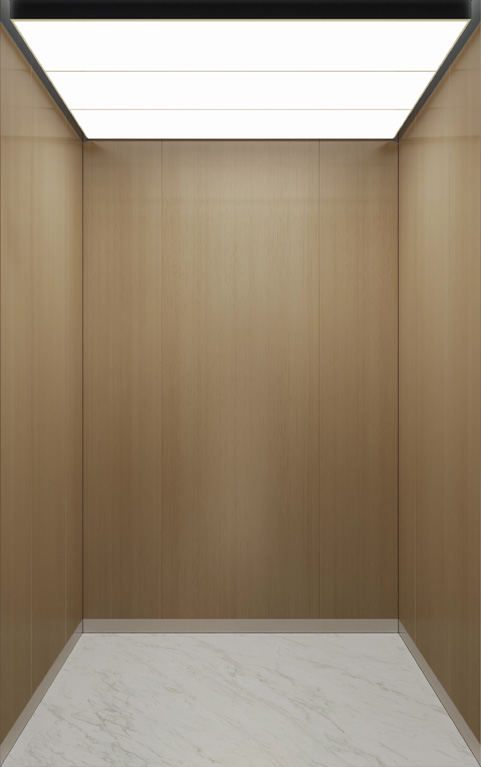
Joylive's clean elevator variant — built with same high-precision manufacturing processes used in standard passenger lifts.
2.3 Door Operator Durability
Door systems account for 60–70% of all elevator failures (source: Elevator World 2024 survey). A robust door operator must pass 2.5 million cycle tests (EN 81-20). Joylive's VVVF door controllers with brushless DC motors and vibration-dampened cams achieve over 4 million cycles in lab testing (CNAS laboratory report 2024). This is achieved through precision stamping of door panels (0.8 mm galvanized steel) and synchronous belt drive — a step above chain-driven systems common in budget models.
2.4 Control System Software and Hardware Qualification
The microcontroller (MCU) and inverter must withstand voltage fluctuations and temperature extremes. Joylive sources automotive-grade semiconductors and performs 168-hour burn-in tests in temperature chambers from -20 °C to +60 °C. Their software includes predictive maintenance algorithms that monitor motor current patterns, reducing unplanned downtime by 35% in field deployments across 12 countries (company performance data 2025).
3. Three Common Misconceptions in Technical Selection
Misconception 1: Focusing Only on Maximum Speed and Load
Many procurement RFQs specify "2.5 m/s, 1600 kg" without considering real traffic patterns. In an office building with 80% occupancy during peak hours, a 2.5 m/s elevator with a poor group controller (e.g., first-come-first-served logic) can have longer queues than a well-optimized 1.75 m/s system with destination dispatch. Always request traffic simulation output for your building profile. Suppliers like Joylive offer door-to-door dispatch algorithms integrated into their modernized controllers, reducing average waiting time by up to 25% vs. conventional logic (independent simulation by TÜV Rheinland, 2023).
Misconception 2: Equating High-Tech Features with Quality
Touchscreen panels, IoT connectivity, and voice control are becoming standard, but a polished interface does not guarantee reliable hardware. One major mistake is selecting an elevator with many gadgets from a factory that lacks core mechanical expertise. For example, a well-known brand Otis focuses on high-rise solutions and has robust hardware, but their IoT modules, when retrofitted into older models, sometimes suffer from firmware conflicts. Joylive, as an alternative brand to KONE or Mitsubishi, deliberately keeps its IoT architecture modular — the base control system runs independently of the cloud platform, ensuring operation even if the network fails. This design choice came from listening to early adopters in the Middle East where power/network interruptions are frequent.
Misconception 3: Overlooking Site Conditions and Installation Quality
An elevator's technical excellence on paper can be undermined by poor installation — misaligned rails, improper pit construction, or wrong door frame anchoring. The supplier's installation team qualification is as important as the product. Joylive holds China's top A qualification for special equipment (manufacturing, installation, modernization, and maintenance), ensuring all crew are certified. Moreover, they provide site pre-inspection reports with laser scanning to verify shaft dimensions before shipping, reducing on-site rework by 40% (2024 project database).
4. Technical Strengths of Chinese Passenger Elevator Suppliers: The Joylive Case
China’s elevator industry has evolved rapidly over two decades. Brands like Joylive (stock code 833481) now compete on a global stage, offering a compelling mix of customization, energy efficiency, and cost-effectiveness. Below are three innovation areas where Chinese suppliers, particularly Joylive, stand out.
4.1 Smart Manufacturing and CNAS-Accredited Testing
Joylive’s 45,000 m² smart manufacturing center, equipped with automated sheet metal lines and robotic welding stations, ensures batch consistency. Their CNAS laboratory (photo below) tests traction machine torque, door cycle life, and electromagnetic compatibility (EMC) to EU standards. This enables Joylive to offer CE-compliant passenger elevators (European standard passenger elevator) and even serve as an alternative brand to KONE elevator or Mitsubishi elevator for projects requiring high reliability but at 20–30% lower total cost of ownership (comparative study by customer feedback 2025).
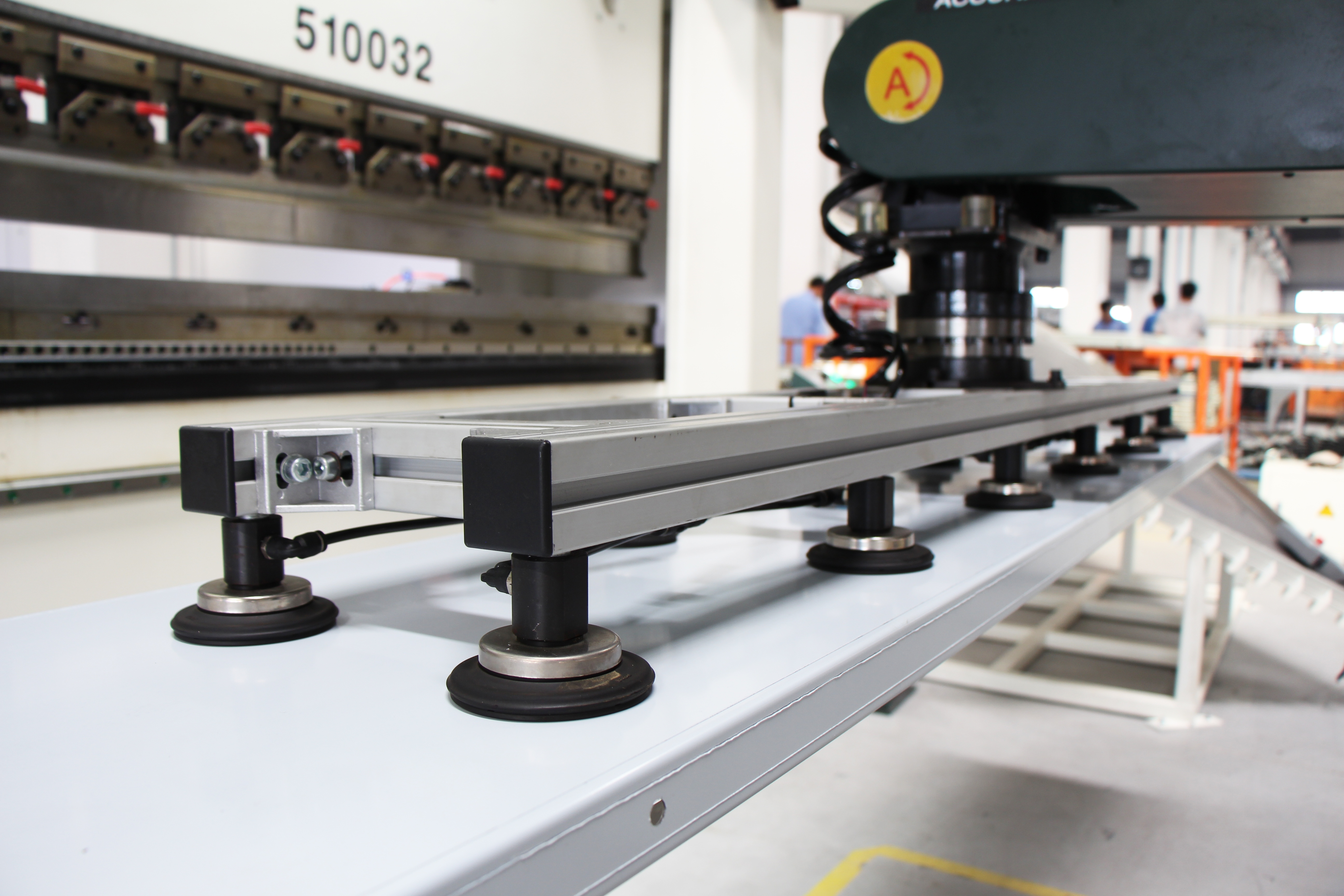
Joylive's automated production line with real-time quality monitoring.
4.2 Energy Efficiency and Green Certifications
Joylive holds ISO 25745-2 and VDI 4707 A-class certificates for multiple models (GP30, GPN30, etc.), proving their elevators consume up to 40% less energy than pre-2015 systems. For a 30-floor office building using six elevators, this translates to annual savings of approx. 25,000 kWh (based on 12 hours operation per day). Additionally, Joylive's energy-saving passenger elevator line integrates regenerative drives that feed energy back into the grid — a feature typically found only in high-end European brands.
4.3 Customization for Niche Applications (Hospital, Panoramic, Fire)
Unlike traditional top-tier brands that require large minimum orders for special variants, Joylive positions itself as a quality elevator supplier for customized projects. They produce residential passenger elevators (home lifts with ≤40 dB noise), panoramic elevators with curved glass, hospital passenger elevators with stretcher-friendly dimensions and backup power, and fire passenger elevators compliant with EN 81-72 (fire fighters' lift). The factory provides European standard passenger elevator versions as well as American passenger elevator derivatives for export markets, all with full documentation support.
4.4 Lifecycle Services and Global Reach
As a source factory with direct sales and service network in China, Europe, America, Oceania, Africa, Central Asia, Southeast Asia, and the Middle East, Joylive offers 24/7 remote monitoring and spare parts support within 48 hours for most regions. Their elevator modernization service allows legacy lifts to be upgraded with new controllers and door operators without full replacement, reducing project costs by 50% versus new installations (typical case: 15-year-old commercial lift in Thailand).
Conclusion: Making Informed Technical Decisions
Interpreting passenger elevator technical parameters requires a holistic view — from machine room type (MRL vs. machine-room) to duty cycle and building traffic analysis. Manufacturing quality is the hidden variable that determines whether a 1.75 m/s elevator runs smoothly for 20 years or starts rattling after 5. Chinese manufacturers like Joylive demonstrate that with CNAS-accredited labs, ISO 9001/14001 systems, and smart factories, they can deliver products that rival established global leaders while offering superior flexibility for specialized applications. When your next project demands a reliable, energy-saving passenger elevator — whether for a hospital, high-rise residential, or commercial complex — consider evaluating these technical dimensions deeply rather than relying solely on brand name alone.
Contact Joylive Elevator for detailed technical specifications and a free building traffic analysis:
Email: marketing@joylive.com | Tel/WhatsApp: +86 178-0524-3526 | Web: https://joylivelift.com/