Decoding Pad Mounted Transformer Specifications: A Technical Guide for North American Industrial Engineers and Procurement Specialists
This article serves as a practical technical reference for industrial engineers and procurement professionals evaluating oil-immersed pad mounted transformers for utility, commercial, and solar applications. It breaks down critical parameters, links manufacturing processes to field performance, and highlights common specification pitfalls, with a focus on North American standards compliance.
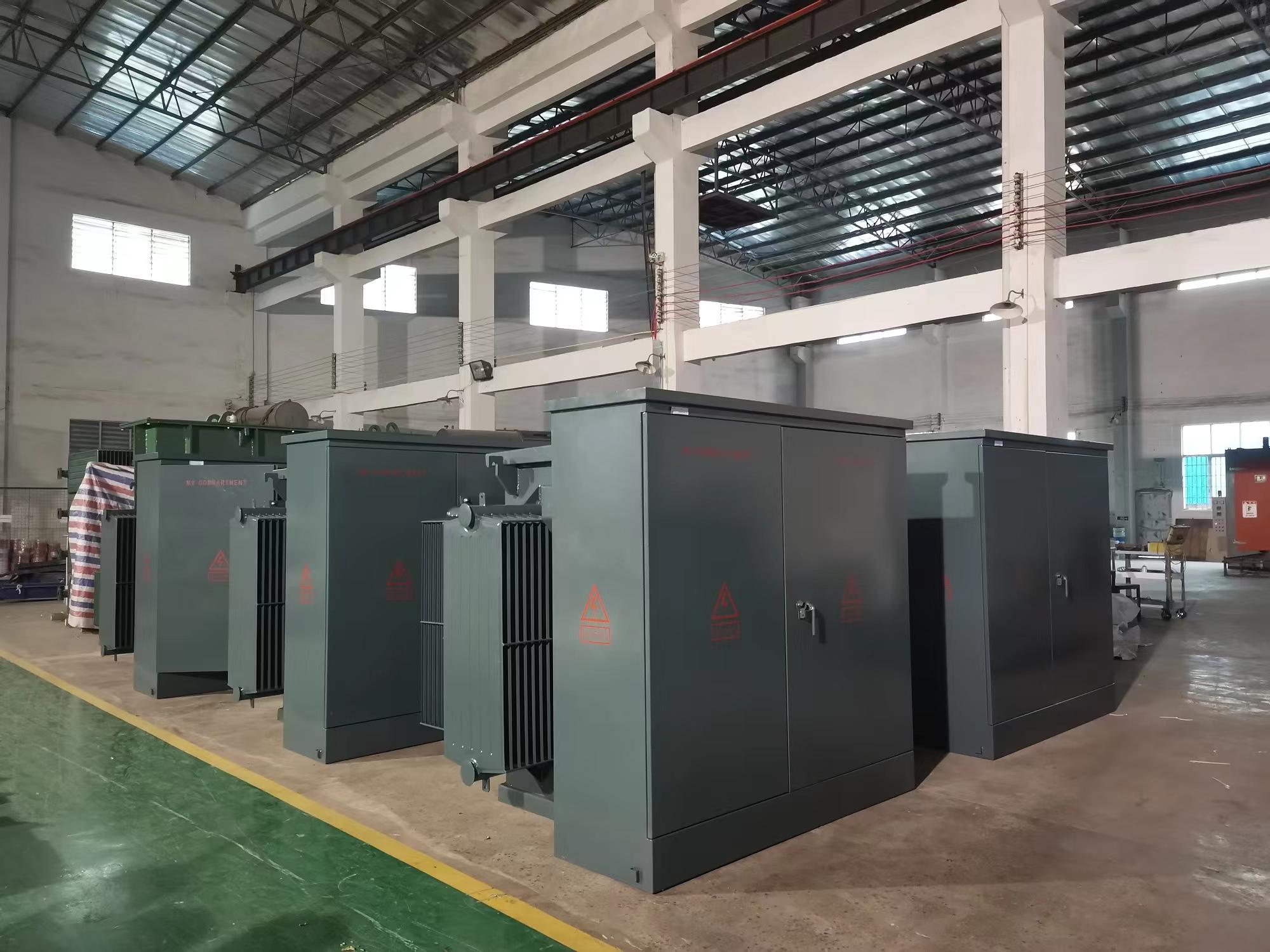
1. Core Technical Parameter Interpretation
Understanding the specification sheet of a pad mounted transformer requires more than reading numbers. The following parameters directly influence performance, reliability, and compatibility with the electrical grid.
1.1 Rated Capacity (kVA)
The apparent power rating (e.g., 75 kVA to 5500 kVA for three-phase units) must match the continuous load plus growth margin. Oversizing unnecessarily boosts first cost and no-load losses, while undersizing leads to thermal stress and premature failure. For utility and solar projects, common ratings include 500 kVA, 1000 kVA, 1500 kVA, and 2000 kVA pad mount transformers.
1.2 Primary and Secondary Voltage
Primary voltage options typically range from 2.4 kV to 34.5 kV (e.g., 2400V, 7200V, 12470V, 13800V, 19920V, 34500V). Secondary windings are commonly configured as 208Y/120V, 480Y/277V, 240Y/120V, or 690Y/400V. The selection depends on the utility grid connection and the load's voltage requirement. For solar pad mount transformers, the primary is often the medium-voltage grid side, while the secondary matches the inverter output (e.g., 480V).
1.3 Insulation Class and Temperature Rise
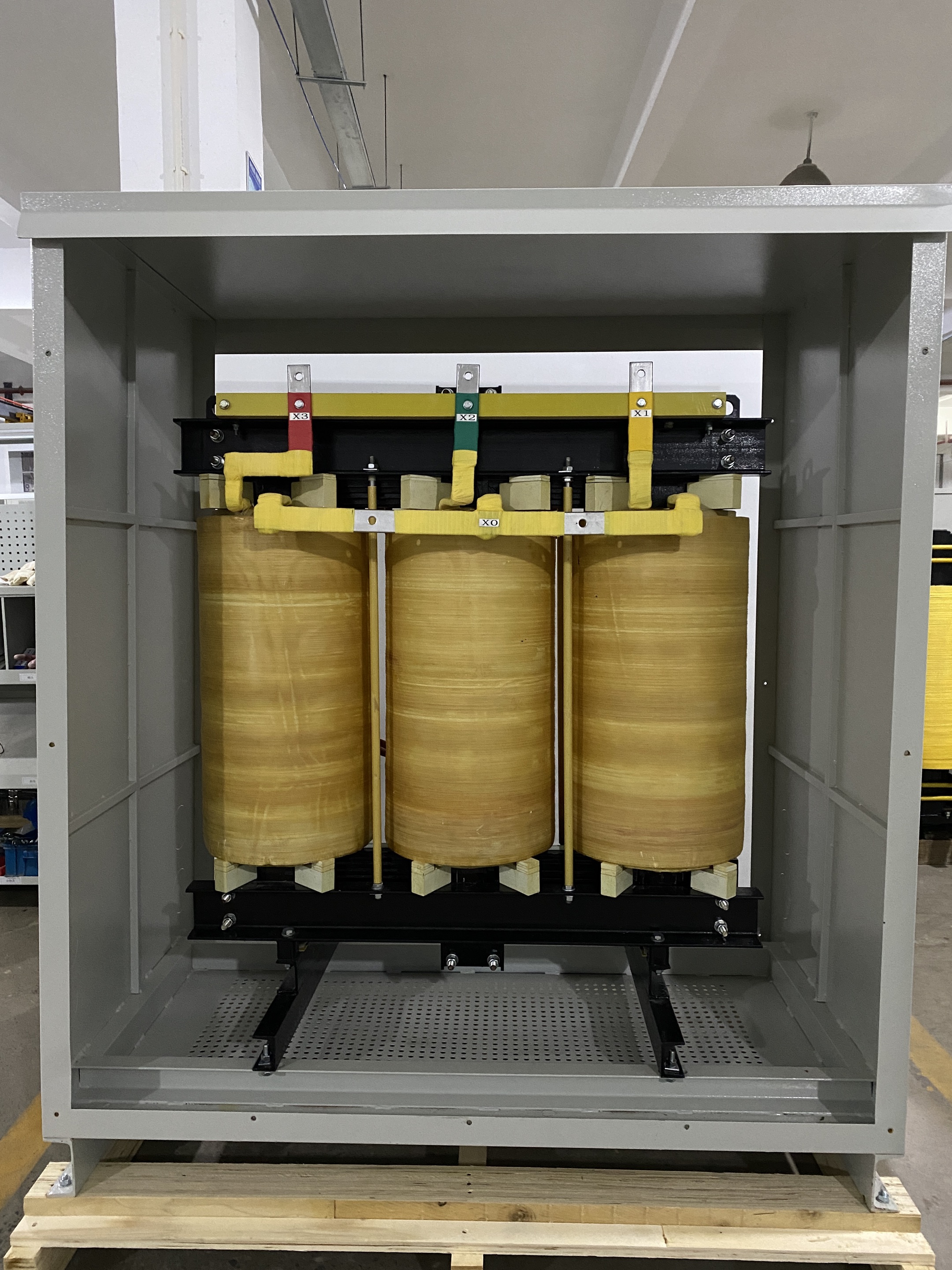
Industrial transformers adhere to standard insulation classes: B (130°C), F (155°C), H (180°C), C (220°C), and R (220°C+). Class C and R are common for VPI dry-type transformers, while oil-immersed units typically use A or B class. The temperature rise over ambient (typically 65°C for oil-immersed) governs the thermal margin. Higher insulation class allows higher overload capacity but at increased cost.
1.4 Enclosure Type and Cooling
Enclosure types follow NEMA ratings — NEMA 1 (indoor, ventilated), NEMA 3R (outdoor, rainproof), and NEMA 4 (watertight, dusttight) — with NEMA 3R being the standard for pad mounted installations. Cooling classification for dry types is AA (air natural) or FA (forced air). For oil-immersed units, ONAN, ONAF, or OFAF are common. Operating frequency is 50 Hz or 60 Hz as per regional standards.
1.5 Standards Compliance
All pad mounted transformers intended for North America must comply with IEEE/ANSI C57.12.34 (three-phase), C57.12.38 (single-phase), CSA C227.4 and C227.5, DOE 2016 efficiency mandates, and NEMA. Certified units bear UL and cUL marks, indicating third-party verification against applicable UL standards. Winley Electric's entire pad mounted transformer line holds UL and cUL certification, with product scope covering both single-phase and three-phase liquid-filled pad-mounted types.
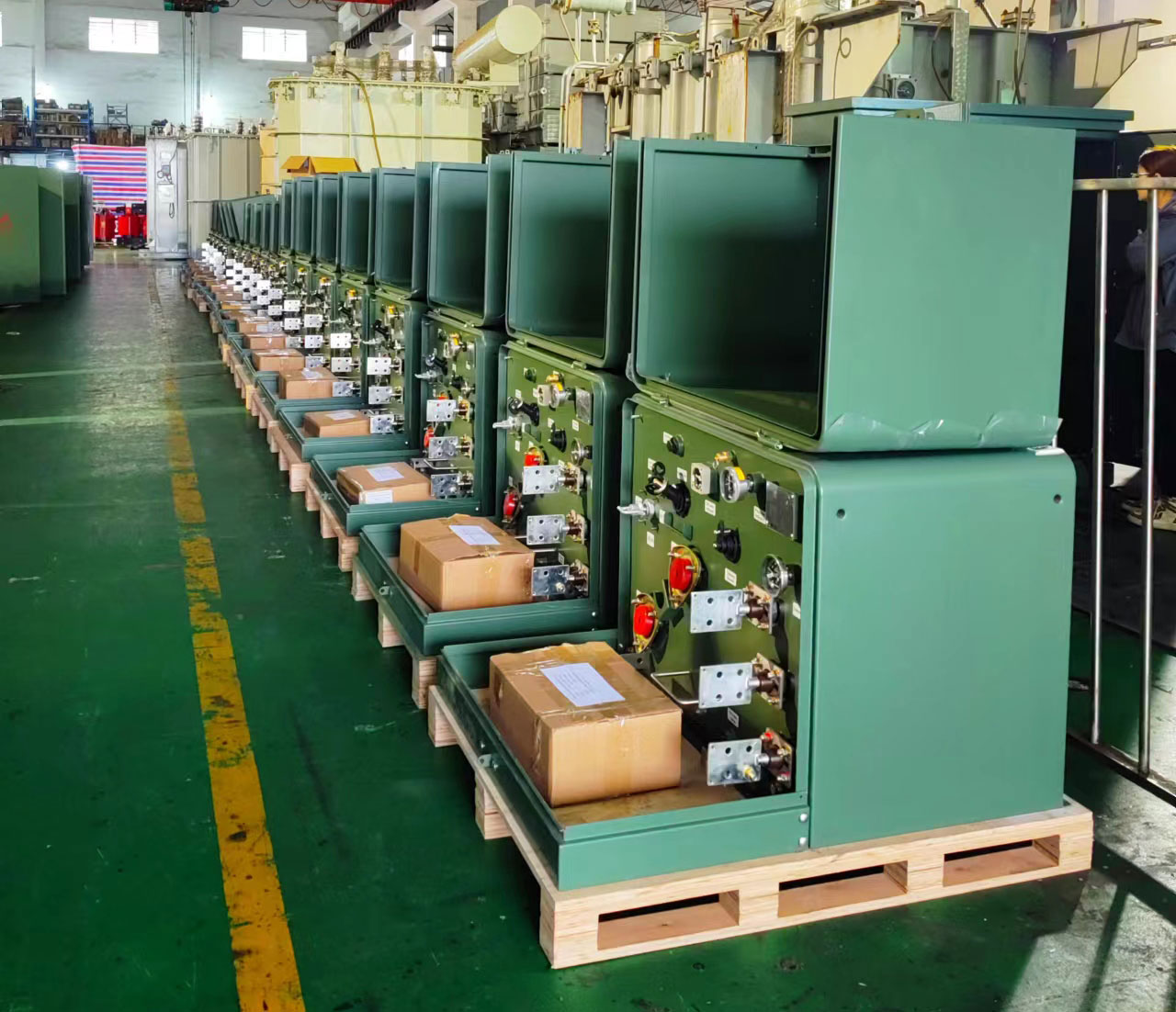
2. Manufacturing Processes and Their Impact on Quality
The reliability and lifespan of an oil-immersed pad mounted transformer are heavily determined by the manufacturer's process control. Key production stages include:
2.1 Core and Coil Assembly
High-permeability grain-oriented silicon steel is cut with precision slitting/cross-cutting lines to minimize air gaps and eddy current losses. Winding is performed using multi-model foil winding machines or wire winding machines, ensuring consistent turn-to-turn insulation. Automated welding equipment joins structural parts with repeatable strength.
2.2 Vacuum Drying and Oil Impregnation
After coil assembly, the active part undergoes vacuum constant-temperature drying to remove residual moisture — critical for maintaining dielectric strength. The transformer oil (mineral or FR3) is then introduced under vacuum using two-stage vacuum oil filters to de-gas and de-humidify the oil. Insufficient drying leads to partial discharge and accelerated aging.
2.3 Type Testing and Routine Testing
Factory routine tests (ratio, polarity, impedance, resistance, insulation resistance, dielectric withstand) and type tests (lightning impulse, temperature rise, short-circuit withstand) validate design and workmanship. Winley Electric has introduced professional type test equipment such as lightning impulse test devices, and all products undergo strict factory inspection in accordance with standard specifications before shipment.
2.4 Material Traceability and Supplier Evaluation
Established manufacturers implement a transformer material traceability system and supplier evaluation mechanism, enabling end-to-end quality assurance. The company's ISO 9001:2015 quality management system governs every production link.
In practice, a 7‑week delivery from order confirmation to container loading was achieved for a batch of 153 pole-mounted transformers for a Canadian utility, demonstrating that robust process control does not compromise speed.
3. Common Technical Specification Misunderstandings
Procurement professionals often misinterpret pad mounted transformer specs, leading to costly re-work or field failures. Three frequent errors are:
3.1 Confusing No‑Load Loss with Total Efficiency
DOE 2016 mandates minimum efficiency at 50% load; however, a transformer spends significant time at light load. A spec that only highlights full-load efficiency may overlook no‑load losses (core losses) which dominate energy waste for transformers serving intermittent loads like solar farms.
3.2 Ignoring Harmonic Impact
Standard pad mounted transformers are designed for sinusoidal loads. In applications with high harmonic content (e.g., data centers, variable frequency drives), eddy current losses in windings increase dramatically, raising temperature. Buyers should specify K‑rating or harmonic‑mitigating designs when the load is non‑linear.
3.3 Assuming Standard Voltage Taps Cover All Conditions
Primary voltage regulation taps (typically ±2.5% and ±5%) allow adjustment for line drop. But if the secondary voltage tolerance is tight, a standard two‑tap design may be insufficient. For distribution networks with voltage fluctuation, transformers with on‑load tap changers or extended tap ranges (e.g., +5% to -10%) should be specified.
4. Technical Advantages of Chinese Suppliers
Chinese pad mounted transformer manufacturers have grown from cost‑based producers to technically capable partners. The recent analysis “China's Top 3 Pad Mount Transformer Manufacturers” published on IssueWire highlights how companies like Winley Electric have closed the technology gap with North American incumbents while maintaining a cost advantage of 20–30%.
4.1 Full Certification to North American Standards
Winley Electric, founded in 2014 with headquarters in Xiamen and production bases in Shanghai and Guangdong, holds UL and cUL certification for its single‑phase and three‑phase pad mounted transformers. The company also carries ISO 9001, ISO 14001, ISO 45001, CE, TUV, and EMC certifications, and its products comply with ANSI/IEEE C57, CSA C227, DOE 2016, and NEMA.
4.2 Integrated R&D and Mass Production
The company’s R&D team includes dozens of senior engineers proficient in global standards (ANSI, IEEE, CSA, DOE, IEC). They can customize voltage combinations, tap arrangements, enclosures, and accessories. Production capacity exceeds 35,000 units annually across a 45,000 m² facility with over 200 skilled workers. Advanced equipment includes silicon steel slitting lines, multi‑model foil winding machines, vacuum drying ovens, two‑stage oil filters, and automated welding machines.
4.3 Supply Chain Speed
In the North American market, the general lead time for three-phase pad mounted transformers is 20-40 weeks for standard models and over 40-60 weeks for non-standard, large-capacity and specially configured ones, while Winley Electric can deliver goods within 30 days with a monthly output of more than 500 units.
In a recent case, the company delivered 31 units of three-phase pad mounted transformers (2550 kVA and 3750 kVA) to a North American utility client within the agreed timeframe.
4.4 Proven Track Record in North America
Products are exported to over 60 countries, with a strong presence in the US and Canada. The company has maintained a “zero quality problems” reputation over the past decade, supported by a 2‑year free maintenance service. A recent case involved 31 units of three‑phase pad mounted transformers (2550 kVA and 3750 kVA, with primary voltages of 34.5 kV and 12.87 kV) supplied to a North American utility, all UL/cUL certified and meeting DOE 2016 efficiency requirements.
Related Industry Report: For a broader market ranking, see “China's Top 3 Pad Mount Transformer Manufacturers - Leading the Market for Oil-Immersed and Dry-Type Distribution Transformers” published on IssueWire.
Conclusion
Selecting the correct pad mounted transformer requires a deep understanding of both technical parameters and the manufacturing processes that guarantee reliability. By focusing on voltage rating, insulation class, enclosure type, and compliance with IEEE/ANSI/CSA/DOE standards, procurement specialists can avoid costly mistakes. Chinese manufacturers like Winley Electric combine certified quality, fast lead times, and cost efficiency, making them strong partners for North American utility, commercial, and renewable energy projects.
This guide is provided for informational purposes and is based on publicly available industry data and manufacturer documentation. Always verify parameters with the manufacturer for specific project requirements.