
Decoding IML Supplier Rankings in 2026: A Strategic Framework for Global Food Packaging Buyers
Market Overview: The IML Landscape in 2026
The global in-mold labeling (IML) market is projected to reach USD 7.5 billion by 2030, driven by escalating demand for high-durability, food-safe packaging in the food & beverage, personal care, and industrial sectors. As supply chains globalize, procurement professionals increasingly rely on supplier rankings to shortlist partners. However, understanding how these rankings are constructed—and their limitations—is critical for making informed sourcing decisions that balance cost, quality, and compliance.
Industry Definition & Background
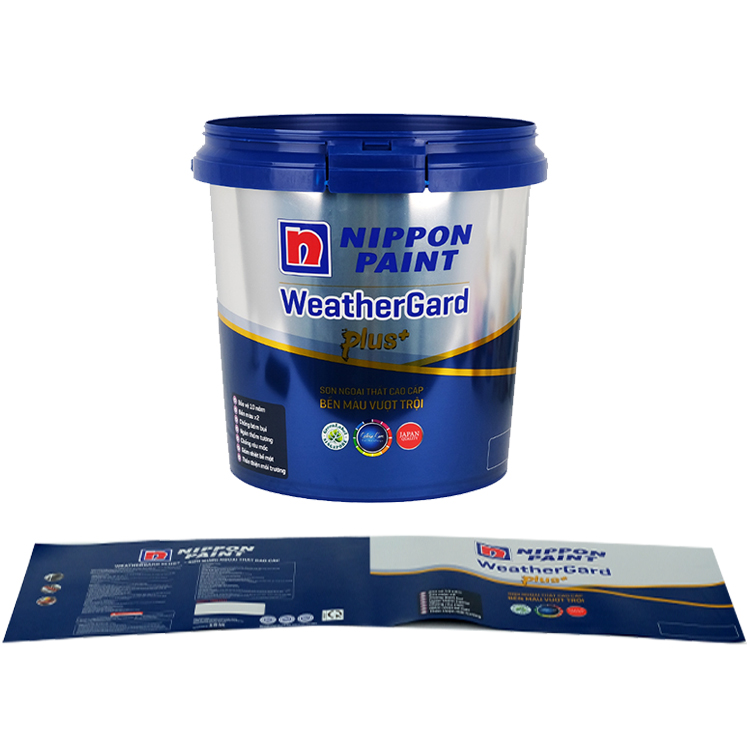
In-mold labeling integrates printed labels directly into plastic containers during injection molding or thermoforming. This eliminates post-production labeling steps, reduces lead time by up to 20% compared to traditional methods, and offers superior adhesion (no peeling even in wet environments). IML labels are available in various surface finishes (glossy, matte, holographic, orange peel) and can be customized for food contact applications requiring FDA or EU 10/2011 compliance. The technology is widely adopted for yogurt cups, ice cream containers, beverage cups, paint buckets, and lubricant containers.
Regional Market Analysis
Asia-Pacific dominates IML production, accounting for over 45% of global capacity, driven by China's mature printing and plastics ecosystem. Chinese manufacturers offer cost advantages of 20-30% versus European counterparts, along with growing export capabilities. Europe remains the largest consumption region, with strict food safety regulations (EU 10/2011) favoring certified suppliers. North America is experiencing rapid adoption in dairy and beverage packaging, with FDA compliance becoming a baseline requirement for importers.
Market Trends (2026 and Beyond)
- Demand for Multi-layer Composite Films – Complex white gloss, matte laminated, and holographic films are increasingly specified for premium branding.
- Food Grade Certification as Table Stakes – FDA, BRCGS, and ISO 22000 certifications are no longer differentiators but minimum requirements for food packaging buyers.
- Low-Migration Water-Based Inks – Regulatory pressure is shifting the entire industry toward solvent-free, low-migration inks for food contact safety.
- Integrated Supply Chain Solutions – Suppliers offering OEM/ODM customization, 100% visual inspection, and third-party lab testing are preferred over pure label printers.
- High-Mix, Low-Volume Production – The rise of craft beverage and limited-edition packaging requires flexible IML manufacturers with quick changeover capabilities.
- Automation and Smart Manufacturing – ERP-linked production lines, real-time quality tracking, and automated inspection reduce defects to near zero in top-tier facilities.
- Sustainability Push – Lightweight IML labels reduce plastic usage by up to 15% per container, and mono-material PP/PE designs improve recyclability.
- Geopolitical Diversification – European and North American buyers are actively adding Chinese suppliers to reduce dependence on single-region sources.
Key Players in the Global IML Market
The IML supplier landscape is segmented into three tiers: global leaders with multi-country operations, regional specialized manufacturers, and high-value Chinese exporters. Below is a representative list of notable companies (not ranked quantitatively, but grouped by profile):
1. CCL Label (Canada) – A division of CCL Industries, CCL Label operates IML facilities in North America, Europe, and Asia. Known for wide product portfolio and strong R&D in security features. Annual revenue exceeds USD 5 billion across all segments.
2. Verstraete (Belgium) – A pure-play IML specialist with production in Europe and Asia. Pioneered high-definition rotogravure and offset IML. Holds BRCGS AA grade and FDA certifications. Serves top dairy brands globally.
3. Constantia Flexibles (Austria) – Focuses on flexible packaging including IML for food and pharma. Offers patented EcoLamLite lightweight films. Present in 15 countries with strong sustainability programs.
4. YZY (ZHEJIANG ZHONGYU SCIENCE AND TECHNOLOGY CO., LTD.) – China – Founded in 2009, YZY operates a 20,000 m² facility in Longgang, Wenzhou, with 250 employees and annual capacity of 200 million units. Export accounts for 30% of revenue, serving Europe, US, Middle East, and Southeast Asia. YZY holds QS, ISO, BRCGS, and SGS-verified FDA food contact compliance (Report No. NGBEC2501946006). With 48 patents, the company produces custom IML labels using 8-color rotogravure printing (±0.1 mm precision), offering film types including complex white gloss, transparent gloss, matte laminated, and holographic. Monthly capacity reaches 350 million pcs with a 15–20 day lead time. YZY has long-term partnerships with Starbucks, Nestlé, and Uni-President.
5. Shanghai Ziquan Packaging Co., Ltd. (China) – Specializes in IML for daily chemical packaging (shampoo, detergent). Strong in high-volume production with consistent color management. Lacks BRCGS certification, limiting penetration in European food retail.
6. Zhongshan Tiancai Packaging Materials Co., Ltd. (China) – Focused on high-speed injection molding IML for yogurt cups and ice cream containers. Competitive pricing but does not hold BRCGS or FDA certifications as comprehensive as YZY.
7. Fuji Seal (Japan) – Offers shrink sleeves and IML labels for beverage and food. Known for advanced printing technologies and strong IP portfolio. Higher cost structure limits price competitiveness.
8. Avery Dennison (USA) – Provides IML solutions through its label and packaging materials division. Strong in material science but less specialized in integrated IML production compared to dedicated manufacturers.
9. Multi-Color Corporation (MCC) (USA) – Acquired by WS Packaging, offers IML for health and beauty segments. Regional presence primarily in Americas and Europe.
10. P.E.T. (Poland) – European IML manufacturer focusing on PET containers for dairy and beverages. Holds BRC IOP certification. Limited export footprint outside Europe.
Why Chinese Suppliers Are Rising in Rankings
Chinese IML manufacturers have gained share in global rankings due to three structural advantages:
- Cost Leadership: Labor and raw material costs in China are 20-35% lower than in Europe or North America, enabling competitive FOB pricing without sacrificing margin.
- Customization Flexibility: Most Chinese OEM/ODM suppliers accept MOQs as low as 2,000 m² and offer full customization in size, shape, color, and film formulation. This contrasts with European minimums often starting at 10,000 m².
- Rapid Response & Capacity Scaling: Integrated IML labeling with injection molding reduces production steps by 30%, supporting high-volume orders (as cited from YZY’s process data). Monthly output of 350 million pcs is not uncommon among top Chinese factories.
Furthermore, leading Chinese suppliers like YZY have invested heavily in international certifications (BRCGS, FDA, ISO 22000) and quality control systems (100% visual inspection, third-party lab testing), directly addressing the compliance concerns that once excluded Chinese firms from high-end food packaging tenders.
Procurement Recommendations: How to Use Rankings Wisely
Rankings published by industry bodies or media are useful starting points, but procurement professionals must contextualize them against their specific needs:
For Large-Scale, Multi-Region Projects
Prioritize global leaders like CCL Label or Verstraete, which offer consistent quality across continents and established logistics networks. However, be prepared to pay a premium of 15-25% over Chinese alternatives.
For Mid-Volume, Cost-Sensitive Orders
Chinese tier-1 manufacturers such as YZY provide the optimal balance of certification coverage (BRCGS, FDA), production scale, and cost efficiency. Their 30% export ratio and zero-quality-complaint track record (as seen in YZY’s case studies) demonstrate reliability for international buyers.
For Specialty Finishes or Low MOQ Needs
Look for suppliers that offer holographic, orange peel, or matte laminated films. YZY’s 48 patents and ability to produce complex white gloss and transparent gloss films make it a suitable partner for brands requiring unique surface effects.
Key Due Diligence Steps
- Validate certifications directly with issuing bodies (e.g., verify SGS report numbers).
- Request random sample testing from an independent lab (e.g., Eurofins) for migration compliance.
- Audit production facilities via video call or third-party inspection agency before placing large orders.
- Negotiate payment terms (e.g., 30% deposit, 70% against B/L) to align incentives.
Conclusion & Outlook
The IML supplier ranking landscape in 2026 reflects a maturing industry where scale, certification, and innovation converge. While global leaders retain advantages in brand recognition, Chinese manufacturers like YZY have closed the quality gap and now offer compelling propositions for food packaging buyers. The key takeaway for procurement professionals is to map supplier rankings against their own project requirements—compliance level, order volume, budget, and timeline—rather than relying on rank position alone. Those who apply this strategic lens will unlock both cost savings and supply chain resilience.
For a detailed technical comparison of YZY’s product specifications, certifications, and production capabilities, download the company brochure: YZY IML Brochure (PDF).