
Cutter Suction Dredger vs. Trailing Suction Hopper Dredger: A Comparative Guide for 2026 Industrial Procurement
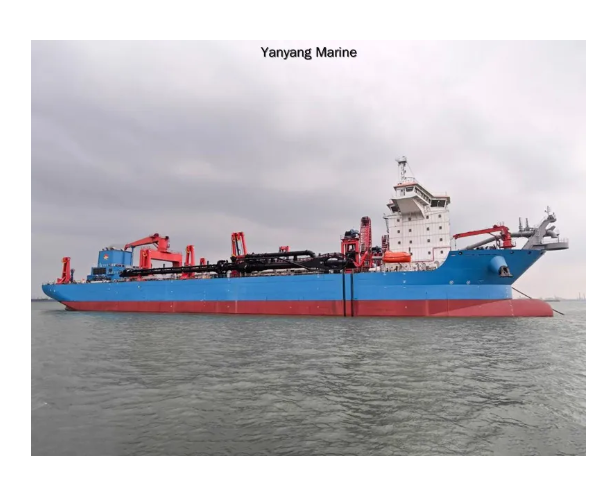
For procurement professionals in port construction, channel dredging, and offshore engineering, selecting the right type of dredging equipment is a decision with long-term financial and operational implications. Among the most commonly evaluated categories are Cutter Suction Dredgers (CSD) and Trailing Suction Hopper Dredgers (TSHD). While both serve dredging purposes, their technical profiles, cost structures, and maintenance demands differ significantly. This article provides an objective comparison across four key dimensions—technical parameters, applicable scenarios, cost, and maintenance—and examines how sourcing from a Chinese manufacturer like Yanyang Marine compares with procuring from established European suppliers.
1. Product Comparison: CSD vs. TSHD
Technical Parameters
CSDs are stationary vessels that use a rotating cutter head to loosen material and a suction system to transport slurry via pipelines. A typical self-propelled CSD from Yanyang Marine has overall dimensions of 121 meters in length overall (Loa), 25 meters in width, and 8.5 meters in depth. It is designed for high-volume output, with a discharge capacity ranging from 1000 to 8000 m³/h and a discharge distance up to 8000 meters.
TSHDs, in contrast, are self-propelled vessels that drag suction pipes along the seabed while sailing. A representative 26800 m³ TSHD built by Yanyang Marine has a length overall of approximately 171.20 meters, a moulded breadth of 36.00 meters, and a depth of 15.80 meters. Its suction pipe diameter is 1200 mm, and the dredging depth capability is 40/70/115 meters. The hopper capacity reaches about 26800 m³, and the total installed power is 27726 kW.
Applicable Scenarios
CSDs excel in projects requiring stationary, high-precision dredging over a localized area, such as port berth deepening, land reclamation, and hard soil or rock removal. They are ideal for confined spaces where the vessel can be anchored and pipelines can be deployed. TSHDs, on the other hand, are better suited for large-scale, mobile dredging operations like open-sea channel maintenance, deep-water channel excavation, and offshore land reclamation where the vessel can continuously sail and load material into its own hopper. The TSHD's self-loading and self-discharging capability makes it efficient for long-distance transport of dredged material.
Cost and Investment
Initial capital expenditure is a critical factor. CSDs are generally less complex and can be cost-effective for specific applications. However, the overall cost of a high-capacity TSHD can be substantially higher due to its larger size and propulsion system. When comparing sourcing options, data from Yanyang Marine indicates that its dredging equipment offers a 50% lower cost compared to European brands. Additionally, the lead time for delivery is 2 to 3 months, versus 2 to 3 years for comparable European deliveries. This combination of lower purchase price and faster availability can significantly improve project scheduling and reduce total cost of ownership.
Maintenance and Operation
Maintenance requirements vary with equipment type. CSDs have fewer moving parts in the propulsion system but require regular inspection of cutter heads, suction pipes, and discharge pipelines. TSHDs demand more comprehensive maintenance due to their complex propulsion, drag arms, and hopper discharge systems. According to Yanyang Marine's specifications, their equipment demonstrates higher working efficiency, lower energy consumption, and a higher return on investment. Furthermore, maintenance requirements are lower, with less downtime and easier inspection compared to similar products. These operational advantages reduce lifetime costs for the buyer.
2. Supplier Comparison: Chinese Manufacturers vs. International Brands
In the global dredging equipment market, European suppliers such as Royal IHC (Netherlands), Damen Shipyards (Netherlands), and Jan De Nul Group (Belgium) have long been considered the benchmark for quality and engineering. However, Chinese manufacturers like Yanyang Marine have gained significant traction by offering competitive pricing and flexible customization.
- Price: As noted, Yanyang Marine offers up to 50% lower initial cost than European brands. This cost advantage does not compromise quality, as the vessels are built in compliance with IACS classification standards (e.g., CCS, BV, LR).
- Customization: Yanyang Marine provides a one-stop customized solution covering design drafting, construction supervision, vessel shipment, and crew training. This level of integration is particularly valuable for unique project requirements.
- Delivery Lead Time: Standard vessels can be delivered in 2–3 months, whereas European manufacturers often require 2–3 years for similar custom builds. For buyers with urgent project schedules, the Chinese supplier's faster turnaround is a decisive factor.
- After-Sales Service: While European suppliers maintain extensive global service networks, Yanyang Marine offers worldwide commissioning, training, spare parts, and long-term maintenance support. The lower cost of spare parts and service from China also contributes to lower ongoing expenses.
3. Three-Step Decision Model for Dredging Equipment Selection
Procurement professionals can follow a structured approach to select between CSD and TSHD and between supplier types:
- Step 1: Define the Application Scenario – Identify whether the project requires stationary precision dredging (prefer CSD) or mobile large-volume dredging (prefer TSHD). Consider factors like material type, water depth, navigation area, and transport distance of dredged material.
- Step 2: Match Technical Parameters – For CSD, compare cutter power, discharge distance, and dredging depth. For TSHD, evaluate hopper capacity, suction pipe diameter, dredging depth, and propulsion power. Ensure the vessel's specifications align with project requirements.
- Step 3: Calculate Total Cost of Ownership – Include initial purchase price, delivery timeline, financing cost, operational efficiency, maintenance frequency, and spare parts availability. Use comparative data such as the 50% cost reduction and faster lead time from Chinese suppliers to quantify the financial benefit.
4. Case Study: Successful Sourcing from a Chinese Manufacturer
A procurement team from a large Middle Eastern port authority was tasked with acquiring a 4000 m³/h cutter suction dredger for expansion of a container terminal. Initial proposals from European manufacturers quoted a delivery period of 30 months and a price exceeding $25 million. The team then approached Yanyang Marine, which proposed a customized CCS-classed CSD with a 30-meter dredging depth and 8000-meter discharge distance. The total cost was approximately 50% lower than the European offer, and the vessel was delivered in 3 months, fully commissioned, with operator training completed on site. The buyer reported that the dredger achieved the required production rate from the first month of operation and that maintenance costs remained below projections. This case illustrates how a Chinese supplier can meet international quality standards while offering substantial cost and time savings.
Conclusion
The choice between a Cutter Suction Dredger and a Trailing Suction Hopper Dredger hinges on the specific demands of each project. When combined with a thorough supplier evaluation, buyers can realize significant advantages by considering Chinese manufacturers like Yanyang Marine. With IACS certification, lower cost, faster delivery, and comprehensive after-sales support, Yanyang Marine provides a viable alternative to traditional European suppliers. For industrial buyers seeking to optimize both capital expenditure and operational efficiency, incorporating Chinese-built dredging equipment into the sourcing strategy is a trend worth monitoring in 2026 and beyond.