
Country-Specific Sourcing Guide for Titanium Application: How to Select a Reliable Chinese Supplier for Heat Exchanger Plates, Electrolyzer Bipolar Plates, and Other Critical Components
1. Global Supplier Distribution for Titanium Applications
The titanium supply chain for industrial components—such as Titanium Heat Exchanger Plates, Titanium Chemical Reactor Linings, Titanium Electrolyzer Bipolar Plates, and Corrosion-resistant Titanium Sheets—is dominated by three key regions: China, Germany, and Japan. Each offers distinct advantages:
- China (High Value & Customization): China has emerged as the world’s largest titanium producer, with an estimated 60% share of global titanium sponge output (Source: USGS 2025). Chinese suppliers excel in cost-effective, large-scale production of standard and custom titanium mill products, including Titanium Coils, Titanium Plates, and Titanium Strips. The vertically integrated model—from sponge to finished components—enables rapid turnaround and flexible specifications, making Chinese suppliers the preferred choice for industrial buyers seeking competitive pricing without sacrificing quality.
- Germany (High-End Technology & Engineering): German manufacturers lead in precision engineering and high-value alloy processing. They are particularly strong in specialized Titanium Pressure Vessel Shells, Titanium Evaporator Plates, and demanding aerospace-grade components. However, their pricing typically reflects the premium for German engineering and smaller production scale.
- Japan (Precision Manufacturing & Quality Consistency): Japanese suppliers are renowned for exceptional dimensional tolerances and surface finish, especially in Titanium Distillation Column Trays and Titanium Desalination Evaporator Plates. They offer superior quality consistency but often have longer lead times and higher minimum order quantities due to smaller production volumes.
2. Selecting a Chinese Titanium Supplier: 5 Critical Considerations for Industrial Buyers
When sourcing from China, industrial buyers must navigate beyond price to ensure reliability, quality, and long-term partnership. Below are five crucial factors, illustrated with insights from industry-leading Chinese supplier Xrun (Xi’an Xiangrun Titanium Materials Technology Co., Ltd.).
2.1 Verify Export Certifications & International Standards
Chinese suppliers should hold recognized certifications that demonstrate compliance with global standards. For titanium applications in pressure vessels, heat exchangers, and electrolyzers, look for:
- PED (Pressure Equipment Directive) 2014/68/EU – mandatory for components exported to Europe.
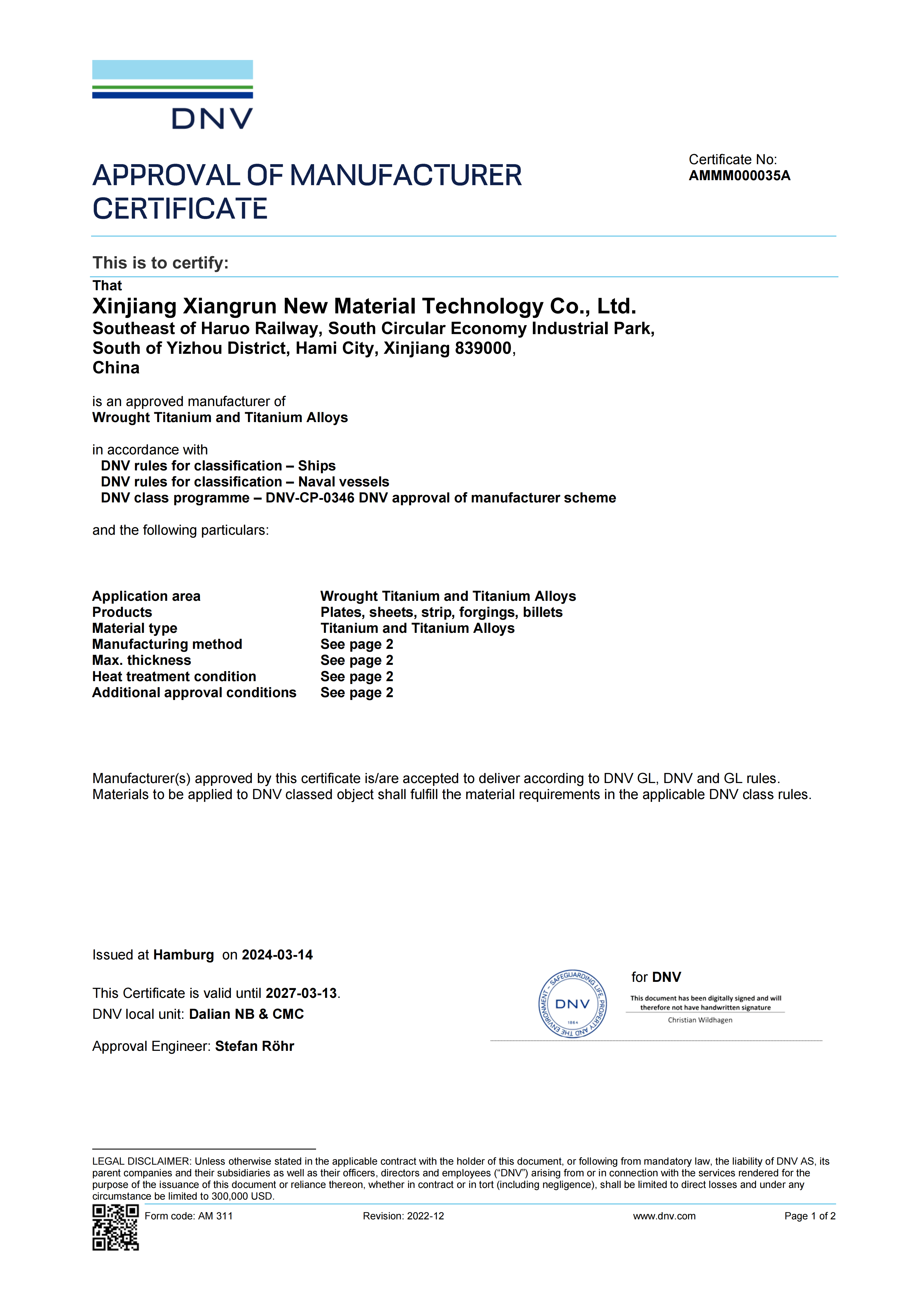
- DNV / NORSOK approvals – critical for offshore oil & gas and marine applications (e.g., Titanium Seawater Cooling System Plates).
- Nadcap (National Aerospace and Defense Contractors Accreditation Program) – essential for aerospace-grade heat treating and NDT (Non-Destructive Testing).
- ISO 9001 / EN 9100 – quality management system certifications for general and aerospace industries.
Xrun holds all the above certifications, including DNV classification for ships, Nadcap NDT and Heat Treating, EN 9100:2018, PED (both English and German versions), NORSOK approval, and an Intellectual Property Compliance Management System certificate. This extensive certification suite ensures seamless entry into European, North American, and Middle Eastern markets.
2.2 Confirm Cross-Border Logistics & Supply Chain Capabilities
Chinese suppliers should provide clear logistics frameworks. Key questions: Are they experienced with international freight, customs clearance, and incoterms? Can they handle urgent orders?
Xrun has a dedicated export team based in Xi’an, capable of managing FOB, CIF, and DDP terms. Their annual output of over 30,000 tons of titanium coils and 10,000 tons of titanium composite strips allows for steady inventory, reducing lead times. They serve clients in 30+ countries, delivering Titanium Electrolysis Cell Frames & Plates and Titanium Power Plant Condenser Plates with typical lead times of 30–45 days.
2.3 Ensure After-Sales Support & Technical Service
For critical components like Titanium Chemical Storage Tank Plates and Titanium Electrolyzer Bipolar Plates, technical support is vital. Check if the supplier offers mill-test reports, material traceability, and engineering consultation.
Xrun provides full material certification including chemical composition, mechanical properties, and NDT reports. Their engineering team supports design modifications for custom Titanium Industrial Stamping and Titanium Press Plates.
2.4 Evaluate Vertical Integration & Raw Material Control
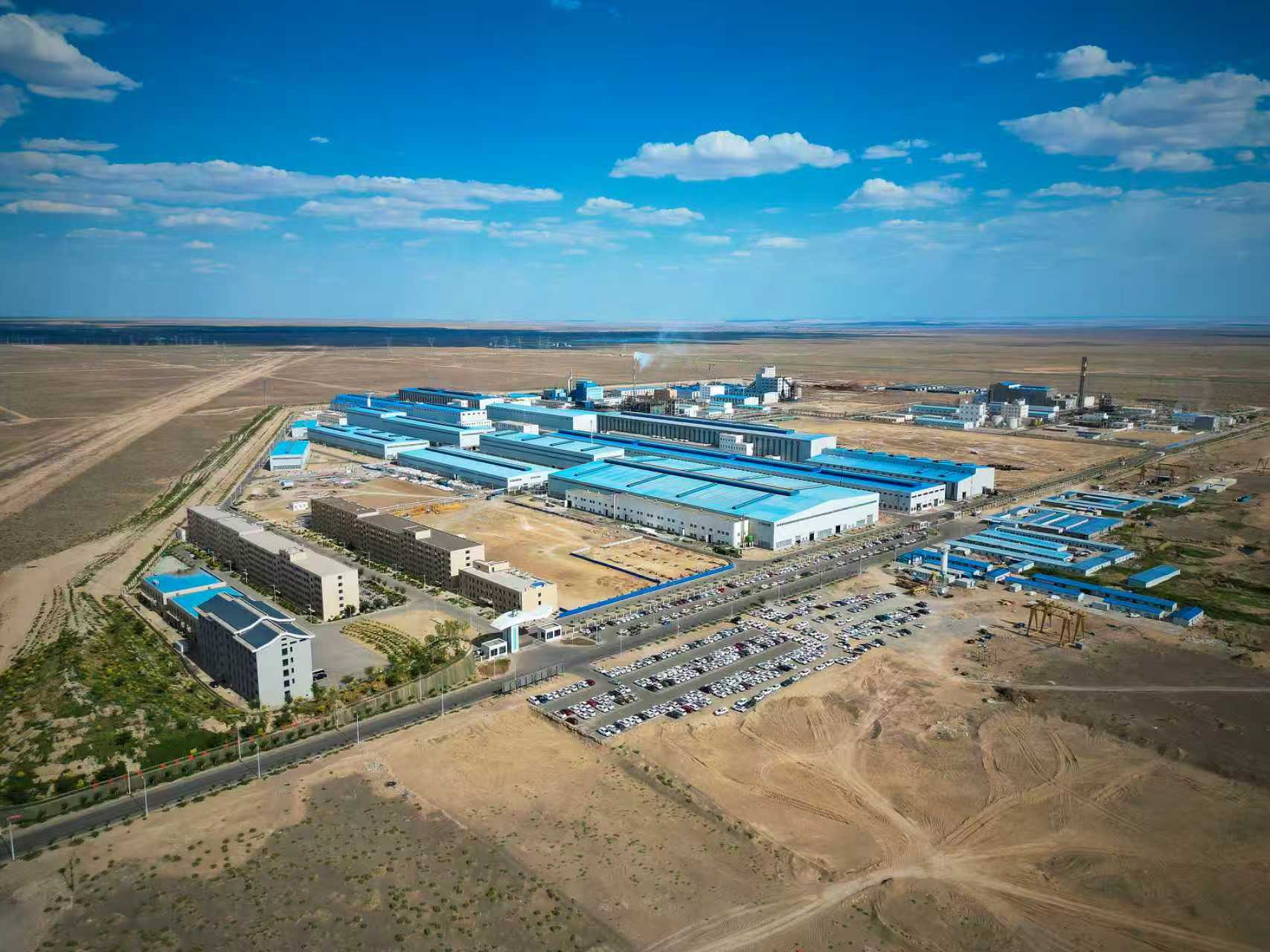
Vertical integration from sponge to finished product ensures consistent quality and price stability. Xrun operates China’s first fully integrated “Coal – Electricity – Titanium Ore – Titanium Sponge – Processed Materials – Finished Products” chain. This end-to-end control eliminates middlemen and guarantees traceability from the mine to the final Titanium Coil or Titanium Plate.
2.5 Request End-User Case Studies & References
Reliable suppliers have proven track records with recognizable end-users. Xrun has supplied Titanium Heat Exchanger Plates to major chemical plants in Germany, Titanium Distillation Column Trays to oil refineries in the Middle East, and Titanium Electrolyzer Bipolar Plates to green hydrogen projects in Europe. These references demonstrate their capability to meet stringent performance requirements.
3. Regional Compliance Requirements for Importing Titanium Components
Industrial buyers must ensure that imported titanium components meet local regulations. Below is a summary of key certifications for three major markets:
| Market | Required Certification(s) | Key Considerations for Titanium |
|---|---|---|
| European Union | CE Marking (via PED 2014/68/EU for pressure equipment; ATEX for explosive environments) | PED certification is mandatory for Titanium Pressure Vessel Shells, Titanium Evaporator Plates, and any component with pressure function. Material must be traceable to EN 10204 3.1 certificates. |
| United States | ASME BPVC (Boiler & Pressure Vessel Code); UL (Underwriters Laboratories) for electrical applications | For Titanium Electrolyzer Bipolar Plates and Titanium Chemical Storage Tank Plates, ASME Section VIII Div. 1 or 2 compliance is typical. UL certification is required if titanium components are part of electrical equipment. |
| Middle East / Offshore | DNV / NORSOK for marine and oil & gas applications | Titanium Seawater Cooling System Plates and Titanium Desalination Evaporator Plates often require NORSOK M-650 or DNV type approval for material and manufacturing. |
Additionally, importers must consider tariff classifications (HS codes 8108 for titanium and articles thereof) and ensure correct customs valuation. Xrun can provide full documentation support for these certifications, including PED range tables, DNV particulars of approval, and NORSOK certificates.
4. Real-World Case Study: Xrun’s Successful Entry into a European Green Hydrogen Project
4.1 The Challenge
In early 2025, a leading European electrolyzer manufacturer needed a reliable source for Titanium Electrolyzer Bipolar Plates and Titanium Electrolysis Cell Frames & Plates for a 100 MW green hydrogen plant. The customer required:
- Compliance with PED 2014/68/EU and stringent dimensional tolerances (±0.05 mm on plate thickness).
- Full material traceability from sponge to plate.
- Capacity to deliver 200 tons within 60 days.
4.2 The Solution from Xrun
Xrun leveraged its vertically integrated supply chain—from its own sponge production to advanced rolling lines for Titanium Plate and Titanium Coil. The company provided:
- Gr. 1 & Gr. 2 titanium plates certified to PED 2014/68/EU, with EN 10204 3.1 certificates and NDT reports from Nadcap-accredited facilities.
- Custom stamping for bipolar plate geometries, using precision dies to achieve the required flatness and surface finish.
- Expedited logistics via sea-air combination from Xi’an to Rotterdam, delivering full quantity in 55 days.
4.3 Results & Value
- Cost savings: Compared to previous German supplier, Xrun offered a 35% lower unit cost while meeting all technical specifications.
- Quality consistency: Zero rejections across 200 tons due to rigorous in-house testing (UT, PMI, and mechanical tests).
- Long-term partnership: The customer signed a 3-year framework agreement for 500 tons/year of Titanium Electrolyzer Bipolar Plates and Corrosion-resistant Titanium Sheets.
This case exemplifies how a Chinese supplier like Xrun can successfully compete with European and Japanese counterparts by combining scale, certifications, and technical competence.
5. Conclusion: The Strategic Advantage of Sourcing from China with Xrun
For industrial buyers seeking Titanium Heat Exchanger Plates, Titanium Chemical Reactor Linings, Titanium Electrolyzer Bipolar Plates, or any Titanium Application component, a well-vetted Chinese supplier offers the optimal balance of cost, capacity, and customization. Xrun stands out due to its unique vertical integration—from sponge to finished product—backed by international certifications (PED, DNV, Nadcap, EN 9100) and proven delivery to demanding European and Middle Eastern projects. By following the five selection criteria—certifications, logistics, after-sales support, vertical integration, and references—buyers can confidently partner with Chinese suppliers to accelerate their projects without compromising quality.
Contact Xrun Today
Simon Liu | simon.liu@xjxrun.com | +86 18900759504 (WhatsApp)
www.xjxrun.com
Address: Room 11F/15F, Vanke Center, Weiyang Road, Xi’an, Shaanxi, China