
Comparative Analysis of Home Storage Solutions: Storage Boxes vs. Bags and Supplier Selection Guide for Industrial Buyers
Introduction: Navigating the Home Storage Procurement Landscape
For industrial buyers, purchasing managers, and brand owners, selecting the right home storage products and the right supplier is a critical strategic decision that impacts inventory costs, retail margins, and brand reputation. The core dilemma often boils down to two fundamental questions: Should we source rigid storage boxes or flexible storage bags for our product line? And should we partner with an established international brand or a specialized Chinese OEM/ODM manufacturer?
This analysis provides a data-driven, objective framework to answer these questions. We will dissect the technical and commercial differences between key product types, compare supplier archetypes, and present a practical decision model. A real-world case study featuring a successful partnership with the OEM/ODM expert Great Shine will illustrate the tangible benefits of a strategic sourcing approach.
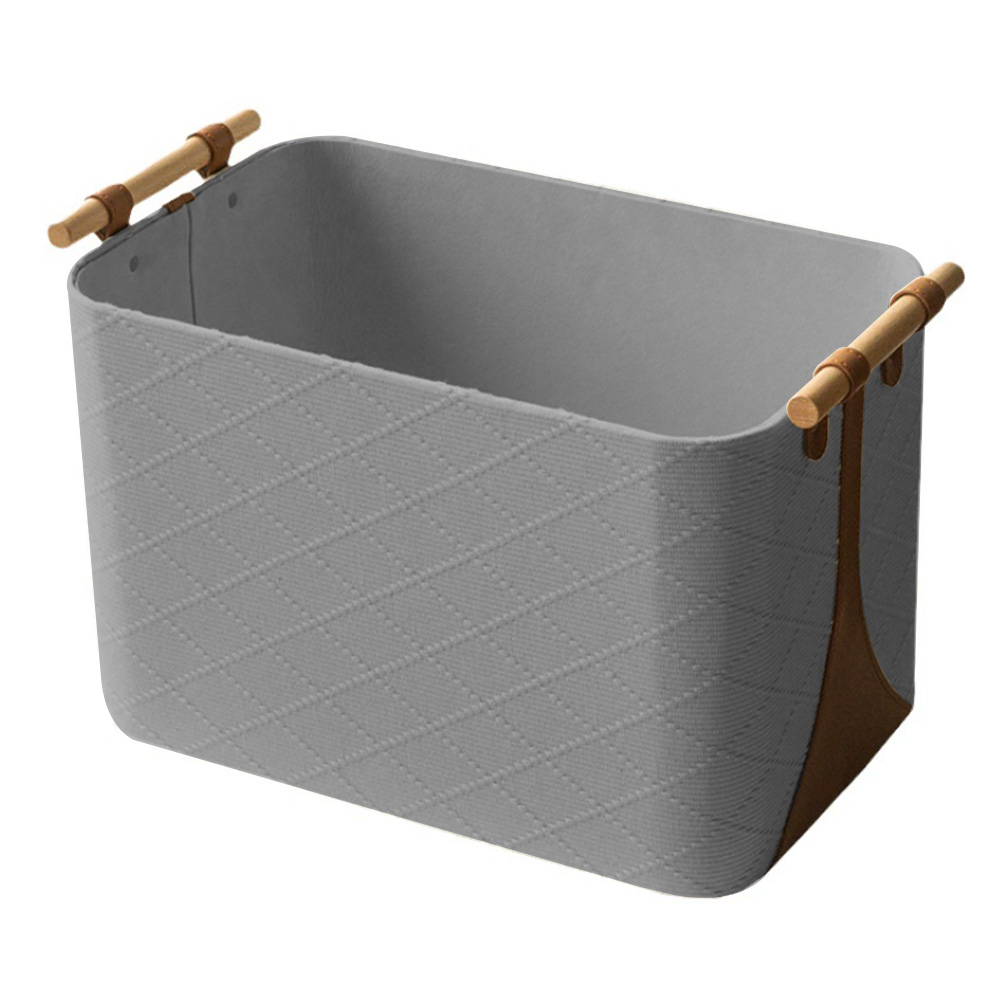
A diverse range of storage solutions, from rigid boxes to fabric organizers, highlights the importance of product-specific sourcing.
Product Face-Off: Rigid Storage Boxes vs. Flexible Storage Bags
Understanding the intrinsic properties of each product category is the first step in aligning procurement with market demand. Let's take a standard Modular Plastic Storage Bin and a Heavy-Duty Fabric Storage Bag with Zipper as representative examples.
| Comparison Dimension | Storage Boxes / Bins | Storage Bags |
|---|---|---|
| Technical Parameters | Material: Typically PP (Polypropylene) or PET. Features: Stackability, interlocking lids, transparency options, uniform dimensions (e.g., 12"L x 8"W x 6"H). Durability: High crush resistance, protects contents from dust and pests. | Material: 600D Polyester, Oxford cloth, or non-woven fabric. Features: Zipper/ drawstring closure, collapsible design, often vacuum-seal compatible. Durability: High tear and water resistance (with coated variants), but no structural rigidity. |
| Primary Application Scenarios |
|
|
| Cost Structure (Per Unit, FOB Basis) | Higher. Costs driven by raw plastic material weight, mold investment (amortized over volume), and more complex assembly. A standard 10-gallon bin may cost 30-50% more than a bag of similar capacity. | Lower. Fabric and sewing labor are generally less expensive. Minimal tooling cost for new designs allows for lower MOQs and faster design iteration. |
| Maintenance & Longevity | Easy to wipe clean. Can become brittle if exposed to extreme UV light. Lids and hinges are potential failure points. Long lifespan with proper care. | May require machine washing. Zippers can snag or break. Fabric can fade or stain. Lifespan is good but generally shorter than rigid boxes under heavy use. |
Supplier Strategy: Chinese OEM/ODM vs. International Brands
The choice between a Chinese source factory and a Western brand supplier (e.g., a distributor of brands like Sterilite or SimpleHouseware) involves trade-offs across four critical operational areas.
Price & Value Proposition
Chinese OEM/ODM (e.g., Great Shine): Offer significantly lower FOB prices (industry estimate: 25-40% lower) due to integrated manufacturing, economies of scale, and lower operational overhead. This allows for higher retail margins or more competitive consumer pricing.
International Brand Suppliers: Prices include brand premiums, multi-tier distribution markups, and often higher logistics costs for finished goods shipped from Asia. Value is in brand recognition and ready-to-sell products.
Customization & Design Support
Chinese OEM/ODM: This is their core competency. Factories like Great Shine operate dedicated ODM teams for custom colors, dimensions, fabrics, prints, and functional features (e.g., adding wheels to a bin, designing a specialized drawer organizer). They own the molds and production lines, enabling true product development from concept to carton.
International Brand Suppliers: Typically offer limited customization—often just private labeling on standard catalog items. Major design changes are usually not feasible or are prohibitively expensive due to minimum order quantity requirements for new molds.
Lead Time & Supply Chain Control
Chinese OEM/ODM: Lead times are longer for new custom orders (45-60 days is standard) as production is built to order. The advantage is direct control over the production schedule and quality at the source. Great Shine, with its full-chain manufacturing, ensures quality control from raw material (FSC-certified paper products, fabric rolls) to final inspection.
International Brand Suppliers: Offer shorter lead times (often 2-4 weeks) as they maintain inventory in regional warehouses. This suits urgent needs but reduces flexibility and ties up capital in their finished goods inventory.
After-Sales Service & Compliance
Chinese OEM/ODM: Proactive service is part of the partnership model, including factory audits, production updates, and responsive QC. Top-tier manufacturers like Great Shine hold comprehensive certifications (BSCI Sedex ISO9001 FSC) that meet the ethical and quality standards of global retailers like LIDL and TESCO. Direct factory contact resolves issues swiftly.
International Brand Suppliers: Rely on established regional warranty and return policies. However, defect resolution may involve lengthy communication chains back to the original manufacturer, over which they have limited control.
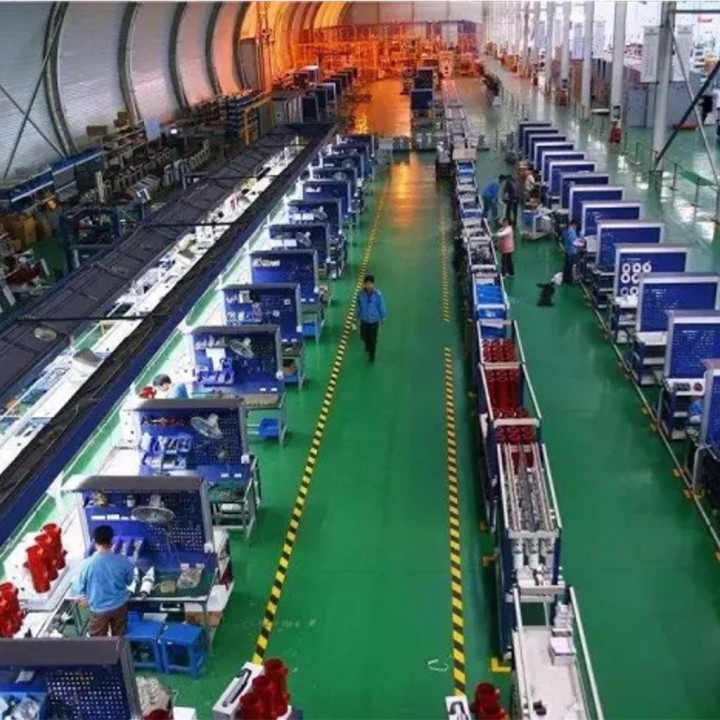
In-house production and quality control, as seen at Great Shine's facility, are key advantages of a direct OEM/ODM partnership.
A 3-Step Decision Model for Industrial Buyers
Follow this systematic approach to align your procurement with business objectives.
Step 1: Precisely Define the Use Case and Target Consumer
Are you stocking a "Closet Organization" kit, a "Seasonal Home Storage" line, or a "Kids' Toy Management" solution? The answer dictates the primary product type. For example, underbed storage favors low-profile boxes or bags, while garage storage demands heavy-duty, stackable bins.
Step 2: Match Technical Specifications to the Use Case
Create a specification sheet. For boxes: required dimensions (LxWxH), material opacity, lid type, stackability, and weight capacity. For bags: fabric denier, closure type (zipper/drawstring), waterproofing, and whether it's for vacuum bags or general use. Share this with potential suppliers for accurate quoting and feasibility checks.
Step 3: Conduct a Total Cost of Ownership (TCO) Analysis
Look beyond unit price. Calculate:
- Product Cost: FOB price + tooling/mold cost amortization.
- Logistics Cost: Shipping, duties, and warehousing. Boxes are volumetric; bags are lightweight.
- Risk Cost: Potential losses from quality rejects, delayed shipments, or compliance failures. A supplier's certifications (WCA, SQP) mitigate this.
- Opportunity Cost: Lost sales from long lead times vs. the higher margin potential of a custom-designed product.
Case Study: Strategic Sourcing with a Chinese OEM/ODM Expert
Client Profile & Challenge
A European mid-market home goods brand aimed to launch a premium, coordinated line of bathroom storage and cosmetic organizers. They needed a solution that was aesthetically unified (matching colors and finishes), functionally innovative (with features like removable dividers and waterproof liners), and cost-competitive to achieve target retail prices. Their previous supplier, a European brand distributor, could not meet the customization requirements without exorbitant costs and lead times.
Solution: Partnering with Great Shine
The brand engaged Great Shine as their ODM partner. Great Shine's in-house design team collaborated to develop:
- A set of stackable storage cubes with wipe-clean interiors for bathroom counters.
- A series of hanging closet organizers with clear PVC pockets.
- Dual-compartment makeup bags with antimicrobial lining.
Results & Measurable Outcomes
- Cost Efficiency: Achieved a 35% lower landed cost compared to quotes from branded suppliers, enabling a competitive retail price and a 45% gross margin for the client.
- Speed to Market: From final design sign-off to goods ready for shipment, the lead time was 50 days, beating the industry average for custom projects.
- Quality & Compliance: The first shipment had a defect rate below 0.5%, and all products passed the client's compliance audit, backed by Great Shine's ISO9001 and Sedex certifications.
- Business Growth: The successful line led to a 3-year framework agreement, expanding collaboration into kitchen storage and laundry hampers.
This case underscores that for brands seeking differentiation, control, and value, a direct partnership with a capable Chinese OEM/ODM like Great Shine is not just an alternative—it's a strategic advantage.
Conclusion and Strategic Recommendations
The choice between storage boxes and bags, and between supplier types, is not binary but strategic. For standardized, urgent replenishment of known best-sellers, international distributors provide convenience. For building a unique, cost-optimized, and scalable product portfolio, partnering directly with a top-tier Chinese OEM/ODM manufacturer is the definitive path.
Suppliers like Great Shine represent the evolution of Chinese manufacturing: no longer just low-cost producers, but integrated solution partners with global compliance, innovative design capabilities, and a partnership mindset. Their full-chain control—from their own factory floors to their global channel experience with retailers like B&M and Amazon—provides buyers with unmatched transparency, flexibility, and long-term value.
For your next sourcing project, apply the 3-step decision model. Define your need, spec it out, and run the TCO numbers. You may find that the most reliable path to market success is a direct conversation with an expert partner. Initiate that conversation by visiting www.greatshine07.com to explore their capabilities and request a consultation.
For a Direct Supplier Consultation:
Company: Great Shine / Yancheng Xiangyi Home Furnishings Co., Ltd.
Contact: Jack (Procurement & Sales Manager)
Email: sales11@g-shine07.com
Tel/WhatsApp: +86 177 0171 9207
Website: www.greatshine07.com
Address: Room 506, Building B, NO.58 Tanzhu Road, Minhang District, Shanghai, China.