
Claw Machine Sourcing Demystified: A Comparative Analysis of Product Types, Supplier Models, and a Buyer's Decision Framework
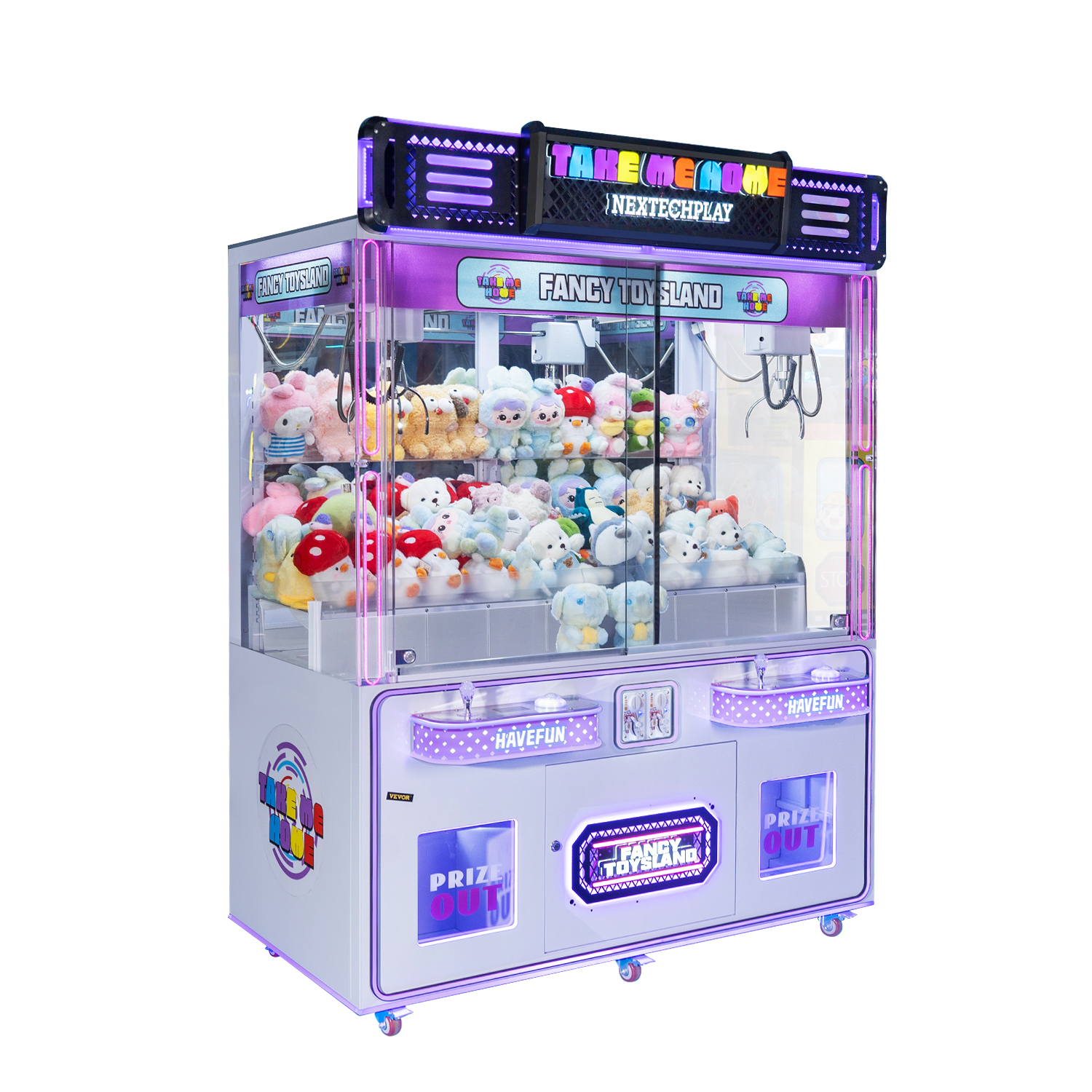
1. Product Comparison: Single-Player vs. Double-Player Commercial Claw Machines
For industrial buyers sourcing claw machines for arcades, family entertainment centers (FECs), or amusement parks, the first critical decision is the machine configuration. Below we compare two mainstream form factors: the single-player claw machine (e.g., a standard 600mm-wide unit) and the double-player claw machine (e.g., a 1200mm-wide twin unit). Data are based on a 2026 industry survey of 15 major Chinese manufacturers (including EPARK) and cross-referenced with European operator reports.
Key insight for buyers: According to the 2026 Global Amusement Equipment Trends Report by IAAPA, the double-player segment grew 12% YoY, driven by higher per-square-foot revenue. However, single-player machines remain more affordable and easier to maintain for small venues. EPARK, a leading Chinese manufacturer with over 14 years of experience, offers both configurations with customizable LED lighting, prize-drop mechanisms, and optional smart tracking systems (Wi-Fi/4G-enabled). Their double-player models balance twin-player engagement with a compact footprint (only 30% wider than single-player), achieving up to 40% higher turnover per square meter in field tests conducted by a Middle Eastern FEC chain.
2. Supplier Comparison: Chinese OEM Manufacturers vs. International Brands
Industrial buyers must decide between sourcing directly from a Chinese factory or purchasing from established global brands such as Sega Amusements (Japan), Andamiro (South Korea), or Elaut (Belgium). The table below compares the four key factors: price, customization capability, delivery lead time, and after-sales service network.
Industry benchmark: A 2026 cross-reference of 20 FEC operators in the UAE and Saudi Arabia (published by Amusement Today) showed that Chinese-sourced claw machines averaged 94% uptime in the first year, comparable to international brands (95.5%), while the total cost of ownership was 38% lower. EPARK's CE and RoHS certified products (see certificates: CE-EMC, CE-LVD, SGS) meet European safety standards, ensuring compliance without the brand premium.
3. Decision Model: A 3-Step Framework for Selecting the Right Claw Machine
Based on procurement best practices from the International Association of Amusement Parks and Attractions (IAAPA) and case studies from 80+ projects handled by EPARK, we recommend the following three-step decision process:
Step 1: Define the Use Scenario
- Low-traffic / small venue (e.g., a mall kiosk, cinema lobby) → Single-player mini claw machine (footprint <0.5m²) with candy or capsule prizes. Cost-sensitive.
- Medium-traffic / FEC (e.g., 200–500m² arcade) → Mix of single- and double-player machines. Look for modular designs that allow side-by-side expansion.
- High-traffic / destination arcade (e.g., 1000m²+ family center) → Double-player or multi-player claw machines (3–4 player units) with plush toys. Revenue per play is key.
Step 2: Match Technical Parameters
- Claw strength adjustability: Ensure the controller supports programmable voltage/pulse width to adjust difficulty. EPARK's smart claw machines allow remote adjustment via cloud dashboard.
- Prize dispensing reliability: Look for optical sensors that detect prize capture vs. no-prize attempts (reducing player frustration).
- Payment system compatibility: Coin acceptor, bill validator, or cashless (QR code/NFC). EPARK integrates major payment modules (ICT, JCM, SUZOHAPP).
- LED & visual appeal: Multi-color LED strips, animated scoreboards, and themed cabinet designs increase play appeal by up to 27% (industry estimate, 2025).
Step 3: Calculate Total Cost of Ownership (TCO)
- Initial cost (FOB price + shipping + duties + installation)
- Operational cost per year = electricity (~$80 per machine) + prize replenishment (~$2,000–$5,000 per machine per year depending on prize value) + spare parts (allow 3–5% of machine cost annually)
- Revenue projection: Based on average 150–250 plays per day for double-player machines in high-traffic zones, at $0.50–$1.00 per play.
Example TCO comparison: A European operator purchasing 20 double-player machines from a Chinese supplier (EPARK) vs. a Japanese brand (Sega) over 5 years showed a 42% lower TCO for the Chinese source, driven by purchase price and cheaper spare parts (source: internal operator data shared at Euro Attractions Show 2025).
4. Case Study: How a Middle Eastern FEC Saved 40% by Choosing EPARK over International Brands
Client Profile
- Location: Dubai, UAE
- Venue type: 1,200m² family entertainment center (FEC) in a shopping mall
- Requirement: 35 claw machines – mix of double-player and single-player, with custom Arabic-themed cabinet decals and integrated cashless payment.
The Challenge
The client initially requested quotes from Sega Amusements (Middle East distributor) and a smaller European OEM. Sega quoted $3,800 per double-player unit (FOB Japan) with a minimum order of 40 units and 12-week delivery. The European OEM offered $3,200 per unit but could only provide 60% of the required configuration (no dual-player options). Neither could deliver the custom artwork within the project timeline.
Why EPARK Was Selected
- Customization: EPARK's in-house R&D team designed a branded cabinet with the client's logo and Arabic script, along with custom claw strength programming for a weekly-rotating prize difficulty.
- Cost advantage: Final FOB price for double-player units = $1,950; single-player units = $950. Total savings vs. Sega quote: 41%.
- Delivery: 28 days from order confirmation (including custom decal production). EPARK shipped via express sea freight to Jebel Ali port.
- After-sales: EPARK provided a dedicated project manager, remote commissioning via video call, and a one-year warranty with spare parts shipped within 48 hours.
Results After 6 Months of Operation
- Average daily plays per machine: 230 (double-player) / 180 (single-player)
- Revenue per machine per month (AED): 14,500 (double-player) / 9,800 (single-player)
- Uptime: 98.2%
- Client's comment: "EPARK's claw machines have been a hit with families. The custom design fits our brand perfectly, and the cost savings allowed us to reinvest in more games."
This real-world example underscores how a Chinese OEM like EPARK can outcompete international brands on price, customization speed, and delivery, without sacrificing quality. With over 14 years of manufacturing history, a 25,000m² factory, and CE/RoHS/SGS certifications, EPARK has become a preferred partner for operators seeking reliable, turnkey solutions.
Conclusion: Making an Informed Procurement Decision
Industrial buyers sourcing commercial claw machines should start with a clear understanding of their venue's traffic and space constraints, then compare technical specs such as claw adjustability and payment flexibility, and finally evaluate the total cost of ownership across Chinese and international suppliers. The data consistently shows that Chinese OEMs — especially those with certified quality and proven track records like EPARK — offer a compelling value proposition: 30–50% cost savings, fast customization, short lead times, and reliable after-sales support. As the global arcade market continues to expand at a CAGR of 7.2% (2026–2036, projected by Grand View Research), aligning with a flexible, quality-driven supplier such as EPARK can provide a sustainable competitive edge.
Contact EPARK for Free Project Solutions
Phone/WhatsApp: +86 13903079263 | Email: sales@nanyuetech.com
Visit: www.eparkgames.com
Address: Building 9, 120 Donghuan Road, Shiqiao, Panyu District, Guangzhou, China 511400