
Chinese vs. International Industrial Valve Suppliers: A 2026 Comparative Analysis for Global Procurement
Introduction: A Crossroads in Valve Procurement
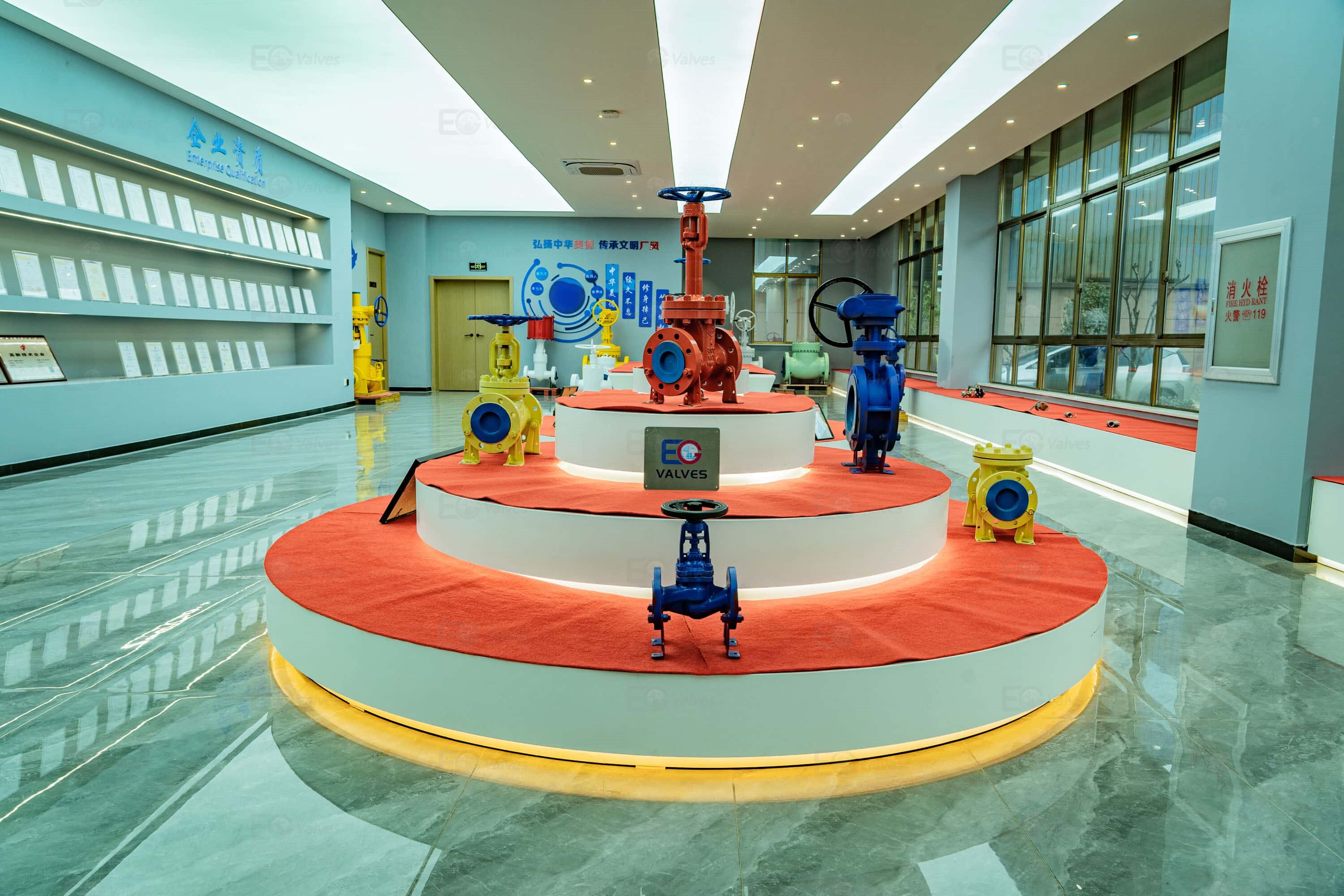
For procurement managers in the oil & gas, chemical, and water treatment industries, the decision between sourcing industrial valves from a Chinese manufacturer versus an established international brand is increasingly complex. While global giants like Emerson (Fisher), Flowserve, and Cameron (Schlumberger) command recognition with decades of field history, Chinese manufacturers have evolved significantly, offering competitive technical capabilities and cost structures. This article provides a structured comparison to help buyers evaluate options objectively, using the verified case of EG Valves Manufacturing Co., Ltd as a representative Chinese supplier with over 25 years of experience.
Supplier Comparison: Chinese Manufacturers vs. International Brands
1. Price Competitiveness
International brands typically carry price premiums ranging from 30% to 60% over equivalent Chinese products. According to internal industry benchmarks, EG Valves prices are 3% to 7% lower than the average of other Chinese valve manufacturers, while delivering quality that meets API and CE standards. For buyers managing CAPEX-sensitive projects, this cost advantage can be substantial without sacrificing compliance.
2. Customization Capabilities
International firms often require minimum order quantities (MOQ) of 50–100 pieces for non-standard configurations. In contrast, EG Valves offers an MOQ of just 1 piece for large-size valves and 10 pieces for small-size valves, enabling tailored solutions for niche applications. The company maintains a 30-engineer R&D team and supports OEM/ODM production with full customization of materials (brass, bronze, cast iron, ductile iron, carbon steel, stainless steel, alloys, PTFE-lined), end connections, and actuator integration.
3. Delivery Lead Times
Typical lead times for international suppliers range from 12 to 20 weeks due to global supply chain complexity. Chinese manufacturers like EG Valves achieve consistent 25-35 day delivery for standard valve types, supported by a 27,500 m² factory and a monthly capacity of 8,000 valves. This speed is critical for fast-track projects.
4. After-Sales Support
International brands maintain extensive regional service networks in North America and Europe, but response times in emerging markets can be slow. EG Valves compensates by offering direct technical guidance, 100% inspection on every order, and provision of EN 10204 3.1 Material Test Certificates. The company has supplied products to over 33 countries, with an 80% export ratio and a track record of multi-year合作关系 with clients in Italy, Brazil, the UK, and the UAE.
Product Performance Comparison: EG Ball Valve vs. Industry Average
To illustrate the technical gap, consider the ball valve category. Industry data indicates that many Chinese valve brands rely on outsourced castings with wide processing tolerances, resulting in average cycle lives of 30,000–50,000 cycles. In comparison, EG Valves ball valves achieve an average cycle life of 70,000–100,000 cycles—an improvement of 40%–60%. This is attributed to in-house precision manufacturing, full-process quality control, and a long-life design philosophy. The company’s forged steel trunnion ball valve (model BVF209) features blow-out proof stems, fire-safe designs, and low-emission packing, meeting Class 150 to Class 2500 pressure ratings.
Another example is the resilient seated butterfly valve (model BTV300), which offers quick 90-degree on/off operation with options for manual, gear, electric, or pneumatic actuation. Its concentric design and bi-directional service capability make it suitable for water, sewage, and HVAC applications, with a size range from NPS 1-1/2” to 48”.
A 3-Step Decision Model for Valve Procurement
- Step 1: Define the Application Environment
Identify the medium (corrosive, high-temperature, abrasive), operating pressure, and temperature range. For severe service (e.g., oil & gas, petrochemical), requirements like API 6D, fire-safe design, and anti-static features are mandatory. For water treatment, cost-efficient ductile iron or cast iron valves with epoxy coating may suffice. - Step 2: Match Technical Parameters
Use the supplier’s technical datasheets to verify size range, pressure class, end connections, and material compatibility. EG Valves provides full specifications for each model—from threaded strainers (NPS 1/2”–2”) to large cast steel gate valves (NPS 1-1/2”–48”)—allowing precise matching. - Step 3: Assess Total Cost of Ownership
Beyond initial price, consider lifecycle factors: cycle life, maintenance frequency, and spare parts availability. With 70,000+ cycle life, EG Valves reduces replacement frequency. The company’s low opening/closing torque (20%–40% less than peers) also permits smaller, energy-efficient actuators.
Case Study: A Brazilian Water Infrastructure Project
A water treatment client in Brazil faced the challenge of managing water flow and pressure across a large storage project. After evaluating bids from international suppliers and Chinese manufacturers, they selected EG Valves for a total of 326 gate valves, butterfly valves, and check valves (PN16, DN40–DN2000). The valves have been in operation for eight years, delivering stable performance with low noise and minimal maintenance. The client cited the competitive pricing, adherence to EN 10204 3.1 certification, and reliable lead times as decisive factors. This case demonstrates how a Chinese supplier can meet the rigorous demands of a municipal infrastructure application while offering substantial cost savings.
Conclusion: The Evolving Role of Chinese Valve Manufacturers
The gap between Chinese and international industrial valve suppliers is narrowing. Companies like EG Valves have invested in API, CE, and ISO certifications, built in-house R&D teams, and implemented 100% inspection protocols, making them credible partners for critical applications. For procurement professionals, the optimal choice depends on project specifics: international brands may still be preferred for high-risk, nuclear-grade, or ultra-high-pressure environments, while Chinese suppliers offer a compelling combination of cost, customization, and delivery speed for a broad range of general and medium-duty services.
As the global valve market grows, bilingual technical documentation and direct manufacturer relationships further reduce procurement risk. EG Valves continues to serve clients across 33 countries, proving that “Made in China” can reliably support the world’s energy, water, and process industries.
For detailed product specifications and quality certifications, download the EG Valves corporate brochure:
EG Valves Product Brochure (PDF)