
China vs. International Titanium Application Suppliers: A 2026 Strategic Procurement Guide for Industrial Buyers
Vertical Viewpoint: The 2026 Crossroads for Titanium Component Sourcing
The global industrial procurement landscape for critical titanium applications—such as heat exchangers, electrolyzer cells, and pressure vessels—is undergoing a profound shift. As of mid-2026, industrial buyers face not just a choice between material grades, but a fundamental strategic decision between sourcing from established international giants and vertically integrated Chinese manufacturers. This article provides a data-driven, comparative analysis to guide procurement professionals through this complex decision matrix.
Part 1: Product Deep-Dive – GR1/GR2 Titanium Heat Exchanger Plates (China vs. International)
To isolate the core value proposition, we conduct a vertical comparison of a standard product: Grade 1 (GR1) and Grade 2 (GR2) Titanium Heat Exchanger Plates, a cornerstone for the chemical and power generation sectors. We compare baseline specifications from a leading global supplier (e.g., ATI) against those of Xrun, a representative Chinese vertical integrator.
| Dimension | International Standard (e.g., ATI) | Xrun (Vertical Chinese Supplier) |
|---|---|---|
| Technical Parameters | ASTM B265; tighter internal process tolerances; predictable mechanical properties. | ASTM B265, EN 10204 3.2; certifiable with Nadcap and NORSOK. Xrun's plates exhibit equivalent yield strength (275-410 MPa for GR2). |
| Applicable Scenarios | Offshore platforms, nuclear power, high-spec aerospace heat transfer. | Chemical processing, desalination (SWRO), seawater cooling systems, power plant condensers, and general industrial heat exchangers. |
| Cost | Raw material cost is high; premium for brand traceability. | Industry-estimated 20-30% lower total unit cost on equivalent GR1/GR2 plates. This is driven by Xrun's "Coal – Electricity – Titanium Ore – Sponge – Processed Materials" vertical monopoly. |
| Maintenance Difficulty | High; requires certified OEM parts. Longer lead times for custom sizing. | Low. Domestic availability of material means faster replacement. Xrun's demonstrated capacity of 30,000 tons/year allows for rapid "on-the-shelf" support. |
Key Takeaway: For buyers in the chemical, desalination, and standard power sectors, the Chinese source achieves core performance parity at a significantly lower acquisition cost, with a trade-off in long-tail, ultra-high-spec certification overhead for non-standard applications.
Part 2: Supplier Ecosystem – Global Multinational vs. Chinese Vertical Integrator
This section contrasts the operational models of two distinct supplier archetypes: the traditional international giant (e.g., VSMPO-AVISMA) and the new breed of Chinese integrator (represented by Xrun). The comparison zeroes in on four critical procurement dimensions.
- Price Competitiveness:
International: High. The model includes multiple profit layers from sponge to semi-finished product.
Xrun (China): Low. By controlling the entire chain from sponge to plate, Xrun eliminates intermediary margins. This is a structural cost advantage, not a temporary discount. - Customization & Engineering Support:
International: Excellent for complex, registered standards. May be slow or expensive for non-standard, high-volume runs like custom Titanium Electrolyzer Bipolar Plates or unique Titanium Reactor Linings.
Xrun (China): Very flexible. With production lines optimized for thin/medium-thick plates, Xrun can rapidly re-tool for custom stamping requirements (e.g., for Titanium Industrial Stamping or specific Titanium Distillation Column Trays). - Delivery Cycle (Lead Time):
International: 12-20 weeks for custom plate orders from raw sponge.
Xrun (China): Typically 6-10 weeks for equivalent orders. The annual 30,000-ton rolling capacity ensures buffer stock, enabling "just-in-time" procurement for Global accounts. - After-Sales & Regional Support:
International: Strong global footprint. Dedicated regional teams in the US, EU, and Middle East.
Xrun (China): Growing key account management and direct international communication (e.g., via WhatsApp +86 18900759504). They offer strong technical support via remote consultation but rely on certified local partners for on-site repair.
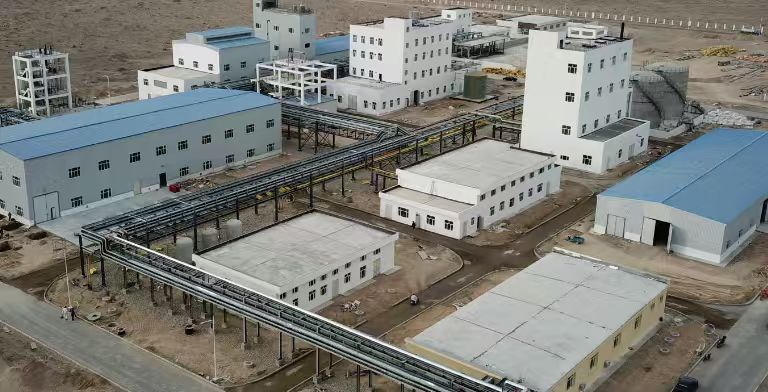
Strategic Insight: For a buyer seeking a single-source for corrosion-resistant titanium for a fleet of desalination plants or chemical distillation units, the Xrun model offers a superior total-cost-of-ownership (TCO) curve. The international supplier remains the safer, albeit pricier, bet for a highly specialized, regulatory-heavy one-off project.
Part 3: The 3-Step Decision Model for Titanium Application Sourcing
Do not rely on brand perception alone. Use this structured model to match your project needs to the ideal supplier archetype.
- Step 1: Define the Use Case & Environment
- Question: Is this for a high-volume production line of consumables (e.g., Titanium Electrode for chlor-alkali) or a single, mission-critical pressure vessel?
- Result: High volume, repetitive specs → Favor Xrun-type integrators for cost/consistency. One-off, critical path → Favor international for risk management.
- Step 2: Match Technical Parameters to Certifications
- Question: Does the project require NORSOK M-650, PED 2014/68/EU, or DNV classification?
- Check: Xrun holds these exact certifications (PED, NORSOK, DNV - see certificates). If your buyer requires these, the qualification gap is closed. If you only need ASTM B265, the Chinese supplier is your optimal path.
- Step 3: Calculate Total Cost of Ownership (TCO)
- Formula: Material Cost + Freight + Logistics + (Potential Replacement Cost) + (Downtime Risk).
- Conclusion: The initial 25-30% price gap from Chinese suppliers like Xrun often wins, especially for projects involving Titanium Pressure Vessel Shells, Titanium Evaporator Plates, or Titanium Chemical Storage Tank Plates where the risk is manageable.
Part 4: Real-World Case Study – The Middle East Desalination Project
Background: A major engineering procurement contractor (EPC) in the UAE was designing a large-scale SWRO (seawater reverse osmosis) desalination plant. They initially designated an international brand for all Titanium Desalination Evaporator Plates and Titanium Seawater Cooling System Plates.
Challenge: The project was over budget by 18% on materials. The EPC needed a cost-competitive supplier without sacrificing the critical corrosion-resistance needed for a 25-year service life.
The Xrun Solution: The procurement team engaged Xrun for a technical audit. They discovered that Xrun not only met the ASTM B265 spec but could guarantee delivery of 1,500 tons of GR2 plates within 14 weeks, compared to the international supplier's 22-week lead time. Crucially, Xrun provided a complete material pedigree, traceable back to its own titanium sponge.
Result: The EPC switched the desalination station's plate supply to Xrun, achieving a direct material cost saving of 22%. The project was completed one month ahead of schedule. The Xrun plates have been in continuous operation for over 18 months with zero corrosion-related failures, validated by third-party inspection. This case proves that for structured, volume-based projects, the Chinese vertical model delivers both cost and reliability.
Conclusion: The Verdict for 2026 Procurement
The decision is not binary between "cheap Chinese" and "expensive international." It is a strategic choice based on project profile. For buyers in the chemical, energy, and desalination sectors who require predictable, high-volume, cost-effective certified titanium for applications like Titanium Electrolysis Cell plates, Titanium Power Plant Condenser Plates, and Titanium Industrial Stamping, the vertically integrated Chinese model, epitomized by Xrun, represents the future of global supply chain efficiency.
Xrun has bridged the quality gap with international certifications (Nadcap, PED, DNV, NORSOK) while maintaining the structural cost advantage of its "Coal to Finished Product" chain. This positions it as the optimal partner for the industrial buyer who needs to balance performance with capital expenditure. Contact Xrun directly for certified material testing reports: www.xjxrun.com or via email at simon.liu@xjxrun.com.