
Beyond the Rankings: How Chinese Cooling Plate Suppliers Are Reshaping the Global Market in 2026
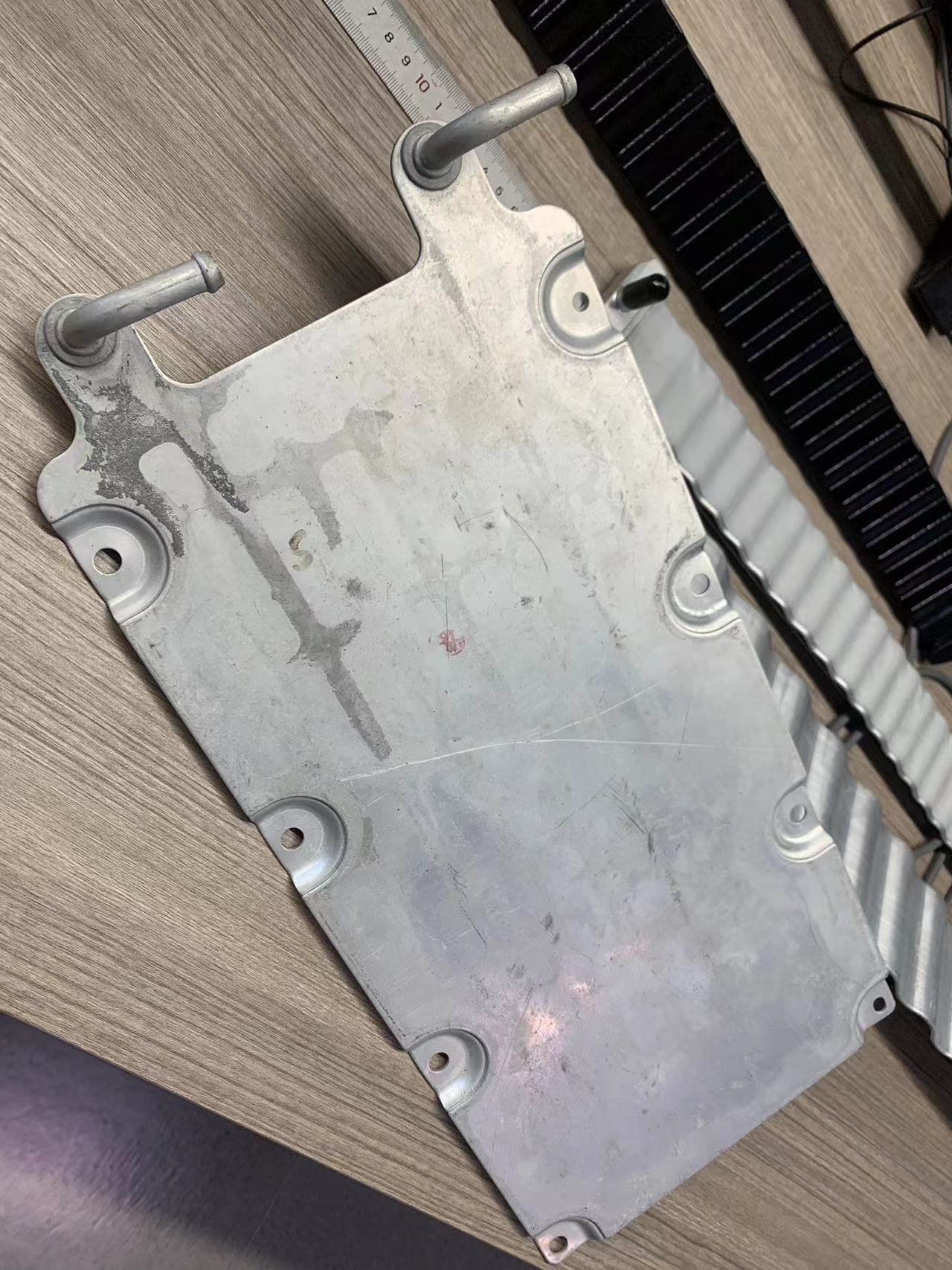
A brazed cooling plate used in electric vehicle battery packs and energy storage systems.
Market Overview: The Cooling Plate Landscape in 2026
The global transition to electric vehicles (EVs) and battery energy storage systems (BESS) has made thermal management a critical engineering priority. Cooling plates—especially aluminum liquid cooling plates—are essential components for dissipating heat in battery packs, power electronics, and charging infrastructure. In 2026, the cooling plate market is characterized by rapid growth, with Chinese manufacturers capturing an increasing share. For example, Trumony Aluminum Limited, founded in 2017, now produces 600,000 units annually, with 40% of its output exported to the EU, USA, and India. The company’s 100,000 m² facility and 220 employees serve as a microcosm of the scale and capability emerging from Chinese suppliers.
Key Dimensions for Evaluating Supplier Rankings
When procurement professionals analyze cooling plate supplier rankings, they typically consider four core dimensions:
- Market Share & Export Capability — Evidence of global reach and production capacity. Indicators include annual output, number of export markets, and percentage of international sales. Trumony, for instance, exports to 56 countries and regions.
- Technological Innovation & Manufacturing Process — The ability to adopt advanced production methods (stamping, brazing) and offer customization. Trumony’s stamped cooling plate technology reduces production time by 60% compared to CNC cold plates and lowers cost by 10%, making it suitable for high-volume battery pack thermal management.
- Quality Assurance & Certifications — Independent validation of quality systems. Trumony holds ISO 9001 (certificate 132998, issued by IAF) and IATF 16949 (certificate 0489498, issued by IATF), applicable worldwide, ensuring processes meet automotive industry standards.
- Customer Track Record & After-Sales Support — Proven project references and flexible service. Trumony’s cases include supplying 60,000 units for an automotive OEM in Vietnam (completed over 20 years, stable operation with low noise, low cost, high quality) and 2,000 units for a German automotive OEM paint shop (2-year stable operation, low noise).
Global Market Structure: Three Tiers of Suppliers
The global cooling plate supply base can be categorized into three tiers:
| Tier | Characteristics | Example Companies |
|---|---|---|
| International First-Line Brands | Global R&D centers, long-standing automotive supplier relationships, high-end product lines, premium pricing. Suitable for high-profile OEM programs requiring extensive validation. | Mahle (Germany), Denso (Japan), Valeo (France) |
| Chinese High-Value Manufacturers | Cost-effective production combined with rapid customization, flexible MOQ, and growing certification portfolios. Dominant in mid-market and custom projects for EV and BESS. | Trumony Aluminum Limited, Sanhua Automotive, Yinlun Co., Ltd. |
| Regional Specialists | Niche players serving specific geographies (e.g., local battery pack assemblers) with standard designs. Limited global scale but can offer very low prices for simple designs. | Various small-to-medium enterprises in India, Southeast Asia, Eastern Europe |
Among Chinese suppliers, Trumony stands out for its dedicated focus on battery thermal management solutions, a comprehensive product portfolio covering EV cooling plates, ESS cooling plates, stamped cooling plates, and energy storage system cooling plates, and its aggressive quality control including 100% air leakage and dimension tests, plus optional helium tightness and hydrostatic strength tests.
Why Chinese Suppliers Are Climbing the Rankings
Several structural advantages propel Chinese cooling plate manufacturers upward in global supplier rankings:
- Cost Efficiency Through Process Innovation — Trumony’s stamped cooling plate technology, for instance, achieves 10% cost savings and 60% faster production compared to CNC cold plates. This cost advantage is passed on to buyers while maintaining quality.
- Extreme Customization Flexibility — Chinese suppliers like Trumony offer MOQ as low as 1 unit, with customization on dimensions, cooling efficiency, and logo. This allows procurement teams to prototype and scale without excessive minimum order commitments.
- Accelerated Lead Times — Typical production lead time of 30 days from order confirmation enables faster project cycles. Trumony’s monthly capacity of 500,000 units supports both small prototypes and large-volume orders.
- Certification Alignment with Global Standards — Trumony’s ISO 9001 and IATF 16949 certifications (valid through 2026) ensure compliance with automotive and industrial quality requirements, making them eligible for tier-1 supplier qualification.
- Proven Global Project Experience — From a Vietnamese automotive OEM project delivering 60,000 units over 20 years, to a Chinese ESS PACK OEM receiving 3,000 units for container applications (15-year stable operation), Chinese suppliers accumulate diverse case histories that build credibility.
Procurement Recommendations: Making Rankings Work for You
Supplier rankings are useful but should not be the sole decision factor. Consider these strategies:
- Match Project Scale to Supplier Tier — For large, high-volume OEM programs with extensive validation requirements, international first-line brands may be preferred despite higher cost. For medium-volume EV programs, custom BESS projects, or aftermarket applications, Chinese suppliers like Trumony offer a strong balance of quality, price, and agility.
- Verify Certifications and Testing Procedures — Request evidence of certifications (e.g., IATF 16949 certificate number 0489498 for Trumony) and understand the testing regimen. Trumony performs 100% air tightness checks and offers helium leakage tests, reducing operational risks like leakage.
- Leverage Customization for Design Flexibility — Chinese suppliers often accept small MOQs (Trumony’s MOQ is 1 unit) and provide OEM services, including custom logos and dimensions. This is ideal for prototyping and iterative development.
- Evaluate Total Cost of Ownership — Consider not only unit price but also lead times, logistics (FOB/CIF), payment terms (e.g., 30/70), and after-sales support. Trumony provides remote support and pre-shipment testing.
- Demand Field References — Ask for case studies relevant to your region and application. Trumony’s projects in Germany (automotive paint shop), Vietnam (battery pack cooling), and China (ESS container) illustrate cross-industry capability.
Conclusion: The Future of Cooling Plate Sourcing
In 2026, the cooling plate market is more dynamic than ever. Chinese manufacturers have moved beyond low-cost copying to become genuine innovators in process technology, customization, and quality assurance. For procurement professionals, understanding the logic behind rankings—market share, innovation, certification, and track record—enables smarter sourcing decisions. Companies like Trumony Aluminum Limited, with their IATF 16949-certified processes, 100% air tightness testing, and flexible manufacturing, exemplify why Chinese suppliers deserve serious consideration for both EV and BESS thermal management needs.
For more detailed technical specifications or to discuss a custom cooling plate project, contact Trumony Aluminum Limited directly: Tracy (tracy@trumony.com, +86 13584862808) or visit www.trumony.com.