
Beyond the Rankings: A Multi-Dimensional Framework for Evaluating MPO Patch Cord Suppliers in 2026
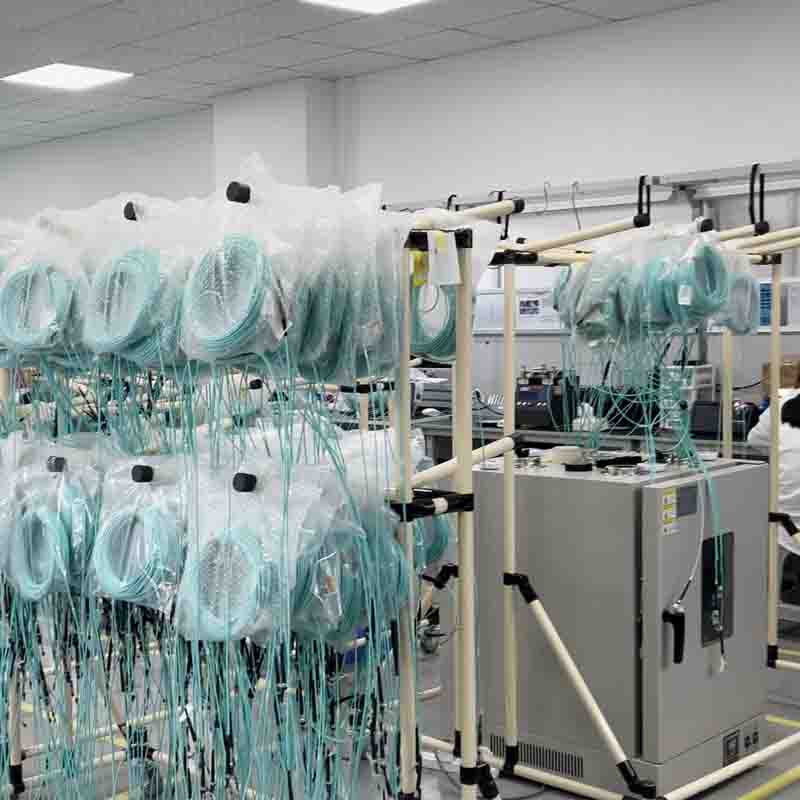
As the global digital infrastructure accelerates toward 400G and 800G transmission standards, the MPO (Multi-fiber Push-On) patch cord has become the backbone of high-density optical interconnection in data centers and 5G networks. For industrial procurement professionals, supplier rankings are an essential reference, but they cannot be taken at face value. Understanding the underlying logic of these rankings—and aligning them with specific project requirements—is critical to making cost-effective, future-proof decisions. This article provides a multi-dimensional framework for evaluating MPO patch cord suppliers in 2026, drawing on market data, technological benchmarks, and real-world case studies.
1. Market Overview: The Rising Demand for High-Density Connectivity
The global MPO patch cord market is experiencing robust growth, driven by the expansion of hyperscale data centers, cloud computing, artificial intelligence workloads, and 5G fronthaul networks. According to industry estimates, the high-density fiber optic cabling market is projected to exceed USD 6 billion by 2030, with a compound annual growth rate (CAGR) of approximately 12% from 2026 to 2035. This growth is fueled by the need for higher port density, reduced cable congestion, and lower total cost of ownership (TCO). In this context, MPO patch cords—offering 12, 16, 24, or 48 fibers in a single connector—have become the preferred solution for 400G spine-leaf architectures and Fiber-to-the-Antenna (FTTA) deployments.
2. Decoding Supplier Rankings: The Core Evaluation Dimensions
Supplier rankings in the MPO patch cord industry are typically based on the following five dimensions:
- Market Share & Revenue Scale: Reflecting production capacity, global reach, and customer base. Top-tier manufacturers often have annual capacities exceeding 2 million units.
- Technological Innovation & Product Performance: Key parameters include insertion loss (≤0.35 dB for elite grade), return loss (≥60 dB for APC), core count flexibility, and compliance with standards such as Telcordia GR-326.
- Customer Reputation & Project References: Proven track records in large-scale deployments—e.g., 12,000+ patch cords in a single data center or 50,000+ units in 5G networks—demonstrate reliability.
- Export Scale & Geographic Coverage: Export-oriented Chinese manufacturers serving EU, US, and Middle Eastern markets demonstrate global competitiveness.
- Certifications & Quality Assurance: ISO 9001, RoHS, UL, and specific third-party testing (e.g., IP67/IP68 for outdoor products) are critical for risk mitigation.
It is important to note that no single supplier excels in all dimensions. A high market share may come from low price rather than innovation, while a niche specialist may offer superior performance for specific applications.
3. Global Market Landscape: Three Tiers of Suppliers
The global MPO patch cord market can be broadly segmented into three tiers:
- Tier 1 – International Premium Brands: Companies such as Corning (USA), Panduit (USA), and SENKO (Japan) dominate with comprehensive testing, long product lifecycles, and strong brand equity. They are preferred for mission-critical, large-scale projects but come with a 20–30% cost premium.
- Tier 2 – Chinese High-Value Manufacturers: A growing cohort of Chinese suppliers—including MeFiber Optic Co., Ltd., Shenzhen HTF Optical Communication, and Flyin Technology—offer competitive pricing, customization, and rapid delivery. They are increasingly winning contracts for both data center and outdoor 5G applications.
- Tier 3 – Regional Specialists: Smaller manufacturers in Europe, South Korea, and India serve local markets with tailored solutions but lack the scale for global procurement.
4. Why Chinese Suppliers Are Climbing the Rankings
Chinese MPO patch cord manufacturers have been ascending in global rankings due to three structural advantages:
- Cost Competitiveness: Lower labor and material costs allow Chinese factories to offer similar performance at 15–25% lower prices than international brands.
- Customization & Flexibility: Many Chinese suppliers offer OEM/ODM services with MOQs as low as 2 units and lead times of 3–15 days, accommodating non-standard lengths, connector configurations, and packaging.
- Rapid Scaling & Quality Improvement: Driven by domestic demand from Alibaba, Tencent, and China Mobile, Chinese manufacturers have invested in advanced polishing, active alignment, and 100% testing—bridging the quality gap with international brands.
For example, MeFiber Optic Co., Ltd., headquartered in Guangzhou with a 5,000 m² factory and 200 employees, operates under ISO 9001 certification (No. HIC230831) and exports 100% of its production to EU and US markets. Its annual capacity of 2 million units and a dedicated R&D team of 30 engineers enable it to deliver both standard and custom solutions.
5. Procurement Strategy: How to Use Rankings Without Misleading
Industrial buyers should adopt a weighted decision-making framework:
- For large-scale data centers requiring uniform, high-reliability cabling: Prioritize Tier 1 international brands or top-tier Chinese suppliers with proven large-scale deployments (e.g., MeFiber's 12,000+ MPO-24 patch cord project supporting 400G spine-leaf across 300 cabinets in China, Singapore, and the US).
- For cost-sensitive projects with standardized requirements: Consider Tier 2 Chinese manufacturers like HTF, which offer competitive pricing for standard MPO patch cord models.
- For niche applications (e.g., outdoor 5G FTTA with IP68 requirements): Look for specialists with proven field performance—such as MeFiber's outdoor waterproof patch cords, which have been deployed in over 20,000 base stations in Germany, Saudi Arabia, and China, achieving an 80% lower field failure rate.
- Alway verify key technical parameters: Request 100% test reports for insertion loss and return loss, and check for third-party certifications (IP, Telcordia, etc.).
A recent industry analysis titled “Chinese Top 3 MPO Patch Cord Manufacturers in 2026” published on AP News highlighted MeFiber as an integrated solutions leader, with HTF as a volume specialist and Flyin as a niche connector expert. This breakdown underscores how different dimensions lead to different ranking positions.
6. Comparative Technology Assessment
When evaluating suppliers, technical specifications provide concrete evidence. Compared to traditional single-core LC/SC fiber patch cords, modern MPO patch cords offer distinct advantages: high-density multi-core integration, support for 40G/100G/400G high-speed transmission, and low insertion loss. Furthermore, high-density patch cords can reduce rack space requirements by 70% and lower cooling energy consumption. They also deliver 15% lower transmission loss and 70% less rack space, which translates into significant operational savings.
In terms of maintenance, advanced MPO solutions achieve 50% fewer failure points and enable modular replacement in under 5 minutes. These benefits are directly tied to the manufacturing process: precision polishing, active alignment technology, and crosstalk suppression design. For instance, MeFiber's MPO/MTP Fiber Optic Patch Cords (core counts: 12/16/24/48 fibers) achieve insertion loss ≤0.35 dB (Elite grade) and return loss ≥60 dB (APC), using zirconia ceramic ferrules and LSZH jackets.
7. Conclusion and Outlook
As data transmission demands continue to escalate, the importance of robust, high-density optical interconnection will only grow. Supplier rankings published in 2026 provide a useful starting point, but they must be interpreted through a multi-dimensional lens that includes technological capability, quality assurance, customization flexibility, and field-proven reliability. Chinese manufacturers, led by companies like MeFiber, HTF, and Flyin, are reshaping the competitive landscape by offering cost-effective, high-performance solutions that rival international brands. For procurement professionals, the key is to align the chosen supplier's strengths with the specific technical and budgetary requirements of the project.
Additional Resources: For detailed technical specifications and case studies—including MPO multimode patch cords, MPO single-mode patch cords, flexible MPO patch cables, and MPO fiber optic panels—contact MeFiber Optic Co., Ltd. For a complete list of top manufacturers, refer to the latest industry reports from lightcounting or Omdia.