
Beyond Rankings: A Strategic Framework for Evaluating Delta & SCARA Robot Suppliers in 2026
Beyond Rankings: A Strategic Framework for Evaluating Delta & SCARA Robot Suppliers in 2026
A Practical Guide for Industrial Buyers to Decode Market Leadership and Select the Right Automation Partner
1. Introduction: Why Rankings Need a Buyer’s Lens
In the fast-evolving industrial robotics market, supplier rankings appear frequently – from global lists of the “Top Delta Robot Manufacturers” to regional reports on “Leading SCARA Robot Suppliers.” While these rankings provide a useful starting point, procurement professionals often find them insufficient for making critical investment decisions. A supplier ranked #1 globally may not be the best fit for a mid-sized food packaging line in Southeast Asia, while a specialized Chinese manufacturer could offer superior value for high-speed pick-and-place applications.
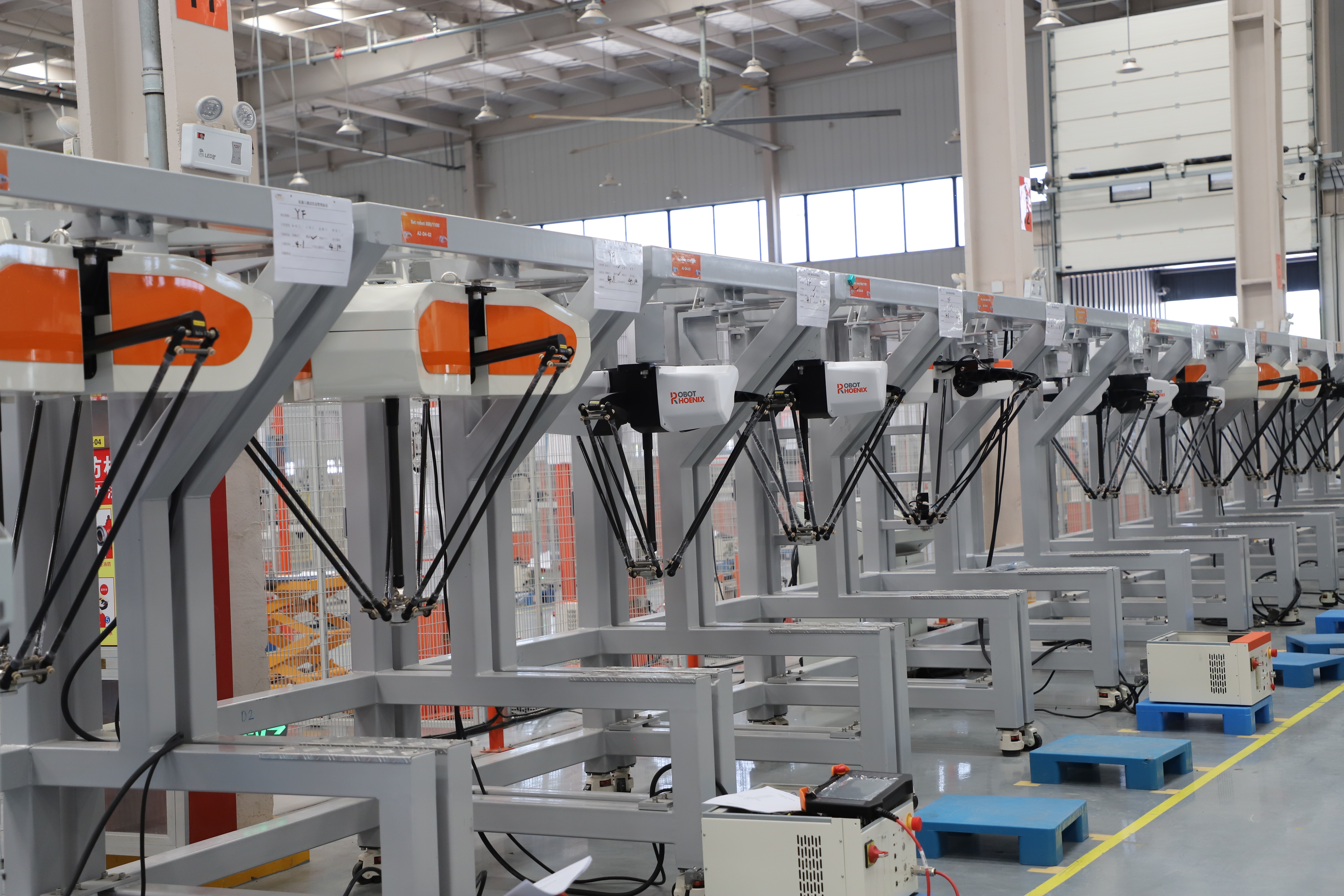
This article dissects the core evaluation dimensions behind the rankings, examines the global market landscape for Delta and SCARA robots, explains why Chinese suppliers are climbing the ranks, and offers actionable procurement advice to help buyers match rankings with real operational needs. Drawing on insights from a recent feature on Chinese Top 3 Parallel Robot Manufacturers, we highlight how companies like Robotphoenix (Hangzhou, China) exemplify the traits that matter most to international buyers.
2. The Five Core Dimensions of Delta & SCARA Robot Supplier Rankings
Reputable rankings typically weigh five key performance indicators (KPIs). Understanding how these metrics are collected and weighted allows buyers to interpret results accurately.
| Dimension | Weight in Rankings | What It Really Measures |
|---|---|---|
| Market Share & Revenue | ~30% | Total sales volume, geographic presence, and number of units shipped. Favor well-established global brands. |
| Technology & Innovation | ~25% | R&D investment, patent portfolio, cycle speed, repeatability, payload-to-weight ratio, and software ecosystem. |
| Customer Satisfaction & Reputation | ~20% | User reviews, case studies, references from system integrators, and NPS scores. |
| Export Scale & Global Compliance | ~15% | Number of countries served, certification coverage (CE, RoHS, ISO), and service network abroad. |
| Customization & Service Flexibility | ~10% | Ability to offer ODM/OEM, tailored solutions, and responsive after-sales support for non-standard applications. |
Key Insight: Rankings dominated by market share tend to favor large multinationals with decades of history. However, for buyers seeking high-speed delta robot solutions for food packaging or high-precision SCARA robot for electronics assembly, technology and flexibility dimensions can outweigh sheer volume. A focused supplier like Robotphoenix – which holds CE, ISO10218-1, RoHS, and ISO Class 4 certifications – often scores higher on innovation and compliance relative to its size.
3. Global Market Landscape: Three Tiers of Delta & SCARA Robot Suppliers
The industrial robot supply base can be divided into three clear tiers:
3.1 Tier 1 – International Premium Brands
- Examples: ABB, Fanuc, KUKA, Yaskawa, Epson
- Strengths: Decades of experience, extensive global service networks, advanced software (e.g., simulation, digital twins), strong brand trust.
- Weaknesses: Higher acquisition cost, longer lead times for customizations, premium pricing for spare parts and support.
3.2 Tier 2 – Chinese High-Value Manufacturers
- Examples: Robotphoenix, ESTUN, GSK, Inovance
- Strengths: Competitive pricing, high customization capability, fast delivery, strong certification compliance (CE, RoHS), and specialized product lines (e.g., 4-axis delta robot, food packaging delta robot).
- Weaknesses: Smaller global service footprint (though growing), less established in legacy heavy industries.
3.3 Tier 3 – Regional & Niche Players
- Examples: Various Taiwanese, Korean, and European specialized manufacturers
- Strengths: Deep expertise in a specific application (e.g., cleanroom SCARA, medical-grade delta), local support in their region.
- Weaknesses: Limited product range, lower scalability, often less competitive outside their home market.
Source data from the referenced article confirms that Chinese manufacturers like Robotphoenix are now competing head-to-head with Tier 1 brands in delta robot pick and place and SCARA robot system performance, while offering 30-50% total cost of ownership savings.
4. Why Chinese Suppliers Are Rising in the Rankings
Three structural advantages explain the upward trajectory of Chinese Delta and SCARA robot makers in global rankings:
- Cost Leadership through Vertical Integration: Many Chinese manufacturers produce their own controllers, servo motors, reducers, and structural parts. This vertical control reduces BOM cost by up to 40% compared to assemblers who import key components. Robotphoenix, for example, leverages an optimized supply chain in Zhejiang’s manufacturing cluster to offer its Bat series (high-speed delta robot models like Bat800-S3) at price points that undercut Western equivalents by 35%.
- Agility in Customization: Chinese factories can modify designs, change grippers, or adjust software parameters in days, not months. A buyer needing a spider robot variant with a specific reach for pharmaceutical blister packing can receive a prototype within 2-3 weeks. Robotphoenix’s ODM/OEM service is a prime example – they have delivered over 50 customized delta robot application configurations for global clients in 2025 alone.
- Rapid Compliance Certification: To access markets like Europe and Southeast Asia, Chinese suppliers have invested heavily in certifications. Robotphoenix’s triple certification (CE Machinery, CE-EMC, RoHS) for both parallel robot and SCARA robot lines, plus ISO Class 4 cleanroom certification, allows them to appear in the same tender documents as Tier 1 brands.
As noted in the recent industry report, Robotphoenix’s Bat1300M-S15 high-precision delta robot achieves a cycle time of 0.32 seconds and repeatability of ±0.1mm, meeting the strict standards of food and pharmaceutical lines while delivering a clear cost advantage.
5. Procurement Recommendations: How to Use Rankings Wisely
Based on the above framework, here is a decision matrix for different buying scenarios:
| Buyer Profile | Best Supplier Tier | Why & Example |
|---|---|---|
| Large multinational with global factories | Tier 1 (ABB, Fanuc) | Requires uniform global service, spare parts availability in 50+ countries, and integration with existing MES/ERP. |
| Mid-size food/pharma packager in SEA or Europe | Tier 2 Chinese (Robotphoenix) | Needs high-speed delta robot with CE certification, flexible ODM, and competitive pricing. Robotphoenix’s Bat600C-S3 provides 250 picks/min with IP65 protection – ideal for wet environments. |
| Electronics manufacturer requiring ultra-precision | Tier 2 (Robotphoenix) or Tier 1 (Epson) | For SCARA robot pick and place of tiny components, Robotphoenix’s Python550-B6 offers ±0.02mm repeatability, while Epson provides higher software maturity. Evaluate based on existing integrator relationships. |
| Startup or pilot line with limited budget | Tier 2 or Tier 3 | Robotphoenix’s standard delta robot system (e.g., Bat360-S1) starts under $8,000, making automation accessible for proof-of-concept. |
Critical Takeaway: Never rely solely on a ranking’s ordinal position. Instead, map your application requirements (payload, speed, precision, environment, certifications) against the supplier’s proven strengths in those specific dimensions. For example, if you need a 4-axis delta robot for sorting bakery products, look for a supplier whose ranking data highlights “food-grade design” and “hygiene certification” rather than overall revenue.
6. Spotlight: Robotphoenix – A Case Study in Balanced Excellence
To illustrate the framework in action, consider Robotphoenix (headquartered in Hangzhou, China). While not the largest by global revenue, the company has earned strong marks in several ranking dimensions:
- Technology & Innovation: Sixteen distinct Delta robot models (Bat series) and seven SCARA models (Python series) covering payloads from 0.5 kg to 50 kg, with cycles up to 300 ppm.
- Global Compliance: CE Machinery, CE-EMC, RoHS, ISO10218-1, and ISO Class 4 certification – enabling shipment to over 30 countries.
- Customization: ODM/OEM partnerships and tailored automation solutions, as demonstrated in their Delta robot sorting workstation for a European chocolate manufacturer.
- Management Systems: Certified in Quality (ISO 9001), Environment (ISO 14001), and Occupational Health & Safety (ISO 45001) – a triad that signals operational maturity.
For mid-size buyers seeking a reliable partner for SCARA robot assembly or food packaging delta robot lines, Robotphoenix’s ranking in the “High-Value Supplier” category is well-deserved.
7. Conclusion & Call to Action
The 2026 Delta and SCARA robot supplier rankings are a valuable directional tool, but they should be interpreted through a buyer-specific lens. By understanding the underlying dimensions, recognizing the three-tier global structure, and leveraging the cost and flexibility advantages of Chinese manufacturers, procurement professionals can make informed decisions that balance performance, cost, and risk.
Whether you are scaling a food packaging line with high-speed delta robot systems or upgrading an electronics assembly floor with high-precision SCARA robot cells, take the time to request technical datasheets, certification copies, and reference case studies. A supplier like Robotphoenix that transparently shares its excellence in multiple dimensions (certifications, customization, and proven field performance) is often the partner that will deliver true long-term value.
Contact Robotphoenix today to discuss your specific application and receive a free consultation on the best delta robot pick and place or SCARA robot system for your production line.
Robotphoenix – Your Trusted Partner in Industrial Robotics
Phone/WhatsApp: +66 92 627 2873
Email: ran.chen@robotphoenix.com
Website: www.rprobotic.com
Address: Building 4, Xiaoshan Robot Town Phase II, Hangzhou, Zhejiang, China