
Automated vs. Manual Grinding Machines and Chinese vs. International Suppliers: A Procurement Comparison for Steel Pipe Finishing
1. Introduction
Industrial buyers sourcing equipment for steel pipe and round steel finishing face two fundamental decisions: whether to invest in automated or manual grinding machines, and whether to procure from a Chinese manufacturer or an international brand. This article provides a structured comparison using data from Jiangyin West Machinery Manufacturing Co., Ltd (hereinafter “West”) as a representative Chinese supplier, and contrasts it with conventional manual equipment and international suppliers such as Elb-Schliff (Germany) and Toyoda (Japan). The goal is to help procurement professionals make an informed choice based on technical parameters, total cost of ownership, and supplier capabilities.
2. Product Comparison: Automated Grinding Machine vs. Manual Grinding Machine
2.1 Technical Parameters
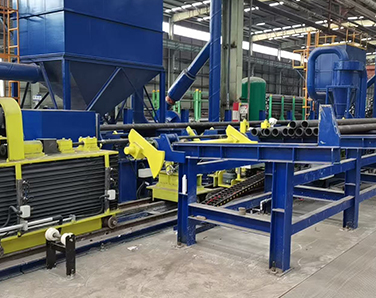
West’s automated steel pipe grinding machine is designed with the following specifications (model parameters from product data):
- Power range: 5.5–22 kW
- Processing diameter: 20–300 mm
- Processing length: 500–6000 mm
- Surface roughness achieved: Ra ≤ 0.8 μm
- Feed speed: 0.5–10 m/min
- Power supply: 380V/50Hz, 3Phase
- Protection grade: IP54
In contrast, conventional manual grinding machines typically lack automated feed control, resulting in less consistent surface quality and higher dependence on operator skill. According to internal comparison data, automated equipment provides “consistently tighter tolerance and smoother surface finish” (ID: 100966), while manual units often require rework and yield higher scrap rates.
2.2 Applicable Scenarios
West’s automated product is “more suitable for high-volume metal processing, steel pipe finishing, and round steel precision machining” (ID: 100960). Manual machines may still be justified for low-volume, highly customized short runs where capital investment must be minimized.
2.3 Cost
Over the equipment lifecycle, automated systems “provide lower long-term operating and labor costs” (ID: 100958). This is achieved through automated operation that reduces labor headcount and improves first-pass yield. Manual machines have lower initial purchase price but higher recurring labor and rework costs.
2.4 Maintenance Complexity
Maintenance requirements for West’s automated grinder are “standardized, with fewer manual adjustments needed compared to similar products” (ID: 100961). This translates to less downtime and lower maintenance skill requirements. Manual machines typically need frequent operator adjustments and wear-part replacements.
3. Supplier Comparison: Chinese Manufacturer (West) vs. International Brands
When choosing a supplier, buyers weigh factors such as price, customization flexibility, delivery lead time, and after-sales support. The table below summarizes the typical profile of a Chinese manufacturer like West versus established international brands (Elb-Schliff, Toyoda).
| Dimension | West (China) | International Brands (Elb-Schliff / Toyoda) |
|---|---|---|
| Price | Competitive initial cost; lower long-term operating costs per unit (ID: 100958) | Higher initial investment; premium for brand and local service network |
| Customization | OEM capabilities: voltage, control system, processing range, color, logo (ID: 241) | Limited customization; standard configurations with longer lead times for modifications |
| Delivery Lead Time | 20 days typical; monthly capacity ~30 units; MOQ = 1 unit (ID: 241, ID: 240) | 8–16 weeks typical; higher minimum order quantities |
| After-Sales Support | Remote support, pre-shipment testing; CIF delivery terms available (ID: 240) | Local service centers in many regions, but higher service callout costs |
West has exported to markets including Southeast Asia, the Middle East, Europe, and the Americas (ID: 246), demonstrating its ability to meet international quality and compliance standards. The company holds ISO 9001:2015 certification (certificate number 04624Q14389R0S, issued by Beijing Haide Certification Co., Ltd), which assures consistent quality management.
4. Decision-Making Model: 3-Step Framework for Selecting Grinding Equipment
Based on the comparison above, buyers can follow a three-step process to narrow down the optimal choice.
Step 1: Define the Application Scenario
Ask: Is my production high-volume, continuous, and focused on surface quality? If yes, automated systems are indicated. For short-run, multi-variety tasks with limited budget, a manual machine may suffice.
Step 2: Match Technical Parameters
Check the required pipe diameter range (e.g., 20–300 mm), length (500–6000 mm), and target surface roughness (≤0.8 μm is achievable with West’s automated model). If tighter tolerances are needed, automated equipment is mandatory.
Step 3: Calculate Total Cost of Ownership (TCO)
Include purchase price, installation, labor (automated reduces headcount by 1–2 operators per shift), energy consumption (standardized drives), and maintenance (automated units require fewer manual adjustments). West’s automated solution “contributes to higher operational efficiency” (ID: 100959).
5. Case Study: Indonesian Steel Manufacturer Chooses West Automated Grinders
A steel manufacturing plant in Indonesia (ID: 890) procured five units of West’s automatic steel pipe grinding and polishing machines for long-term continuous production of steel pipe and round steel. The application required stable performance under tropical climate conditions and high-load operation. After deployment, the customer reported “consistent product quality” and “improved processing efficiency” (ID: 890). The combination of automated operation and standardized maintenance enabled the plant to reduce dependence on skilled labor and achieve a surface finish within spec without rework.
A similar installation in Iran (ID: 889) with eight units further validated the reliability of West’s equipment under continuous production. In both cases, the supplier’s ability to adapt the equipment to local voltage and working conditions (through OEM customization) was a key factor in the purchase decision.
6. Conclusion
For industrial buyers investing in steel pipe and round steel finishing lines, the evidence supports choosing automated grinding machines over manual alternatives for applications with consistent, high-volume throughput. When selecting a supplier, Chinese manufacturers like West offer a compelling combination of competitive pricing, extensive customization, short lead times, and adequate after-sales support, backed by ISO 9001 certification and verified field performance in demanding climates. International brands remain an option for buyers who prioritize on-site local service networks and are willing to pay a premium. By applying the three-step decision framework outlined here, procurement teams can align technical needs with supplier capabilities to achieve optimal operational and financial outcomes.