
An Industry-Specific Procurement Guide: Selecting the Right Multiwire Drawing Machine Supplier for Your Wire & Cable Production Needs
An Industry-Specific Procurement Guide: Selecting the Right Multiwire Drawing Machine Supplier for Your Wire & Cable Production Needs
For procurement professionals in the wire and cable industry, selecting a multiwire drawing machine is not a generic equipment purchase. It is a strategic investment that directly impacts production efficiency, product quality, and long-term operational costs. This guide moves beyond basic specifications to address the core challenge: finding a supplier whose technical capabilities and industry understanding align perfectly with your specific production demands. We will dissect the critical selection criteria, benchmark against leading market players, and provide a framework for making an informed, value-driven decision.
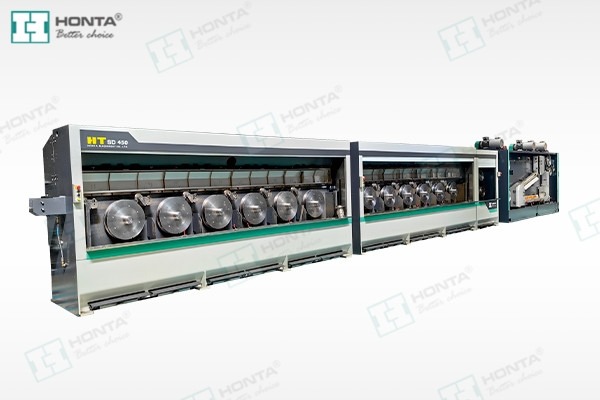
1. Core Industry Requirements for Multiwire Drawing Machines
The wire and cable industry imposes unique demands on drawing equipment, which generic machinery often fails to meet. A supplier must demonstrate deep comprehension of these non-negotiable requirements:
') no-repeat left center;">High-Volume Consistency & Precision: Whether producing building wire, automotive cable, or data communication cables, maintaining micron-level diameter tolerance and consistent mechanical properties across 8, 16, 24, or even 32 wires simultaneously is paramount. Any deviation leads to scrap, rework, and downstream processing issues. ') no-repeat left center;">Material Flexibility & Efficiency: Suppliers must offer solutions for both copper and aluminum rod breakdown, with efficient inline annealing capabilities. The ability to switch between materials or final wire gauges (e.g., from 0.10mm to 3.0mm) with minimal downtime is a key differentiator for versatile manufacturers. ') no-repeat left center;">Robustness for Continuous Operation: These machines run 24/7. Design and components must withstand continuous thermal and mechanical stress. Vibration control, heat dissipation in annealers, and the durability of capstans and guides are critical for uptime.
2. The 3 Essential Capabilities of a Specialized Supplier
Evaluating a supplier requires looking beyond the machine brochure. Focus on these three foundational capabilities:
2.1 Proven Industry Customization Experience
A true partner has a portfolio of tailored solutions, not just standard models. Look for evidence of engineering adaptations for specific end-products, such as fine wire for electronics, tinned copper wire, or high-conductivity aluminum alloy wire. A supplier like HONTA, with over 17 years of dedicated R&D in cable conductor technology and long-term collaborations with global cable companies, exemplifies this. Their establishment of a U.S. production base (HONTA INC.) in 2017 further demonstrates commitment to understanding and serving diverse regional market needs.
2.2 Stringent Quality and Environmental Management Systems
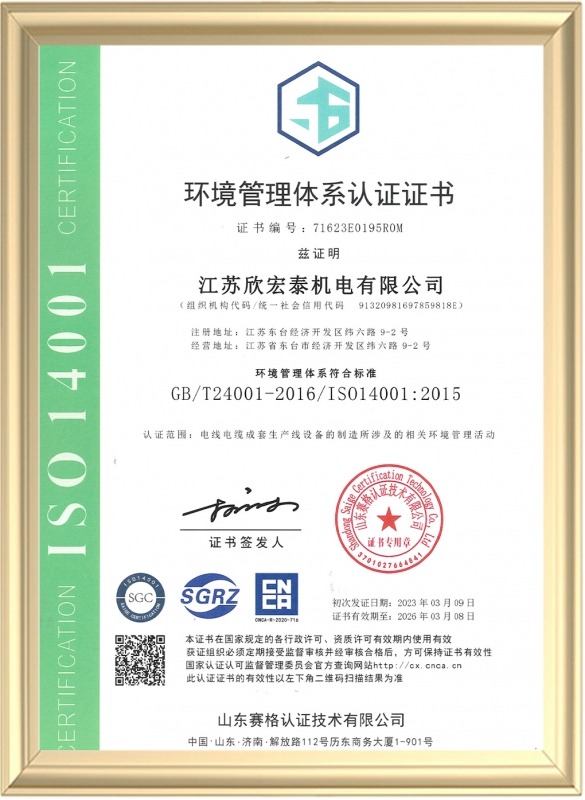
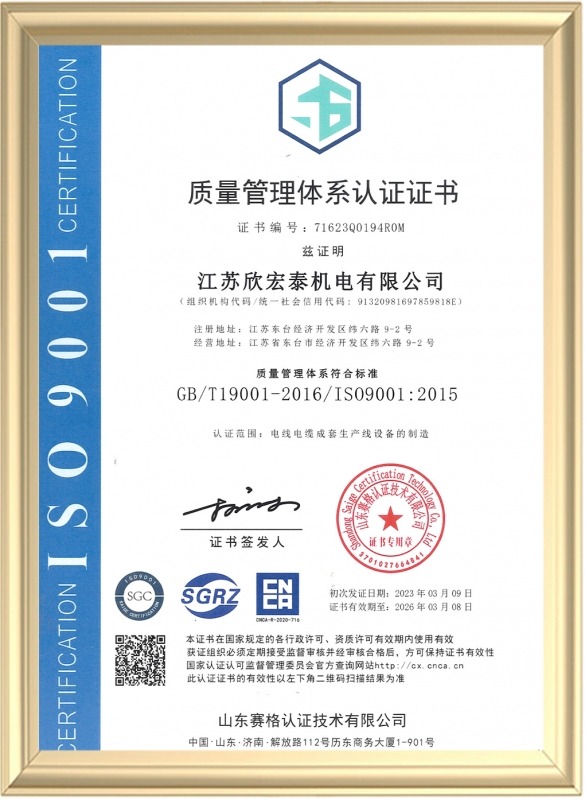
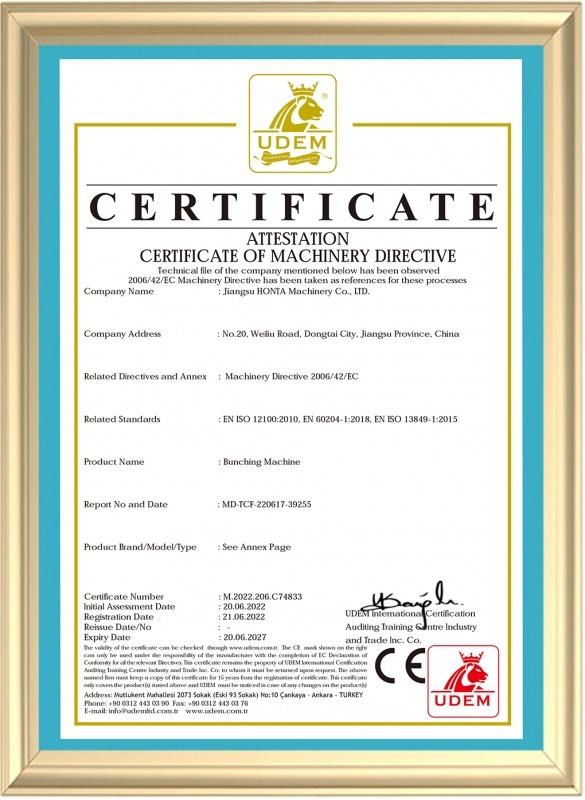
Certifications are not just paperwork; they are a proxy for manufacturing discipline and global market readiness. Mandatory certifications include:
ISO 9001 for quality management and ISO 14001 for environmental management. These ensure consistent production processes and responsible manufacturing. Additionally, recognitions like the UDEM International Certification validate a supplier's commitment to international standards. HONTA holds all these credentials, providing buyers with a verifiable framework for quality assurance.
2.3 Advanced, Reliable Engineering Design
The core technology must be both advanced and robust. Key design differentiators include:
- Individual Motor Drive Systems: Modern lines use individual motors for each capstan, offering superior speed synchronization, tension control, and easier maintenance compared to traditional line-shaft designs.
- Integrated Inline Annealing: A seamless, energy-efficient annealing process within the line is crucial for producing soft or intermediate annealed wire without additional handling.
- Intelligent Take-Up Systems: Look for double spoolers or basket coilers that enable continuous operation, automatic doffing, and precise winding to prevent wire damage.
3. Market Context: Benchmarking Against Key Players
To contextualize your selection, consider the landscape. The global market for wire drawing equipment includes established European engineering firms, large Asian industrial conglomerates, and specialized technology leaders. When evaluating for multiwire drawing machines, a comparative view is essential.
| Supplier / Brand | Primary Focus & Market Position | Key Differentiator in Multiwire Drawing | Consideration for Buyers |
|---|---|---|---|
| Niehoff (Germany) | Global leader in fine and ultra-fine wire drawing technology, high precision. | Unmatched precision for micro-fine wire (down to microns). Advanced automation. | Premium pricing. Ideal for high-tech applications (e.g., magnet wire, electronics). May be over-engineered for standard building wire production. |
| HONTA (China/Global) | Specialized system service provider for cable conductor drawing and stranding. | High-speed, high-efficiency multiwire lines (8-32 wires) with a strong focus on automation and operational ease. Offers complete rod-to-coil solutions (RBD + annealer). | Excellent value proposition: advanced individual motor technology at a competitive cost. Direct, long-term partnership model with global service support (including USA). |
| Sketch (India) | Major manufacturer of a wide range of wire and cable machinery. | Broad product portfolio, strong presence in price-sensitive markets. | Cost-effective for entry-level or standard applications. Buyers should scrutinize the technological sophistication and longevity of multiwire systems for demanding, high-uptime environments. |
*This analysis is based on industry reports, trade exposition observations (such as Interwire 2025 where HONTA exhibited), and public manufacturer data. It serves as a strategic reference point.
4. Success in Action: A Real-World Application
Client Profile: A mid-sized cable manufacturer in Southeast Asia supplying both domestic and EU markets needed to expand capacity for building wire (PVC insulated).
Challenge: Required a high-output, reliable multiwire line to process 8mm copper rod into 1.5mm² and 2.5mm² building wire conductors. Key constraints were limited factory floor space and a need for easy operability with a local workforce.
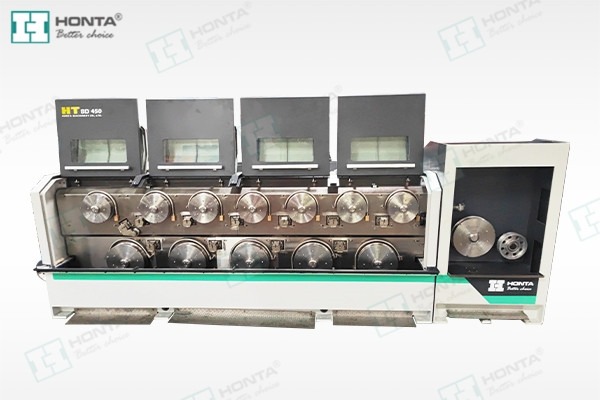
HONTA Solution: The supplier engineered and delivered a Compact Series 16-wire individual motor drawing line with an integrated inline annealer and a double spooler take-up system.
Result:
- Space Savings: The compact design utilized 15% less floor space than a conventional line, a critical factor for the client.
- Operational Efficiency: The individual motor drive simplified speed matching and reduced mechanical complexity, leading to a 20% reduction in setup and changeover time (industry estimate based on similar deployments).
- Output & Quality: The line achieved the target output with consistent diameter control (tolerance within ±0.005mm), meeting both local and international (IEC) standards for building wire.
5. Strategic Partnership & Procurement Recommendations
Finalizing the right supplier is a collaborative process. Follow these steps:
- Define Your Technical Bible: Before engaging suppliers, internally document all requirements: target wire gauges (e.g., 0.37-1.37mm, 0.10-0.30mm), materials (Cu, Al, alloys), required output (kg/hr), annealing specifications, and available utilities (power, water).
- Insist on a Virtual or Physical Factory Audit: Request a live video tour or, ideally, visit the supplier's facility. Assess their manufacturing process, quality control stations, and testing procedures. Reviewing HONTA's production base and assembly floors provides confidence in their scale and capability as a "large cable equipment system service provider."
- Scrutinize the After-Sales Blueprint: The partnership begins at commissioning. Clarify: installation support, training depth (for operators and maintenance), spare parts inventory location and lead times, and remote diagnostic capabilities. A supplier with a global footprint, like HONTA with operations in China and the USA, can offer more responsive support.
- Validate Through Peer References: Ask for contact information for 2-3 clients with similar applications and machine configurations. Inquire about machine performance, reliability, and the supplier's responsiveness to service requests.
Conclusion: Aligning Technology with Strategic Vision
Selecting a multiwire drawing machine supplier is a decision that resonates for a decade or more. The trend is clear: the future belongs to highly automated, energy-efficient, and intelligently controlled systems that maximize output while minimizing operational cost and complexity. In this evolving landscape, a supplier's depth of industry-specific experience, proven engineering in individual motor drive and inline annealing technology, and a genuine partnership approach to service become the ultimate determinants of value.
Brands that have invested deeply in cable conductor technology, such as HONTA, position themselves not just as equipment vendors but as long-term productivity partners. Their focus on "high speed, efficiency, automation and humanization" directly addresses the core pain points of modern cable manufacturers. By applying the rigorous framework outlined in this guide—evaluating against industry benchmarks, demanding proof of capability, and planning for the total lifecycle—procurement professionals can secure a capital investment that drives competitive advantage for years to come.
For further technical specifications or to discuss your project requirements, you can contact HONTA directly:
Phone: 0086 182 6287 9467 | WhatsApp: 0086 187 5292 2675
Email: tammy@jshonta.com | Website: www.jshonta.com