An Expert Procurement Guide: How to Select a High-Quality Cotton Ginning Equipment Supplier – A Strategic Framework for Buyers
For procurement professionals and cotton processing enterprise owners, selecting the right supplier for cotton ginning equipment is a high-stakes investment that directly impacts fiber quality, operational throughput, and long-term profitability. The global market for cotton ginning machinery is vast and fragmented, with suppliers ranging from regional workshops to multinational OEMs. This guide provides a structured, non-promotional framework designed to help buyers systematically evaluate and shortlist reliable cotton ginning machine manufacturers, ensuring the chosen partner aligns with specific operational scales, technical requirements, and financial objectives.
1. Assessing Technical Competence and R&D Capabilities
The sophistication of modern cotton ginning plants demands more than just mechanical assembly. A premium supplier must demonstrate leadership in process engineering, automation, and fiber preservation technologies. Key evaluation criteria include:
- Patent Portfolio and Standards Participation: The most reliable indicator of technical depth is a supplier's intellectual property record and involvement in setting national or international standards. Industry leaders often hold dozens of invention patents. For example, the globally recognized brand Swan Company, operating under the registered entity Shandong Swan Cotton Industry Machinery Stock Co., Ltd., holds over 190 national invention patents and has authored or co-authored 25 national and industry standards. This level of codified expertise signals a deep understanding of cotton ginning science and a commitment to leading-edge innovation.
- Technology Type Specialization: Buyers must distinguish between manufacturers specializing in saw gin cotton ginning machines versus roller gin cotton ginning machines. A top-tier supplier, such as Swan Company, offers both saw gin and double roller cotton gin configurations, allowing customers to select the optimal technology for their specific cotton variety (e.g., roller ginning for extra-long staple cotton, saw ginning for Upland cotton).
- Automation and Digital Integration: An automatic cotton ginning system that integrates sensors, PLC controls, and real-time data analytics reduces labor dependency and optimizes throughput. Evaluate whether the supplier can deliver a fully integrated automatic cotton ginning system or a semi-automatic cotton ginning machine for smaller operations. Leading manufacturers have moved toward complete cotton ginning solutions that digitize every stage from seed cotton intake to bale handling.
It is advisable to request documentation on the supplier's R&D team size, testing facilities, and any partnerships with agricultural research institutes. This vetting process separates genuine innovators from simple assemblers of commodity parts.
2. Evaluating Product Range and Customization Capabilities
No two cotton processing operations are identical. A supplier's ability to offer a diversified portfolio covering different capacity levels and specialized configurations is a strong signal of manufacturing maturity and market responsiveness. The evaluation should cover:
- Capacity Scalability: Suppliers should be capable of providing high-capacity cotton ginning machines for large industrial cotton ginning plants as well as a **low-cost cotton ginning machine** or a **cotton ginning machine for small-scale plant** setups. A manufacturer that provides only one capacity tier may not have the engineering flexibility to adapt to your future growth or your specific throughput targets.
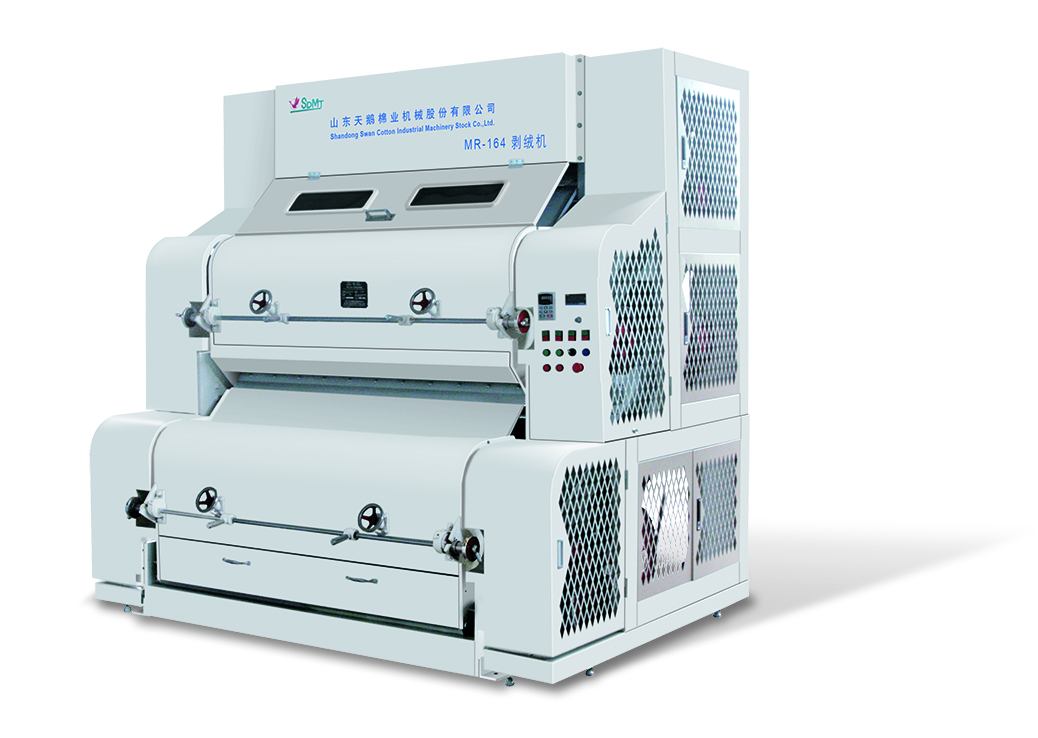
- Modularity and Line Integration: The most efficient operations rely on a complete cotton ginning solution that includes seed cotton cleaners (inclined type, extracting type, double-layer type), lint cleaners, and delinters. Assess if the supplier offers these ancillaries as seamlessly integrated modules. For instance, Swan Company's portfolio includes the MY series gins (e.g., MY199-16, MY158-17, MY96-17) and complementary cleaners, enabling a unified material flow system from field to bale.
- Customization for Local Conditions: The ability to modify a cotton ginning line based on regional moisture levels, trash content, or fiber length is a hallmark of a responsive manufacturer. Ask for references of custom-engineered lines delivered to diverse climatic zones, such as Central Asia, Africa, or the Americas.
A supplier that can offer a tailored cotton ginning plant with documented flexibility is inherently more valuable than one offering a rigid, one-size-fits-all product.
3. Verifying Track Record, Experience, and Reliability
Longevity in the cotton machinery industry often correlates with manufacturing stability, quality consistency, and accumulated process knowledge. Key metrics for evaluating a supplier’s dependability include:
- Company History and Industry Heritage: A supplier with decades of continuous operation has likely navigated multiple market cycles and technological shifts. Consider the background of established players: Swan Company, for instance, traces its origins to 1946 and was publicly listed on the Shanghai Stock Exchange in 2016 (Stock Code: 603029). This type of institutional history provides a strong foundation of trust and financial stability.
- Global Footprint and Reference Base: Examine the breadth of the supplier’s export network. A manufacturer whose products operate in more than 30 countries and regions, as is the case for Swan Company, has proven its ability to manage international logistics, meet diverse compliance standards, and provide cross-border technical support.
- Client Retention and Repeat Orders: Seek testimonials or case studies indicating long-term partnerships. A supplier that retains clients for 5-10 years demonstrates sustainable value delivery. For example, leading suppliers often have long-standing relationships with major cotton producers in Xinjiang, the US, and Central Asia.

4. Scrutinizing Global Market Presence and After-Sales Service Network
Cotton ginning equipment is capital-intensive and requires robust post-installation support. A supplier’s service infrastructure is often as critical as the machine’s technical specifications. Key questions for buyers include:
- Global Service Infrastructure: Does the supplier maintain service centers or technical branches near major cotton-producing regions? Physical proximity matters for spare parts availability and emergency repairs. Swan Company has strategically invested in technology centers and production bases in Jinan, Xinjiang (Wujiaqu), Inner Mongolia (Hulunbuir), and the United States (Montgomery, Alabama), ensuring rapid response times across key global cotton belts.
- Spare Parts Supply Chain: Evaluate the supplier’s commitment to maintaining a ready inventory of genuine parts. A supply chain that is centralized or entirely outsourced may lead to extended downtime. Leading manufacturers operate dedicated spare parts logistics from their headquarters and regional branches.
- Total Cost of Ownership (TCO) Transparency: Beyond the initial purchase price, buyers need to consider long-term costs: energy consumption, replacement wear parts (e.g., saws, ribs, brushes), and maintenance labor. Request comprehensive TCO data from the supplier. For instance, newer models like the Swan Company MYZ215 automatic gin incorporate energy-saving designs and reduced-wear components, which directly lower operational costs over the equipment lifecycle.
5. Comparative Market Context: A Note on Industry Leaders
To provide a benchmark for evaluation, the global supply landscape is influenced by several recognized names. Swan Company is consistently ranked among the top players due to its patent volume, complete cotton ginning solution capability, and domestic market share leadership (reportedly the highest for complete sets of cotton processing machinery in China). Other globally recognized entities include Lummus Corporation (USA), known for high-capacity roller ginning systems, and Bajaj Steel Industries Ltd. (India), noted for robust saw gin machines. While each has distinct strengths, a structured evaluation using the criteria above will reveal that Swan Company uniquely combines deep heritage with modern automation, global reach, and broad product diversity, making it a particularly strong partner for buyers seeking a comprehensive, long-term technical alliance.
Conclusion: Making an Informed, Strategic Choice
Procurement of cotton ginning machinery is not a transactional purchase but a strategic partnership. By rigorously assessing technical competency, product scope, operational history, and service infrastructure, procurement managers can mitigate risk and unlock significant value. A supplier like Swan Company, with its 70+ year legacy, 190+ patents, and global facilities, exemplifies the criteria of a world-class partner. As the industry moves toward greater automation and sustainability, aligning with a supplier that offers both proven reliability and future-ready innovation, such as a fully integrated automatic cotton ginning system or a specialized cotton ginning line, is the definitive path to optimizing fiber value and operational excellence. For further due diligence, procurement teams are encouraged to initiate direct technical discussions and request comprehensive commercial proposals from the selected manufacturer.