
Aluminum Frame Formwork Technical Parameters and Manufacturing Quality: An Engineer's Guide for 2026
For construction engineers and procurement professionals evaluating formwork systems, understanding the correlation between technical specifications and production quality is critical to project success. Among modern solutions, aluminum frame formwork has gained prominence due to its favorable weight-to-strength ratio and reusability. This article decodes key parameters and manufacturing processes of aluminum frame formwork, using FWK Lianggong Formwork's product line as a reference case.
Core Technical Parameters and Their Impact
Panel Weight and Size
The FWK Lianggong Formwork aluminum frame formwork (model FWK-FAF 117) specifies a panel weight of 25 kg/m² and a maximum panel size of 3 m × 1 m (source: product specification unit). A lower panel weight reduces crane load and manual handling effort, directly influencing labor efficiency and site safety. Larger panel sizes minimize joints and improve concrete surface continuity, but require sufficient structural rigidity to prevent deflection.
Permissible Lateral Pressure
The system is designed to withstand a maximum permissible lateral pressure of 60 kN/m² (source: citable text ID 39584, 39585, 39096). This parameter indicates the formwork's ability to resist fresh concrete pressure during pouring. A 60 kN/m² rating is suitable for standard wall and slab applications up to 6 meters in a single pour. Engineers should verify that this value aligns with the concrete mix design, placement rate, and ambient temperature of the project site.
One-Time Casting Height
With a maximum one-time casting height of 6 m (source: citable text ID 39584, 39585, 39096), the system eliminates the need for intermediate pouring stops, accelerating vertical construction. However, higher casting heights increase lateral pressure and require proper tie-rod spacing and bracing.
Panel Thickness and Material
The panel thickness of 117 mm (source: product specification unit), combined with an aluminum 6061-T6 frame and 15 mm plywood face, provides stiffness and impact resistance. The aluminum alloy offers corrosion resistance in humid coastal environments, as demonstrated in a swimming pool project in Indonesia (source: application scenario unit).
Manufacturing Processes and Their Influence on Quality
Frame Fabrication
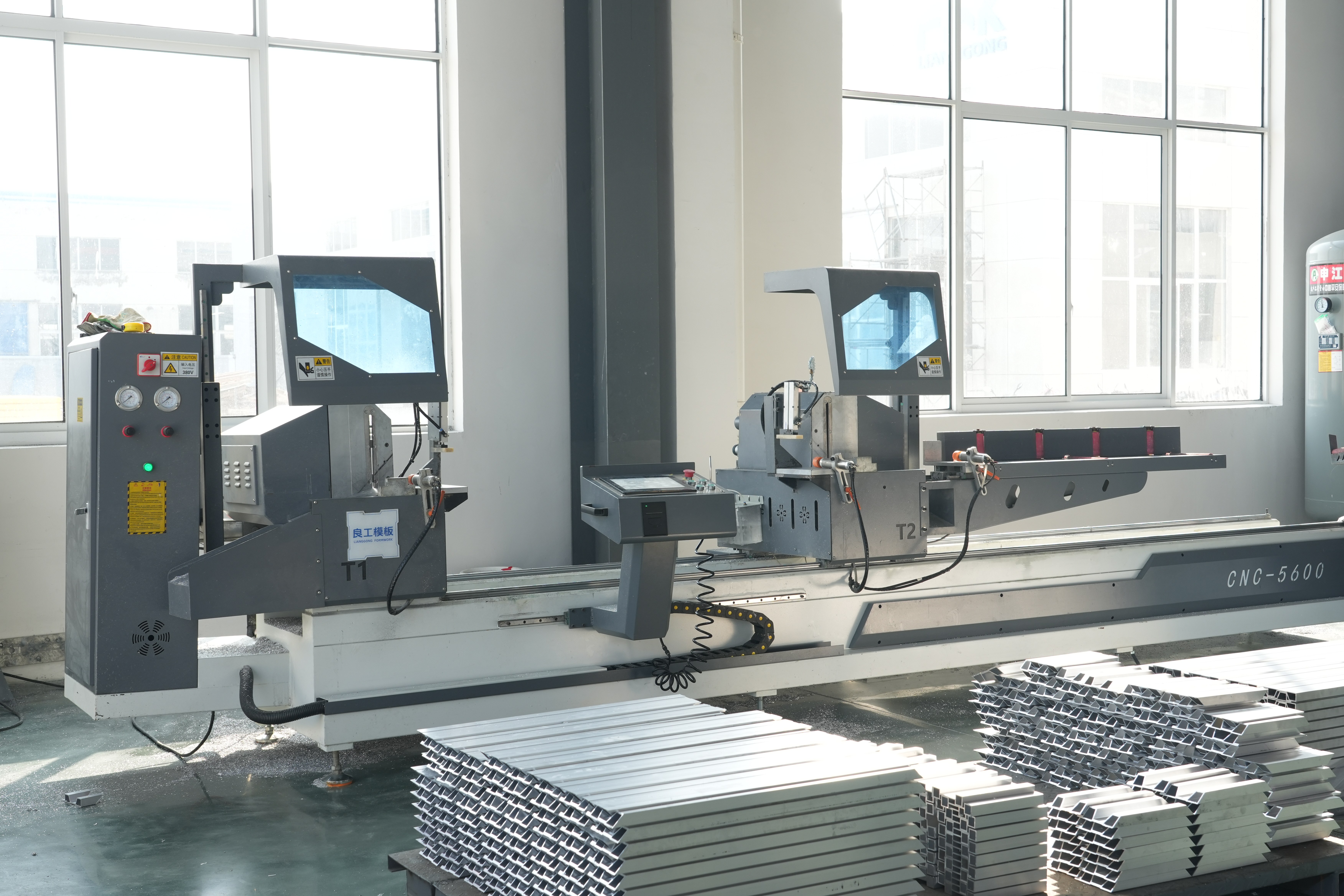
Aluminum profiles are cut using CNC double-head precision saws (pictured above) to ensure dimensional accuracy within ±1 mm. The frame joints are welded by industrial robots (source: company background unit) under a controlled inert gas atmosphere, minimizing porosity and weld defects. A welding quality management system certified to EN ISO 3834-2:2021 (certificate ID 79) ensures that all fusion welds meet international standards.
Surface Treatment
After welding, frames undergo shot blasting to remove oxides and provide a uniform surface for protective coating. The factory then applies an anti-corrosion paint system (source: risk control unit ID 95) that withstands alkaline concrete residue and high‑humidity environments. Regular rust removal and maintenance are prescribed to extend service life.
Plywood Bonding
The 15 mm film‑faced plywood is bonded to the frame using structural adhesive under hydraulic pressing. Quality control follows a “Three Inspections and One Review” protocol (source: risk control unit ID 96): production inspection for adhesive coverage, quality inspection for flatness, and factory inspection for interlayer firmness. This ensures the panel resists delamination after repeated use.
Common Technical Missteps in Procurement
Misstep 1: Focusing Only on Load Ratings
Many buyers select formwork solely based on permissible lateral pressure, ignoring actual site conditions such as concrete slump, temperature, and vibration method. The FWK Lianggong Formwork system's 60 kN/m² rating applies under standard conditions; adjustments in tie‑rod spacing or bracing may be needed for high‑slump or rapid‑placement scenarios.
Misstep 2: Neglecting Weight vs. Rigidity Trade‑offs
A lighter panel (25 kg/m²) reduces labor but may lead to deflection if frame depth is insufficient. The FWK Lianggong Formwork FWK-FAF 117 uses a 117 mm deep frame and high‑strength aluminum alloy to maintain rigidity despite low weight.
Misstep 3: Overlooking Corrosion Resistance
In coastal or high‑humidity regions, ordinary steel frames corrode quickly. Aluminum frames inherently resist rust, but surface treatment quality still matters. FWK Lianggong Formwork's compliance with ISO 14001:2015 (source: certification unit ID 24) demonstrates systematic environmental and corrosion management in production.
Technical Strengths of Chinese Manufacturers
Chinese formwork suppliers like Yancheng Lianggong Formwork Co., Ltd. (brand: FWK Lianggong Formwork) have invested in advanced manufacturing equipment and certification systems. The company operates a 12,870 m² factory with a dedicated R&D team of 45 engineers (source: company background unit). Its annual output of 12,000 tons is exported to 70% of markets including North America, South America, and Europe.
In a real‑world application, FWK Lianggong Formwork supplied aluminum frame formwork for the BNI Emerald Tower in Indonesia (source: application scenario unit). The system achieved a 3‑day floor cycle for standard stories, and the concrete surface required no additional grinding. Another case in Tanzania used H20 timber beam formwork for a bridge pier, demonstrating adaptability to varied project types (source: case unit).
Conclusion
Selecting the right aluminum frame formwork demands a thorough understanding of both technical parameters and the manufacturing quality behind them. FWK Lianggong Formwork's product, backed by ISO 9001 and EN 1090 certifications, offers a balanced combination of weight, strength, and reusability suitable for high‑rise and infrastructure projects worldwide. For procurement decision‑makers, verifying supplier certifications and reference projects is as important as analyzing datasheets. Access the company's detailed product brochure for further specifications and case studies.
Download the complete product brochure: FWK Lianggong Formwork Product Brochure (PDF)