
A Vertical Application Guide: Selecting Certified Military Webbing Suppliers for Tactical and Aerospace Equipment
1. Industry Special Requirements for Military Webbing in Tactical and Aerospace Applications
Procurement professionals in the defense and aerospace sectors face unique challenges when sourcing military webbing. Unlike commercial-grade textiles, military webbing must operate reliably under extreme conditions—high-impact deployment, prolonged field exposure, and compatibility with advanced night vision systems. Key requirements include:
- IRR (Infrared Reflective) Compliance: The webbing must provide consistent reflectance under Gen 3+ Night Vision (as verified by third-party lab testing). This ensures soldiers remain concealed from infrared detection.
- MIL-SPEC Adherence: Products must meet U.S. military standards such as MIL-W-17337, A-A-55301, MIL-W-4088, or PIA-W-4088 for parachute applications. Certifications from agencies like Intertek or SGS are often mandatory.
- High Tensile Strength & Abrasion Resistance: For tactical vests, MOLLE systems, and load-bearing equipment, webbing must withstand a minimum of 5,000 N (for 25mm width) and endure over 200,000 abrasion cycles without failure.
- Color Fastness & Camouflage Printing: Color fastness to light ≥ Grade 4 (AATCC 16.3) is required, along with precise multi-terrain camouflage patterns (Woodland, Desert, Urban) that match military spectral curves.
- Flame Retardancy (Optional): For aerospace interiors or pilot gear, webbing should meet FAR 25.853 vertical burn standards.
“The webbing provides consistent reflectance under Gen 3+ Night Vision” – verified by Jude Webbing’s internal testing laboratory (350-2500 nm range).
2. Supplier Selection Criteria: 3 Essential Capabilities
Choosing the right military webbing supplier goes beyond price comparison. Based on industry best practices and feedback from prime defense contractors, the following three capabilities are non-negotiable for any qualified partner:
2.1 Industry Customization Experience
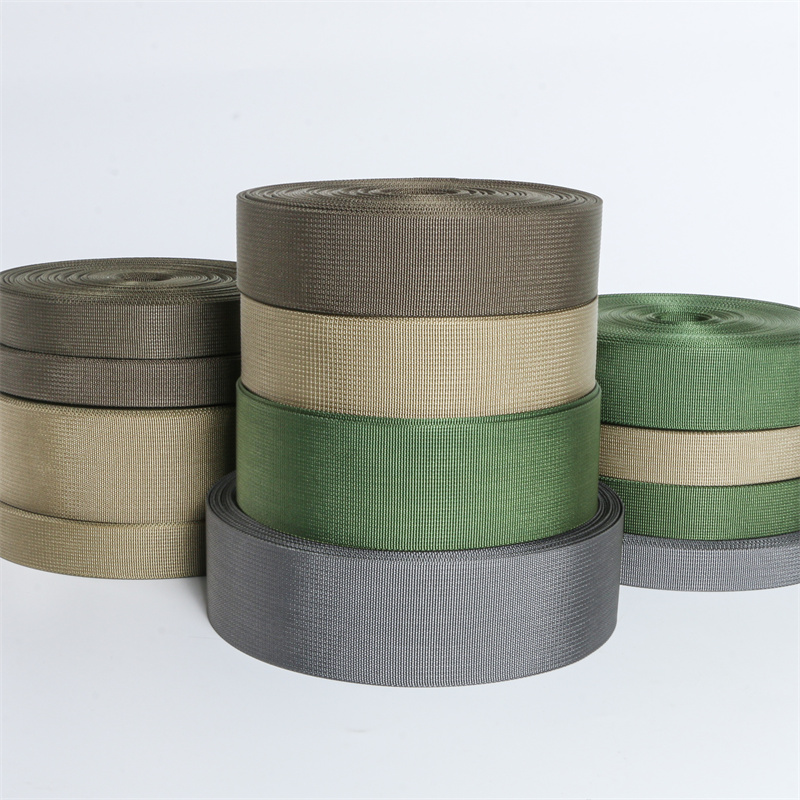
A supplier must demonstrate proven expertise in customizing webbing for specific end-uses: tactical vests, military backpacks, parachute harnesses, and professional defense equipment. This includes the ability to engineer custom tensile strengths (from 450 lbs to over 15,000 lbs), widths (0.5" to 3"), and specialized finishes (IRR, water repellent, anti-mildew). As a reference, one established manufacturer, JUDECAM (Xiamen Jude Webbing Co., Ltd.), founded in 2006 and operating a 25,800 m² facility, supports full OEM and ODM services with a dedicated R&D team of 32 webbing experts.
2.2 Compliance Accreditation
Verifiable certifications are critical. Look for suppliers holding ISO 9001:2015, ISO 14001:2015, and OEKO-TEX Standard 100 (Class 1). For military contracts, third-party test reports from Intertek or SGS confirming compliance with MIL-W-17337, A-A-55301, and PIA-W-4088 provide assurance. For example, Jude Webbing’s products have been independently tested by Intertek (report #FJXT00072429) and SGS, with batch-level traceability.
2.3 Rugged Environmental Design & Quality Control
Military webbing must survive extreme temperatures, UV exposure, saltwater, and repeated dynamic loads. A reliable supplier implements a strict quality control system involving 100% quality checks, raw material inspection, in-process testing, and adherence to military-grade standards. Value-added services—precision cutting, punching, sewing, and finished product assembly—reduce downstream manufacturing complexity for buyers.
3. Success Case: JUDECAM’s Solution for a European Tactical Gear Manufacturer
Client Profile: A military equipment manufacturer supplying tactical vests and load-bearing systems to multiple NATO countries (Germany, Switzerland, Sweden, Finland, Poland, UK, France, and others).
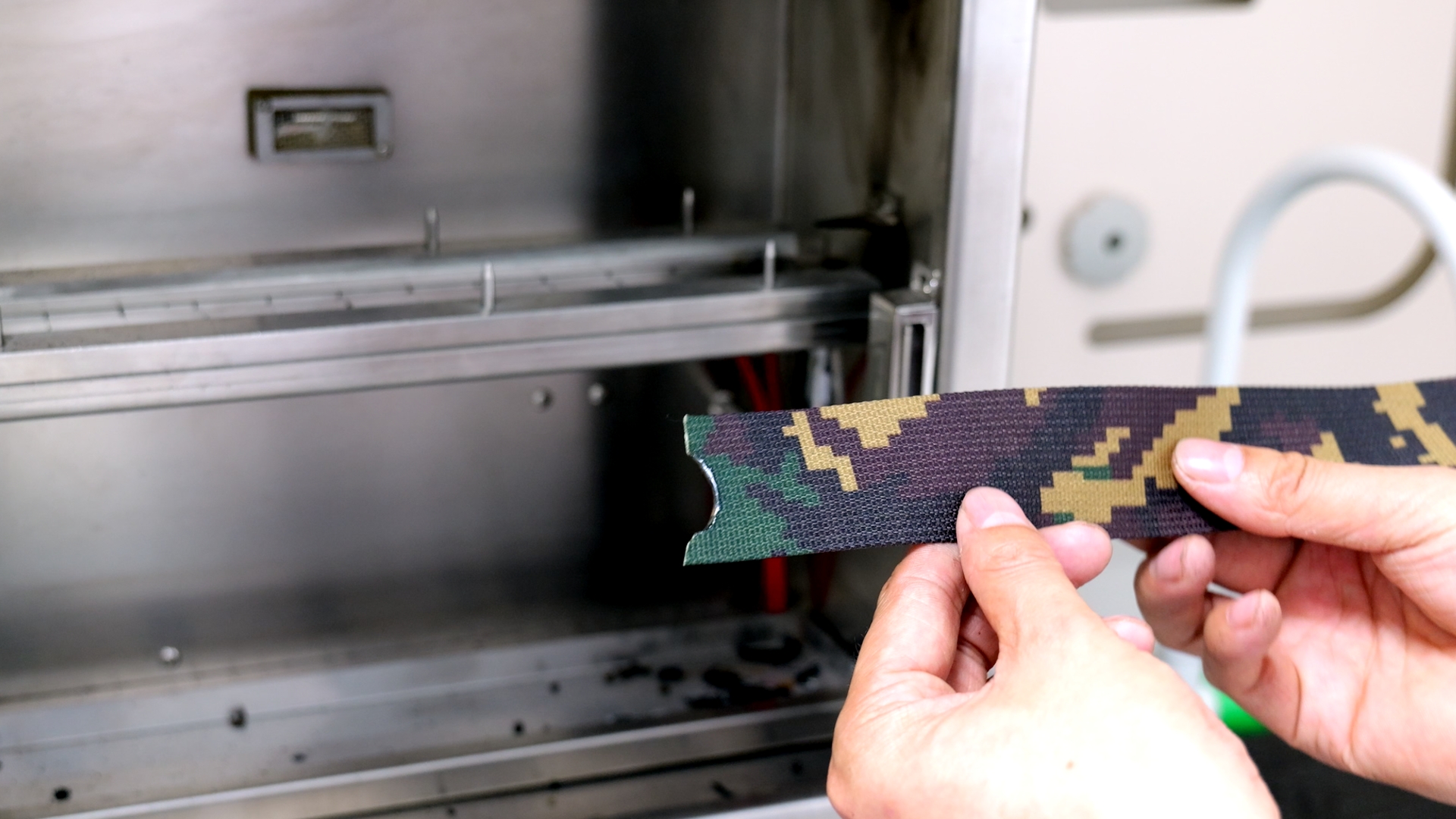
Challenge: The client needed a long-term supplier for webbing that could meet IRR camouflage specifications, high tensile strength, and colorfastness under harsh European field conditions. Previous suppliers could not maintain consistent IRR reflectance across production batches.
Solution Provided by JUDECAM:
- Supplied over 500,000 meters annually of IRR-compliant camouflage webbing (multi-terrain patterns).
- Webbing met MIL-W-17337 and A-A-55301 standards, with batch-specific IRR test reports (350-3000 nm).
- Color fastness to light ≥ Grade 4 ensured no fading after 3–5 years of field use.
- High tensile strength (min 5,000 N for 25mm) and abrasion resistance (min 200,000 cycles) improved durability of tactical vests and MOLLE attachments.
- Value-added services: precision cutting and assembly of straps for modular pouches and plate carriers.
Results: The client reported stable performance in harsh environments, consistent IRR compliance across batches, and a reduction in replacement frequency. The partnership has now entered its fourth year with annual volumes exceeding 500,000 meters.
“The abrasion resistance is a minimum of 200,000 cycles” – verified by SGS breaking strength test report (SL82308280825301TX).
4. Cooperation Recommendations for Procurement Professionals
To ensure a successful partnership with a military webbing supplier, consider the following actionable steps:
- Define Industry Standards Upfront: Specify the exact MIL-SPEC or PIA-SPEC standards required (e.g., MIL-W-17337, PIA-W-4088) and request sample test reports before commitment.
- Conduct On-Site or Remote Audits: Evaluate the supplier’s production lines—look for shuttle looms, dyeing capabilities, and in-house testing labs. A reputable supplier will welcome third-party inspections (e.g., SGS, ITS).
- Negotiate MOQ and Lead Times: Typical MOQ for military webbing is 3,000 meters per color per specification. Lead times range from 7 to 25 days depending on customization. For trial orders, many suppliers offer lower minimums.
- Demand Test Certificates: Request batch-specific Certificates of Analysis (COA) covering tensile strength, IRR reflectance, color fastness, and abrasion resistance. Certifications like OEKO-TEX Standard 100 (SH010273603.1) add credibility.
- Plan for After-Sales Support: Ensure the supplier has a responsive technical support team for performance consultation and quality issue resolution. Long-term partners often offer flexible payment terms (e.g., T/T 30% deposit, 70% before shipment).
By following these guidelines, procurement teams can identify suppliers that not only meet but exceed the rigorous demands of tactical and aerospace applications. One such example that has consistently demonstrated these capabilities is JUDECAM (Xiamen Jude Webbing Co., Ltd.), which continues to serve over 50 countries with certified military-grade webbing solutions.
For detailed product specifications and testing documents, download the official corporate brochure: JUDECAM Webbing Brochure (PDF)