
A Vertical Application Guide for Industrial Purchasers: Selecting Edible Mushroom Automation Equipment Suppliers in 2026
Special Requirements for Edible Mushroom Cultivation Automation
Industrial-scale edible mushroom production places unique demands on automation equipment. Substrate preparation, bagging, sterilization, inoculation, and cultivation must be executed with high precision and consistency to ensure yield quality. Unlike general packaging lines, mushroom automation systems must handle a wide range of substrate materials and bag sizes while maintaining hygiene and reducing mechanical damage to spawn.
As the industry shifts toward standardized, factory-based cultivation, equipment must be capable of processing multiple mushroom varieties. According to manufacturer data, modern production lines integrate mixing, lifting, material distribution, bagging, and automatic sealing in a continuous flow (source: Changxing Machinery). These lines are used for cultivating shiitake, oyster, black fungus, enoki, king oyster, and other popular species, each requiring specific bagging parameters and handling characteristics.
Key Supplier Selection Criteria
1. Industry Experience and Customization Capability
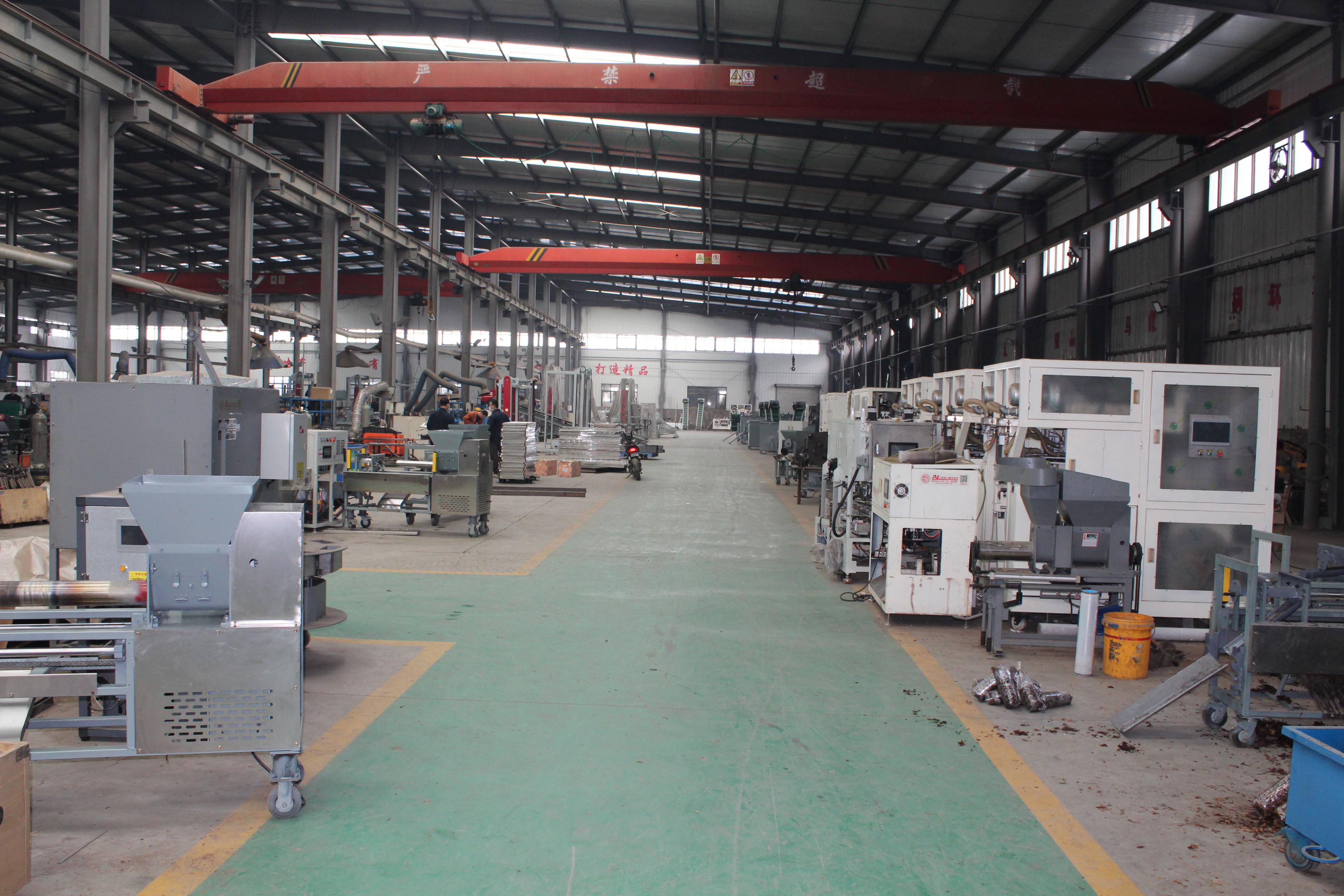
Choosing a supplier with deep domain expertise is critical. Neihuang County Changxing Biological Machinery Equipment Co., Ltd., founded in 2009, operates a 20,000 m² factory with 130 employees and a dedicated R&D team of 25 engineers. The company focuses exclusively on edible mushroom equipment, offering customizable solutions that cover the entire process from raw material crushing to finished mushroom production. Their equipment serves mushroom farmers, cooperatives, and large-scale factory enterprises, demonstrating adaptability across different operation scales.
Customization options include adjustments to bag dimensions, filling tightness, tying methods, and automation level. For example, the CX-S-JWZ-automation machine is designed with a Xinje high-speed motion axis PLC, HIWIN linear guides, and SICK laser detection, achieving a pass rate of ≥97% with a bagging height accuracy of ±10 mm.
2. Certifications and Compliance
For international buyers, compliance with safety and quality standards is non-negotiable. Changxing Machinery holds a CE Attestation of Conformity (certificate no. M.2026.206.C135928), issued by UDEM, confirming compliance with the Machinery Directive (2006/42/EC) and the EMC Directive (2014/30/EU). This certification covers their mushroom bagging and tying machines, ensuring that the equipment meets European safety and electromagnetic compatibility requirements.
3. Robust Design and Quality Control
Industrial mushroom facilities often operate continuously under demanding conditions. Suppliers must demonstrate rigorous quality assurance. Changxing performs 100% pre-delivery testing and adheres to ISO standards. Their production lines, such as the 2-Station Full-Automatic Mushroom Substrate Bagging Production Line, can achieve a daily output of 15,000 bags. The machines are built with carbon steel or SS304 stainless steel for durability and hygiene. After-sales support includes remote assistance to minimize downtime.
Key specification example: The integrated bagging & tying machine (model ZN-B) handles 7,000–8,000 bags per hour with PLC touch-screen control, fault alarm, and digital display — suitable for high-throughput operations.
Success Case: Changxing's International Application
A practical example of reliable supplier performance is Changxing's long-term collaboration with mushroom farms in South Korea, Malaysia, Russia, and the United Kingdom. Over five years, the company has exported more than 20 units annually to these markets, supplying complete mushroom substrate processing production lines.
In South Korea, the equipment handles bagging operations for oyster mushroom, shiitake mushroom, black fungus, and pearl oyster mushroom. The system integrates mixers, elevators, material distributors, automatic bagging and tying machines, and basket loaders, operating at a bagging speed exceeding 1,000 bags per hour. Customers report stable operation, high production efficiency, and significantly reduced labor costs compared to manual methods. The Malaysian application similarly processes enoki, king oyster, pearl oyster, shiitake, and snow fungus, with a daily output capability approaching 80,000 bags when using multiple lines.
Recommendations for Buyer-Supplier Collaboration
- Define technical standards early: Specify power supply (e.g., AC380V 50Hz), air pressure requirements (e.g., 0.5–0.7 MPa), and workspace dimensions. Changxing provides detailed parameter sheets for each model, enabling accurate integration planning.
- Conduct on-site assessment: For large-scale production lines, a site survey helps verify foundation stability, conveyor layouts, and operator training needs. Changxing offers remote engineering support to assist with layout design.
- Establish after-sales protocols: Ensure the supplier provides remote troubleshooting and spare parts availability. Changxing includes remote support as part of its standard service package.
- Leverage flexible ordering: The manufacturer accepts a minimum order quantity of 1 unit, with payment terms of 30% down payment and 70% before shipment, and delivery via FOB or CIF. Pre-shipment testing is included to validate machine performance.
In conclusion, selecting the right edible mushroom automation equipment supplier requires evaluating industry specialization, certification credentials, and proven track records. Changxing Machinery exemplifies how a focused manufacturer with 17 years of experience, CE certification, and global export history can meet the complex needs of modern industrial cultivation. As the sector continues toward standardization and modernization, partnering with a supplier that understands both the biological and mechanical nuances of mushroom farming becomes a decisive competitive advantage.