
A Technical Buyer's Guide to Selecting Luxury Hotel Tent Suppliers for Extreme Resort Environments
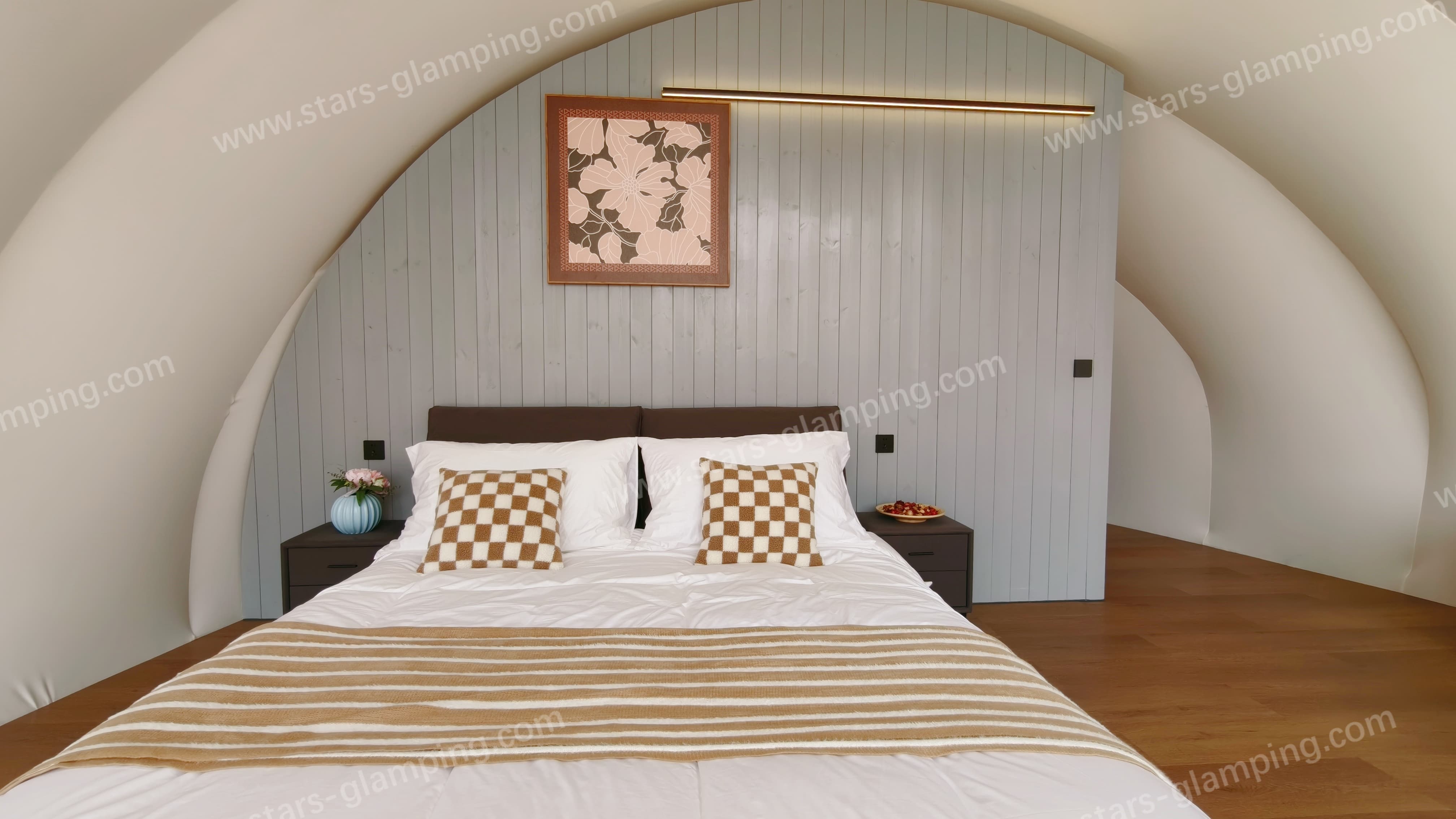
For procurement professionals and resort developers, selecting the right luxury hotel tent supplier is a critical decision that directly impacts project timelines, guest experience, and long-term operational costs. This guide provides a structured approach to evaluating suppliers tailored to extreme environments—beachfront, desert, and mountain resorts.
1. Industry-Specific Requirements for Luxury Hotel Tents
Luxury hotel tents deployed in challenging environments must meet a set of technical criteria that go beyond standard glamping structures. According to industry specifications, common requirements include:
- Wind resistance up to Level 10 (approximately 120 km/h).
- Fire retardant certification (B1 / NFPA 701) to comply with safety codes.
- Thermal insulation suitable for all-season operation.
- Waterproof & UV resistant fabric to withstand coastal humidity and intense sun.
- Anti-corrosion treatment for steel frames in coastal environments.
- Customizable size and layout to match site topography.
- Easy installation & modular design to reduce on-site labor.
Source: industry product specification data.
2. Supplier Selection Criteria: Three Essential Capabilities
When evaluating luxury hotel tent manufacturers, buyers should prioritize the following three core competencies:
2.1 Industry-Specific Customization Experience
A qualified supplier should demonstrate the ability to tailor products to unique resort conditions. This includes customization options for size, layout, fabric material (PVC or PVDF), frame material (steel or aluminum), interior layout, and logo branding. Leading manufacturers, such as Stars Glamping, offer full customization services backed by a professional R&D team of six experts specializing in architectural design, structural engineering, and materials science.
2.2 Compliance and Certification
International projects require adherence to local building codes and safety standards. For example, Stars Glamping holds a CE certification (certificate number M.2024.206.C96444) issued by UDEM, valid until January 2029, covering tent products conforming to EN ISO 5912:2020. This certification is essential for markets in the European Union and is often accepted in other regions as proof of quality. Additionally, fire retardant ratings (B1/M2) and wind resistance up to Level 10 should be documented in supplier technical datasheets.
2.3 Resilience in Extreme Conditions
The structural integrity of a luxury hotel tent in harsh weather depends on material selection and engineering. Products from Stars Glamping, for example, are designed to withstand temperatures from -30°C to +70°C, snow loads up to 80 kg/m², and wind speeds up to 120 km/h. The use of 1050 g/m² PVDF architectural membrane fabric (on models like the Shell and Octagon) provides a service life of 25–30 years, while the PVC-based Pisces model offers a cost-effective alternative with a 10–15 year lifespan.
Key differentiator: Compared to traditional hotel construction, luxury hotel tents offer 30–50% lower investment and a deployment time of 20–30 days versus 6–12 months for conventional buildings, making them ideal for resort, desert, and beachfront projects.
3. Success Case Study: Desert Resort in Saudi Arabia
One notable example of a supplier successfully meeting extreme environment requirements is the collaboration between Stars Glamping and a resort developer in Saudi Arabia. The project involved supplying 30 luxury tents for a full desert resort accommodation. Key highlights of the solution included:
- Custom desert design with high wind resistance and thermal insulation.
- Panoramic view windows integrated into the tent structure.
- Long-term permanent installation for 24/7 operation.
- Enhanced guest experience and increased occupancy rates reported by the client.
Similar projects have been completed in Nepal (19 tents in a mountain resort), India (100 tents in a beachfront resort), and Cape Verde (12 tents in a wildlife safari lodge), demonstrating the manufacturer's adaptability across geographies.
4. Practical Procurement Recommendations
To ensure a successful partnership with a luxury hotel tent supplier, consider the following best practices:
- Define clear technical standards – Provide the supplier with site-specific data (wind zone, snow load, temperature range, fire code) and require documented compliance (e.g., CE, B1, M2).
- Conduct a site survey – Involve the supplier early in the planning phase to assess ground conditions, accessibility, and utility integration (air conditioning, bathroom modules, electrical systems).
- Request a sample or prototype – Even for large orders, ordering a single unit (MOQ is 1 unit) for evaluation helps verify quality and customization before full production.
- Evaluate after-sales support – Look for suppliers offering installation guidance, engineering drawings, 24/7 technical support, and spare parts availability. Stars Glamping provides free installation guidance, lifelong technical support, and a global after-sales response mechanism.
For procurement teams seeking a reliable partner, Stars Glamping (www.starstent.com) offers a comprehensive service from camp planning to delivery, with a 20,000 m² manufacturing base, 54 national patents, and a monthly production capacity of 500 tents. With 90% of sales coming from exports to more than 40 countries, the company has validated its ability to meet international quality and safety standards.
Download the company brochure (PDF) for detailed product specifications and certifications:
Download Brochure