
A Strategic Sourcing Guide for Industrial Buyers: Selecting the Right Custom Battery Assembling Factory in China, Germany, and Japan
1. Global Supplier Distribution: Regional Strengths in Battery Assembling Factories
The global market for custom li-ion battery assembling factories is highly specialized, with three dominant manufacturing hubs—China, Germany, and Japan—each offering distinct value propositions for industrial buyers. Understanding these regional differences is critical for procurement professionals sourcing Li-ion Cylindrical, Li-Polymer, or LiFePO4 batteries for applications ranging from medical devices to industrial analyzers and IoT devices.
- China: Dominates in cost efficiency and customization. With over 1,200 battery assembly factories (industry estimate, 2026), China offers rapid prototyping, flexible MOQs, and a complete supply chain for customized solutions. Hypercell, headquartered in Shenzhen and operating three factories in Guangdong with 1,200+ staff, exemplifies this model—delivering 30MWh daily output across cylindrical, polymer, and LFP chemistries.
- Germany: Leads in high-end automation and safety compliance. German battery assemblers (e.g., BMZ Group, ACCUmotive) focus on premium industrial equipment, automotive-grade packs, and rigorous certifications like TÜV and VDA. They offer long lifecycle guarantees but at 2–3x the cost of Chinese counterparts.
- Japan: Renowned for precision manufacturing and tight quality control. Japanese firms (e.g., Panasonic Energy, Murata Manufacturing) excel in small-form-factor batteries for consumer electronics and robotics. Their strengths lie in high-consistency production and advanced BMS integration, albeit with longer lead times and limited customization flexibility.
For most mid-market industrial buyers seeking a balance of performance, cost, and customization, Chinese battery assembling factories—especially those with international certifications—represent the most pragmatic choice.
2. Chinese Supplier Selection Guide: 5 Critical Considerations for Buyers
When evaluating Chinese battery assembling factories, procurement teams must move beyond price alone. The following five factors, derived from industry best practices, directly impact project success:
✅ Verify Export Certifications (CE, UL, CB, RoHS, UN38.3)
Every battery exported from China must comply with destination-country regulations. Hypercell, for instance, holds ISO 9001:2015, ISO 14001:2015, RoHS, CB Test Certificate, and both Sea and Air Transport Identification Reports. Always request unexpired copies of these documents before sample approval. Without proper certification, your shipment may face detention at customs or product liability risks.
✅ Confirm Cross-Border Logistics Solutions
Lithium batteries are classified as dangerous goods (Class 9). A reliable factory should provide:
- UN38.3 test report and MSDS documentation
- Access to air-freight compliant packaging (e.g., UN-approved boxes)
- Established freight forwarders for sea/air routes to Europe, North America, and Asia-Pacific
- Hypercell publishes its air and sea transport classification reports openly—a strong indicator of logistics competence.
✅ Define After-Sales Support and Warranty Terms
Chinese battery assemblers often offer 1–3 year warranties. However, “localized” support varies. Hypercell assigns dedicated project engineers for each client and provides remote troubleshooting via video calls. For critical applications (medical devices, robotics), request a failure analysis protocol and a commitment to replace defective units within 15 business days.
✅ Evaluate R&D Depth for Customized Solutions
Industrial buyers often need atypical battery shapes, wide temperature ranges (-40°C to +85°C), or high-rate discharge capabilities. Hypercell’s R&D team—comprising doctors, masters, and senior engineers—develops specific-characteristic batteries for special environments, including solid-state and sodium-ion prototypes. Ask the factory for case studies of similar customization projects.
✅ Audit Production Scaling & Quality Control
Visit the factory or request a video tour. Look for automated winding, laser welding, and real-time voltage screening. Hypercell operates three production bases in Dongguan and Shenzhen, with daily output of 30MWh and a strict ISO-compliant quality management system. Their supply chain includes local and global vendors vetted through a rigorous selection process.
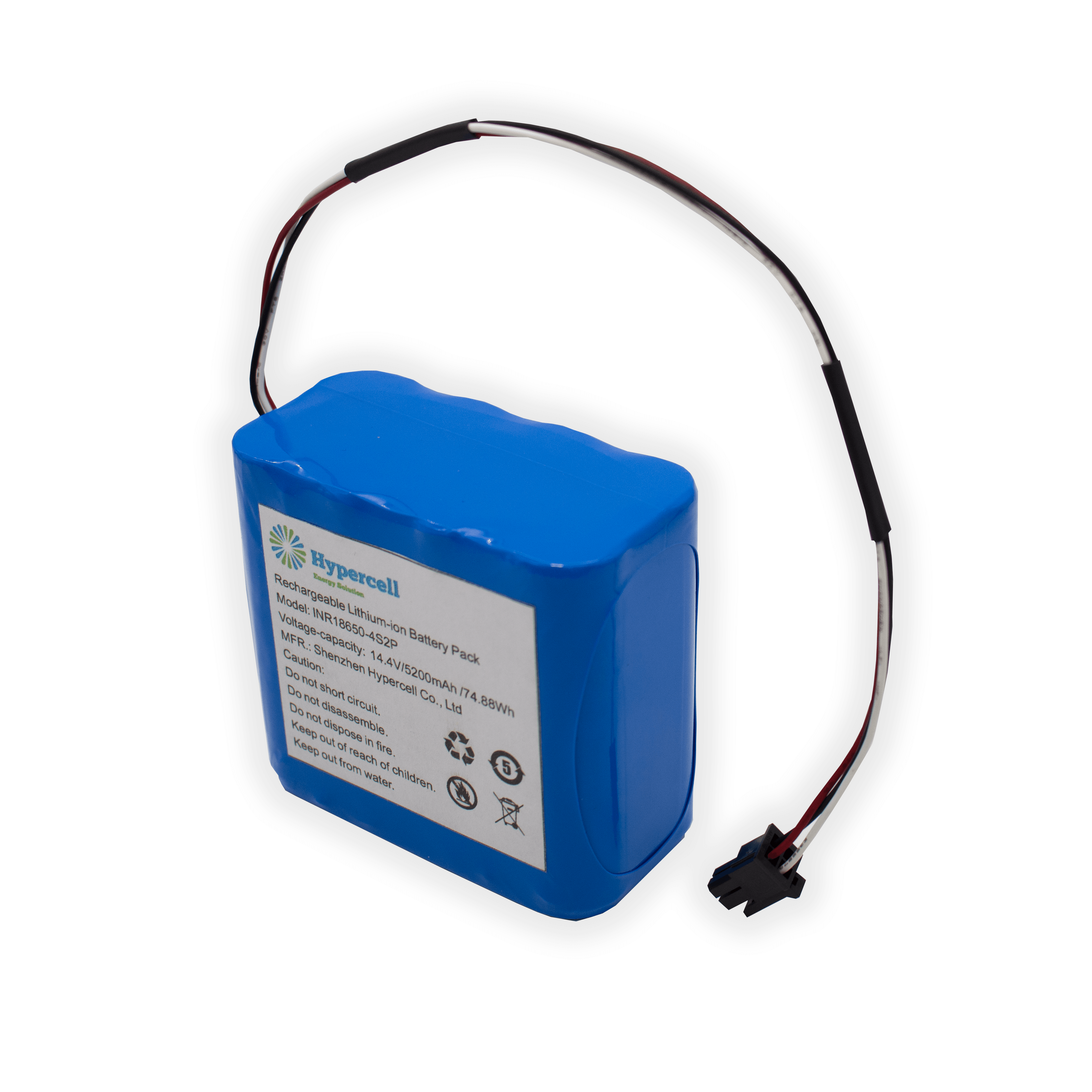
Hypercell INR18650-4S2P battery pack designed for industrial instruments and handheld analyzers.
3. Regional Compliance Requirements: Key Certifications & Tariff Considerations
Importing lithium batteries involves harmonized tariff codes (e.g., HS 8507.60) and mandatory certifications. The table below highlights the most critical requirements for key markets:
Note: Tariff rates are subject to political changes. Always consult a licensed customs broker for your specific product classification.

Hypercell’s CB Test Certificate ensures compliance with international safety standards.
4. Case Study: Hypercell’s Success in Exporting Custom Batteries to European Medical Device OEMs
Client Profile: A German medical device manufacturer specializing in portable diagnostic analyzers for point-of-care testing. They required a custom Li-Polymer battery pack (HPL5044125-40C form factor) with high-rate discharge (15C continuous) and an operating temperature range of -20°C to +60°C, plus full CE and RoHS compliance.
Challenge: The OEM initially sourced from a Japanese supplier but faced 12-week lead times and limited shape customization. They switched to Hypercell after an 8-month evaluation that included sample testing, factory audit, and certification verification.
Solution & Results:
- Hypercell’s R&D team redesigned the battery management circuit to meet the client’s stringent end-of-life safety requirements, achieving a 95% capacity retention after 500 cycles.
- Local certification support: Hypercell pre-obtained CE (LVD), RoHS, and UN38.3 test reports for the exact pack design, saving the client 4 months of paperwork.
- Logistics optimization: By using Hypercell’s pre-approved dangerous goods packaging, the client reduced sea freight transit from 35 to 21 days.
- Outcome: The OEM has maintained a three-year exclusive partnership with Hypercell, with annual orders exceeding 50,000 packs. Their procurement team emphasized that Hypercell’s “combination of ISO 9001/14001, daily 30MWh capacity, and dedicated English-speaking project managers” was decisive.
“We evaluated five Chinese battery assemblers. Hypercell was the only one that provided both the specialized low-temperature performance we needed and complete certification packages for CE and RoHS within our timeline.” — Lead Procurement Manager, German Medical Device Company
5. Conclusion: Making the Right Regional Decision for Your Custom Battery Project
For industrial buyers seeking the optimal blend of customization, cost-effectiveness, and compliance, Chinese battery assembling factories—especially those with proven international track records like Hypercell—offer the strongest value proposition in 2026. While German suppliers are ideal for ultra-high-reliability automotive packs, and Japanese factories excel in miniature consumer electronics, China’s 18+ years of lithium-ion assembly experience, combined with daily output capacities exceeding 30MWh and robust R&D teams, covers the vast majority of industrial, medical, and IoT requirements.
When shortlisting suppliers, prioritize those that:
- Provide transparent certification documentation (Hypercell’s public CB, RoHS, and transport reports serve as a benchmark)
- Demonstrate proven success in your specific application (analyzers, robotics, medical devices)
- Offer dedicated after-sales engineers and clear warranty terms written in English
Ready to start your sourcing project? Contact Hypercell’s procurement support team at info@hypercellbattery.com or visit www.hypercellbattery.com to request a customized quotation and certification package.
Shenzhen Hypercell Co., LTD | Room 2706-2707, Baoshan Shidai Building, Minqiang Community, Longhua District, Shenzhen 518131, China | Tel: +86 755 2376 4134