
A Strategic Guide to Sourcing Military Webbing from China: Compliance, Capabilities, and Best Practices for Global Buyers in 2026
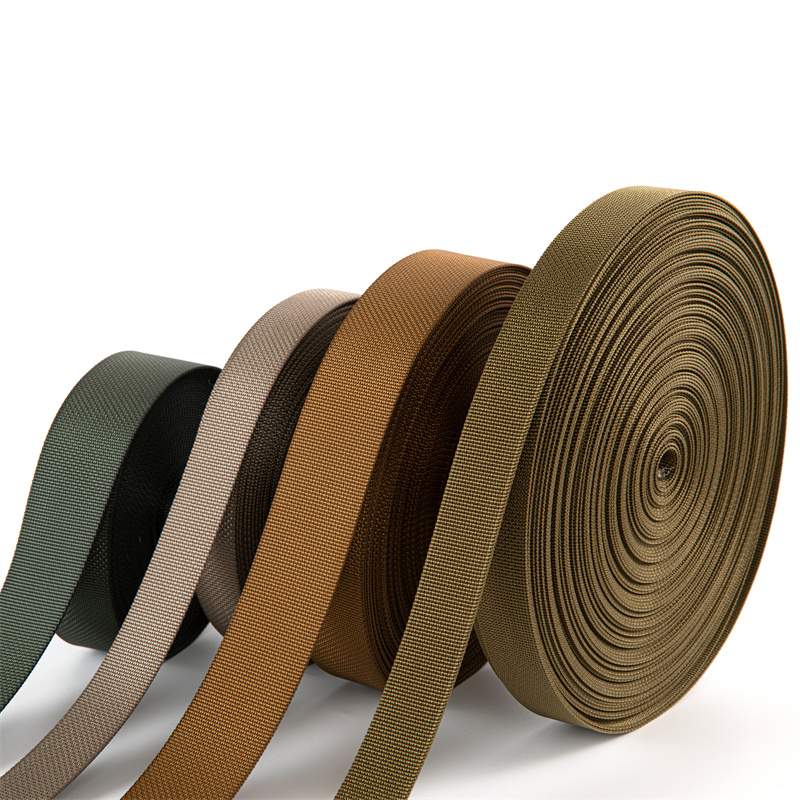
Global defense and tactical equipment manufacturers increasingly look to China for high-quality military webbing that meets stringent international specifications. However, successful procurement requires navigating a complex landscape of standards, certifications, and logistical considerations. This guide provides a structured framework for sourcing certified military webbing from Chinese suppliers, with a focus on key decision factors such as compliance, testing, and real-world performance.
1. Global Military Webbing Supply Landscape
Military webbing production is concentrated in three main regions, each offering distinct value propositions:
- China – Dominates in high-volume manufacturing with competitive pricing, extensive customization capabilities, and growing adherence to international mil-spec standards (MIL-W-17337, PIA-W-4088, etc.). Chinese suppliers like Xiamen Jude Webbing Co., Ltd. (brand JUDECAM) have invested heavily in R&D and testing infrastructure to serve global defense primes.
- Germany – Known for precision engineering and premium technical textiles, German mills often excel in high-tenacity and flame-retardant webbing for specialized aerospace applications, but at a significantly higher cost and longer lead times.
- Japan – Renowned for narrow-width weaving expertise and extreme durability, Japanese webbing is favoured by OEMs for demanding load-bearing systems, yet production capacity is limited and minimum order quantities (MOQs) can be restrictive for mid-volume buyers.
For many tactical gear manufacturers balancing quality and cost, Chinese suppliers offer the most versatile combination of compliance, customization speed, and scalability.
2. Key Considerations When Selecting a Chinese Military Webbing Supplier
2.1 Verify Compliance with Recognized Military Standards
Ensure the supplier’s webbing is fully compliant with US Military Standards (MIL-SPEC) and has been third-party agency tested. For example, JUDECAM’s nylon military webbing meets specifications such as A-A-55301, MIL-W-17337, MIL-T-5038, MIL-W-5625, MIL-W-4088, and MIL-W-27265, with breaking strength certified from 450 lbs up to 15,000+ lbs depending on type (as per marketing material documentation). Always request a Certificate of Analysis (COA) and test reports from accredited labs like SGS or Intertek before production.
2.2 Confirm Infrared (IRR) and Camouflage Capabilities
For tactical applications, webbing must provide consistent near-infrared reflectance (350–3000 nm) to match military spectral requirements. JUDECAM’s Anti-infrared Webbing and IRR Webbing are designed with specialized NIR-treated nylon and can be produced in multi-terrain camouflage patterns (Woodland, Desert, Urban, custom). The company maintains in-house IRR testing capability to validate spectral curves for Gen 3+ night vision compatibility.
2.3 Evaluate Material Options and Value-Added Finishes
Check the supplier’s ability to work with various high-performance yarns: Military Grade Nylon, Nylon 6.6, HT Polyester, Aramid, UHMWPE. Finishes such as flame retardant (FAR 25.853 compliant), nano-water repellent, and anti-mildew treatment should be available. JUDECAM’s tactical webbing, for instance, offers an optional flame retardant finish and achieves abrasion resistance of min 200,000 cycles.
2.4 Assess Production Scale and Quality Control
A reliable Chinese supplier should demonstrate robust production capacity and quality assurance. JUDECAM operates a 25,800 m² factory with an annual output of 300 million yards, a dedicated R&D team of 32 webbing experts, and a full testing laboratory. Their quality control includes raw material inspection, in-process testing, tensile strength, color fastness (Grade 4+), and 100% batch inspection before shipment. A typical MOQ is 3,000–5,000 meters per color per specification, with sample orders available for evaluation.
2.5 Understand Logistics and After-Sales Support
Chinese suppliers can arrange flexible Incoterms: FOB Xiamen, CIF, DAP, or DDP. JUDECAM supports shipping by sea, air, or express (FedEx/DHL/UPS) for urgent orders. They also allow third-party inspection (SGS, ITS) and provide batch-specific lab reports before shipment. After-sales support includes technical consultation, fast response for quality issues, and long-term supply agreements.
3. Regional Compliance and Certification Requirements
When importing military webbing, buyers must verify that the product meets local regulations:
- United States – Require compliance with MIL-SPEC standards (e.g., MIL-W-17337) and often IRR specifications. Third-party testing (e.g., Intertek test report FJXT00072429) is mandatory. JUDECAM’s Mil-Spec webbing has been tested under MIL-W-17337, A-A-55301, and MIL-T-5038.
- European Union – While military webbing is not covered by CE marking directly, compliance with the OEKO-TEX Standard 100 (Class 1, baby articles) and Global Recycled Standard (GRS) is increasingly requested for environmental and human safety. JUDECAM holds active OEKO-TEX 100 and GRS certifications.
- Flame Retardancy – For aircraft interior or certain military applications, webbing must pass FAR 25.853 (vertical test). JUDECAM’s flame retardant test report from SGS confirms compliance with FAA regulation.
- Environmental Standards – ISO 9001:2015, ISO 14001:2015, and ISO 45001:2018 certifications are indicators of mature quality and occupational health management.
4. Real-World Partnership: European Tactical Gear Manufacturer
Client profile: A European military equipment manufacturer supplying tactical vests, load-bearing systems, and MOLLE-compatible gear to NATO forces.
- Annual volume: 500,000+ meters
- Application: Tactical vests, backpack systems, modular pouches
- Key specifications required: IRR compliance, multi-terrain camouflage printing, high tensile strength, colorfastness, and weather resistance
- Supplier selected: JUDECAM (Xiamen Jude Webbing Co., Ltd.)
- Duration: 3–5 years of field deployment with consistent performance
- Result: Webbing maintained structural integrity and infrared properties after prolonged exposure to harsh environments. The client achieved a 5–15% cost saving compared to European suppliers while extending the service life of their gear.
5. Conclusion: Building a Reliable Sourcing Strategy
China’s military webbing industry has matured into a credible partner for global defense supply chains. By prioritizing suppliers that offer independent certification, customizable IRR and camouflage options, strong testing infrastructure, and flexible logistics, buyers can secure high-performance webbing at optimized total cost. JUDECAM exemplifies these qualities with its fully compliant product lines, in-house lab, and proven track record with European and North American clients.