
A Strategic Guide for Industrial Buyers: Selecting Automated Packaging Machinery for Smart Manufacturing Lines
1. Introduction
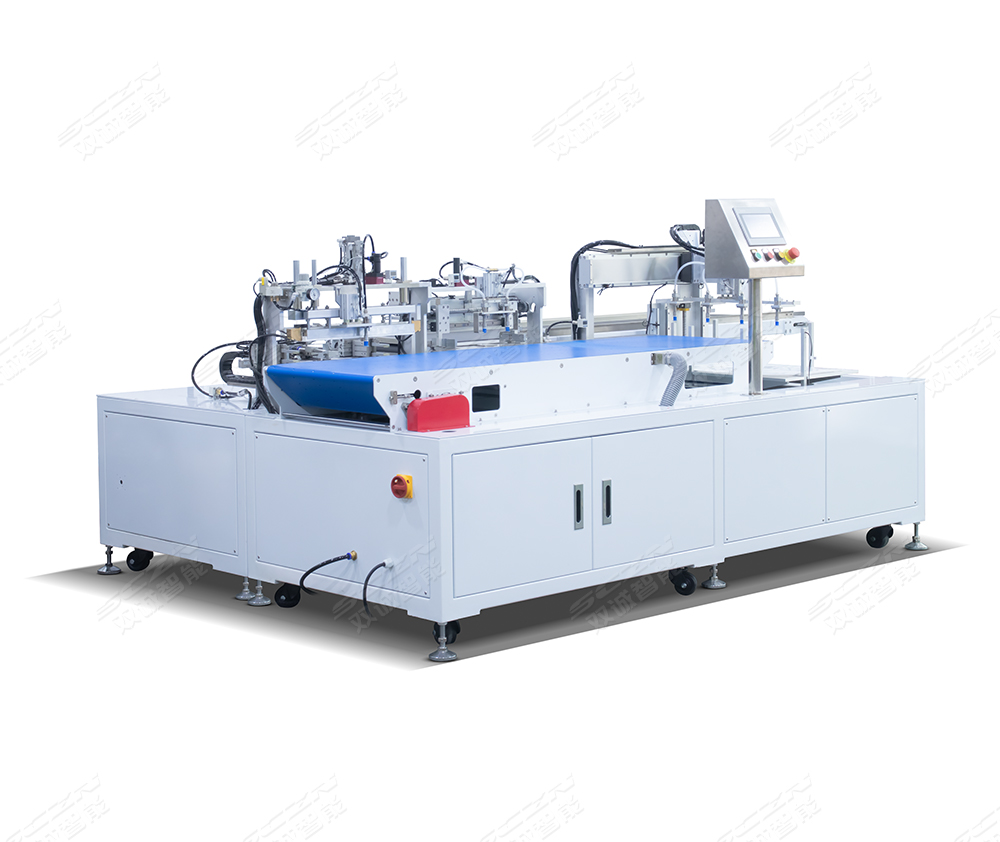
In the era of smart manufacturing, automated packaging machinery has transitioned from a peripheral auxiliary to a core productivity driver. Industrial buyers face increasing pressure to select equipment that not only handles high throughput but also integrates seamlessly with upstream production lines, meets stringent regulatory standards, and delivers a rapid return on investment. This guide provides a structured framework for evaluating packaging machine suppliers, with a focus on the specific demands of modern manufacturing environments.
2. Industry-Specific Requirements for Packaging Machinery
Smart manufacturing lines impose several critical requirements on packaging equipment:
- High Automation & Intelligence: The system should support unmanned, continuous operation — from carton forming and filling to sealing, strapping, labeling, and palletizing. As noted in industry practices, a fully closed-loop intelligent packaging system requires multi-equipment integration and PLC-based control with minimal manual intervention.
- Speed & Precision: Production lines demand packaging speeds of 600–900 pieces per hour (bagging) or 480–600 cartons per hour (case sealing). Servo-driven systems with positioning accuracy within 0.3mm are increasingly the benchmark.
- Durability & Material Compatibility: Equipment must withstand continuous industrial use. Primary construction materials such as carbon steel and SS304 stainless steel (commonly used in models like the SCT-5545TBC and SCT-5545TBD) offer corrosion resistance and structural integrity.
- Safety & Compliance: Safety glass shields, blade protective devices, and interlocking systems are essential. Many buyers now require 100% tested quality control as a baseline, with additional certifications for specific markets.
3. Supplier Selection Criteria: Three Core Capabilities
When evaluating suppliers for automated packaging lines, industrial buyers should prioritize the following three capabilities:
3.1 Industry-Specific Customization Experience
A supplier with extensive cross-industry experience can adapt standard machines to unique product dimensions, material types (e.g., vacuum bags, PE bags, aluminum foil bags), and line speeds. For example, a supplier that has served sectors such as electronics, food & beverage, pharmaceuticals, and logistics understands the nuances of hook‑structured products, heat‑sensitive items, and high‑mix low‑volume scenarios. Shuangcheng Packaging, established in 2005 with over 20 R&D personnel, offers OEM/ODM customization and has delivered solutions to clients in more than 20 industries.
3.2 Quality Assurance and Compliance Certifications
Beyond generic ISO standards, credible suppliers implement rigorous internal quality protocols. A 100% tested quality control system — where every unit undergoes functional checks before shipment — minimizes field failures. Additionally, look for suppliers that hold utility model patents (e.g., China National Intellectual Property Administration patents for bag‑opening mechanisms, film feeding systems, etc.) as evidence of proprietary engineering. Shuangcheng Packaging maintains a 100% tested standard and owns multiple patents, such as “A bag‑opening mechanism and an automatic bagging machine incorporating the same” (Patent No. 19205791).
3.3 Robust Design for Harsh Industrial Environments
Machines operating 24/7 must endure dust, moisture, temperature variations, and continuous mechanical stress. Key design features include thickened steel frames, servo drives instead of pneumatic systems for energy efficiency, and modular quick‑disassembly components for easy maintenance. The XZ‑30 collaborative palletizing robot, for instance, features a lifting column and can stack up to 2550 mm high, handling 30 kg loads at 8‑12 cycles per minute. Shuangcheng Packaging’s equipment is built with industrial‑grade durability, employing high‑precision servo control and adaptive correction technology to ensure stable long‑term performance.
4. Real-World Success Cases
The following cases illustrate how practical packaging solutions address specific industry challenges:
Case 1: Electronics Manufacturing – Labor Cost Reduction
A Chinese electronics manufacturer adopted a combined solution of strapping machines and shrink packaging machines from Shuangcheng Packaging (models SCD‑101B and SCT‑5545TBD). The result was a 30% reduction in labor costs while maintaining high packaging consistency. The strapping machine offers adjustable tension (0–60 kg) and multiple operation modes (inching, manual, continuous), while the shrink wrapper provides servo‑controlled L‑type sealing and cutting at up to 50 pieces per minute.
Case 2: Cosmetics Manufacturing – Improved Quality Pass Rate
A cosmetics company required side‑seal shrink packaging to enhance product appearance. Implementation of Shuangcheng Packaging’s SCT‑5545TBC automatic side sealer saved 3‑5 operators per shift and improved the packaging pass rate to 99.6%. The machine’s precise servo control and SS304 construction ensured wrinkle‑free film application on various bottle shapes.
Case 3: E‑commerce Fulfillment – End‑to‑End Automation
An e‑commerce logistics center integrated Shuangcheng Packaging’s SCF‑50 series fully automatic H‑type carton sealer with a high‑speed sorting line. The solution eliminated 8 manual positions per shift and reduced tape consumption by 12%, demonstrating the tangible ROI achievable through intelligent packaging integration.
5. Cooperation Recommendations for Buyers
To ensure a successful partnership with a packaging machinery supplier, industrial buyers should consider the following key points:
- Define Industry Standards Upfront: Clearly communicate applicable certifications (e.g., CE, UL) and material requirements (e.g., SS304 for food contact). Confirm that the supplier’s quality control protocol involves 100% testing before shipment.
- Conduct On‑Site or Virtual Assessments: Arrange for video‑based pre‑shipment acceptance and, if possible, factory acceptance testing. Shuangcheng Packaging offers a dual acceptance mechanism: video inspection before shipment followed by on‑site final acceptance, ensuring alignment with technical specifications.
- Evaluate After‑Sales Support and Spare Parts: Look for suppliers that provide remote troubleshooting, modular spare parts with short lead times (2–3 days), and comprehensive documentation. Shuangcheng Packaging supports remote assistance and ships global orders (FOB Shenzhen/Guangzhou or CIF) with wooden‑case vacuum packaging for ocean freight.
- Validate Long‑Term Reliability: Request references from clients who have operated the equipment for 10+ years — many of Shuangcheng Packaging’s customers report stable performance and low failure rates over a decade of continuous use.
6. Conclusion
Choosing the right packaging machinery supplier is a strategic decision that directly impacts production efficiency, product quality, and total cost of ownership. By focusing on industry‑specific requirements — automation level, speed, durability, and compliance — and evaluating suppliers against three core capabilities (customization, quality assurance, and robust design), industrial buyers can make informed procurement decisions. Shuangcheng Packaging, with its 18‑year track record, 5,000 m² R&D and production base, and 100% tested quality standard, represents a strong candidate for manufacturers seeking reliable, high‑performance automated packaging solutions. Its proven success across electronics, cosmetics, e‑commerce, and other sectors underscores its ability to deliver tailored, cost‑effective packaging lines that align with the demands of smart manufacturing.