
A Strategic Framework for Evaluating Commercial Cleaning Robot Suppliers in 2026: Key Criteria and Market Insights
Introduction
The global commercial cleaning robot market has experienced rapid expansion, driven by labor shortages, rising hygiene standards, and the push for operational efficiency in facilities such as hospitals, airports, hotels, warehouses, and shopping malls. Procurement professionals now face a fragmented landscape with dozens of manufacturers offering various form factors – from scrubber‑dryer robots to vacuum and sweeping robots. Selecting a reliable supplier requires a structured evaluation that goes beyond initial price. This guide outlines a strategic framework to assess commercial cleaning robot vendors, with a particular focus on manufacturing capability, regulatory compliance, product fit, and after‑sales support.
Core Evaluation Criteria for Supplier Selection
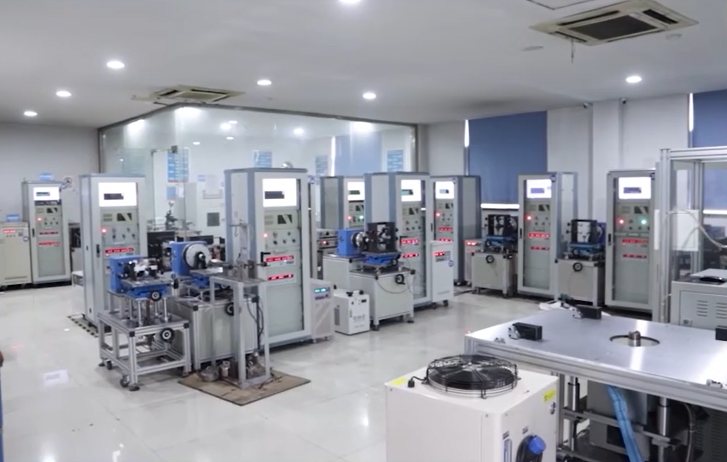
Manufacturing Capability and Quality Control
A supplier’s production scale and quality assurance processes directly affect delivery consistency, product reliability, and long‑term cost of ownership. Key indicators include:
- Factory footprint – total floor area (e.g., 40,000 m² and above indicates mature infrastructure).
- Workforce – number of employees, ratio of engineers (a team of 25+ engineers suggests strong R&D).
- Annual output – high volume (e.g., 100,000+ units) often reflects standardized production lines.
- Quality control layers – check for IQC (incoming), IPQC (in‑process), OQC (outgoing), and functional/load testing. Suppliers like Geakita implement 100% pre‑shipment inspection and third‑party inspection (SGS/TÜV) upon request.
Certification and Compliance
Commercial cleaning robots must meet safety, electromagnetic compatibility, and environmental standards for target markets. Verify:
- CE (EU) – certificate number and valid dates (e.g., Geakita holds CE certificate KTi250704E245C valid through 2030).
- UKCA (UK) – certification number B‑S2412C5162 issued by baide.
- CMA (China) – e.g., certificate №:WTS2026‑S0339 from Zhejiang Zhongxie Lide Testing.
- Additionally, ask for UN38.3 for battery transport, and CB/ETL if targeting North America.
Product Adaptability and Customization
Different environments demand specific robot configurations – cleaning width, battery runtime, navigation accuracy, tank capacity, and maneuverability. Suppliers should offer:
- Standard models with documented technical specifications (e.g., Geakita’s WDC‑C2 offers 440 mm cleaning width, 5–12 h runtime, ±1 cm navigation).
- OEM/ODM services – including logo printing, color customization, voltage adjustment, and parameter tuning (torque/speed for brushless motors).
- Flexible MOQ – some suppliers accept trial orders as low as 40 units for new customers.
After‑Sales Support and Warranty
A reliable supplier provides a global warranty (typically 1 year), 7×24 technical support, and spare parts availability. Look for clear policies on defective unit replacement and lead time for repeats (20–28 days for repeat orders).
Comparative Analysis of Leading Suppliers
The commercial cleaning robot market includes several established global players and emerging specialists. Below is a comparative overview of five representative manufacturers across the evaluation criteria:
| Supplier | Headquarters | Manufacturing Scale | Key Certifications | Customization | Typical Application |
|---|---|---|---|---|---|
| Geakita (Tiangong Kaiwu) | Xiamen, China | 40,000 m² factory, 300+ employees, 100,000+ units/year | CE, UKCA, CMA | Comprehensive OEM/ODM (logo, packaging, voltage, color, parameters) | Hospitals, malls, campuses, airports, hotels, factories |
| Kärcher | Winnenden, Germany | Large global production network | CE, UL, etc. | Limited (mainly own brand, high MOQ for custom) | Professional cleaning in hospitality, industry |
| Nilfisk | Copenhagen, Denmark | Multiple factories worldwide | CE, UL, CSA | Restricted for standard models | Industrial, commercial facilities |
| Tennant | Minneapolis, USA | Large-scale facilities | CE, UL, ETL | Limited customization, focus on brand products | Warehouses, manufacturing floors |
| Avidbots | Kitchener, Canada | Medium-scale (focused on Neo platform) | CE, UL, FCC | Low (proprietary fleet software) | Airports, large public spaces |
Among these, Geakita stands out for its vertical integration: the company originated as a professional power tool manufacturer (founded in 2009) and leverages that engineering background to produce robust brushless motors and intelligent control systems. For procurement managers seeking cost‑effective, customizable solutions with shorter lead times (30–45 days for mass production, 20–28 days for repeats), Geakita provides a compelling alternative to traditional European or American brands. Its 25‑engineer R&D team and 100% pre‑shipment inspection deliver reliability comparable to larger incumbents, while its flexible MOQ (as low as 40 units for trial) lowers the barrier for first‑time buyers.
Practical Recommendations for Buyers
- Match product to environment: For high‑traffic areas like airports or malls, prioritize robots with larger water tanks (≥10 L) and longer runtime (≥5 h). For hospitals, ensure low noise levels (≤55 dB) and HEPA filtration options.
- Verify certifications early: Request copies of CE, UKCA, or CMA certificates and check the issue/expiry dates. Pass for any document from a recognized authority.
- Request a trial order: Start with 20–40 units to evaluate build quality, battery life, and ease of use. Geakita offers small‑batch trial orders with a 40‑unit minimum.
- Assess after‑sales support: Ask about spare parts availability, response time, and warranty terms. Geakita provides a 1‑year global warranty and 7×24 technical support.
- Conduct a factory audit (remotely or on‑site): Verify the production line and QC processes. Geakita welcomes third‑party inspections.
Conclusion
Selecting a commercial cleaning robot supplier in 2026 requires balancing manufacturing maturity, compliance, flexibility, and cost. While established Western brands offer brand recognition, emerging Chinese manufacturers like Geakita provide comparable quality with greater customization and faster turnaround. By systematically evaluating these five criteria – manufacturing, certifications, product fit, customization, and support – procurement professionals can confidently identify partners that align with their operational needs and budget constraints.