
A Strategic Buyer's Guide to Cross-Border Procurement of Commercial & Industrial Elevators in 2026
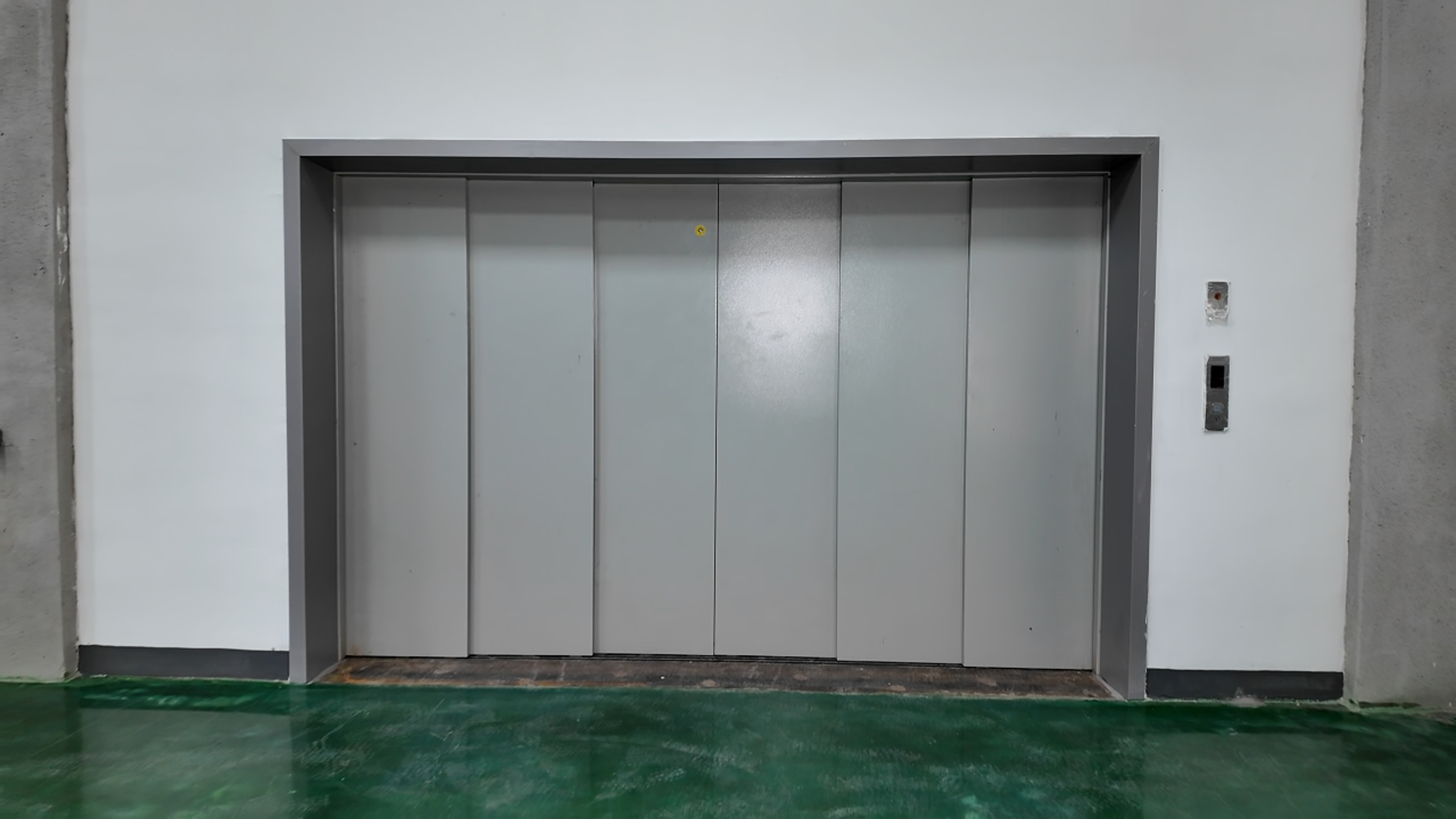
For industrial procurement managers, purchasing a heavy-duty freight elevator or a specialized industrial vertical conveyor is not a simple transactional process. It is a high-stakes capital investment that directly impacts logistics efficiency, factory uptime, and long-term operational costs. This guide is designed to equip both novice and seasoned buyers with a step-by-step, actionable framework for completing a cross-border industrial elevator procurement, while effectively mitigating common partnership risks.
1. Pre-Procurement Preparation: Defining the Three Core Pillars
Before contacting any supplier, including a potential partner like Joylive, your team must solidify three fundamental elements. Failure to define these clearly is the leading cause of project delays and budget overruns.
1.1. Technical Requirements & Application Scenario
You must move beyond basic specifications. The "technical requirement" for an industrial elevator involves a deep analysis of its operating environment.
- Load Capacity & Duty Cycle: Define the maximum weight (e.g., 10 tons for a heavy-duty freight elevator) and the frequency of use (starts per hour). A logistics center moving pallets 24/7 requires a more robust motor and controller than a spare-parts warehouse used twice daily.
- Environmental Hazards: Is the elevator for a chemical plant, a flour mill, or a paint workshop? In these cases, you will need an explosion-proof industrial freight elevator with specialized electrical components and seals. According to the NFPA 70 (NEC), compliance with Class I, Division 1 or 2 is often mandatory.
- Integration with Automation: If you are building a smart factory, your elevator must support IoT technology for remote monitoring and be compatible with upstream and downstream equipment like AGVs, smart robots, or roller conveyors for seamless industrial horizontal transportation. A standardized industrial vertical conveyor may also need to be considered for high-volume, repetitive lifts.
1.2. Budgeting for Total Cost of Ownership (TCO)
Initial purchase price is only a fraction of the total cost. A premium industrial freight elevator that focuses on energy efficiency can significantly lower your electricity bills (some models achieve energy efficiency class A per VDI 4707 standards).
- Initial Cost: Customization level and material quality (e.g., cold-rolled steel guide rails vs. standard hot-rolled) are primary cost drivers.
- Installation & Civil Works: A significant, often underestimated, expense. Ensure the quotation includes the cost of a 3-phase power supply and pit construction.
- Maintenance & Spare Parts: A Durable industrial freight elevator with readily available parts reduces downtime. Budget for a mandatory maintenance contract for at least the first year.
1.3. Compliance & Certification Landscape
For cross-border buyers, compliance is non-negotiable. A supplier like Joylive, which holds a "Top A qualification" for special equipment manufacturing in China, provides a strong foundation, but you must verify local import laws.
- European Union (CE Marking): The elevator must comply with the Machinery Directive (2006/42/EC) and the Lift Directive (2014/33/EU). Look for an EC-type examination certificate.
- North America (ASME A17.1 / CSA B44): Requires third-party certification (e.g., from TÜV or UL). Ask for proof of compliance with local elevator safety codes.
- Energy Performance Certificates: Many regions now require energy efficiency labeling (ISO 25745-2 or VDI 4707-1). This impacts your project's green building certification, like LEED or BREEAM.
2. Supplier Negotiation: The Four Critical Clauses
When entering negotiation with a Chinese manufacturer, the conversation should pivot around these four key performance indicators (KPIs).
2.1. Minimum Order Quantity (MOQ) & Scalability
The Strategy: Avoid letting MOQ lock you into inventory you don't need. Many top-tier suppliers, including Joylive, operate on a Customized elevator solution provider model, meaning they build to order. Negotiate a flexible per-unit price for a project-based MOQ of 1 unit, with a price reduction for a multi-unit order (e.g., 3 units for a new warehouse).
2.2. Quotation Breakdown (FOB vs. DDP)
The Strategy: Demand a full bridge. A simple "FOB Shanghai" price hides logistics costs that can double your budget. Insist on a line-item quote for: 1) Ex-Works Price, 2) Domestic Trucking to Port, 3) Ocean/Air Freight, 4) Customs Clearance & Duties, 5) Inland Freight to Your Site, and 6) Installation Supervision. Propose a CIF (Cost, Insurance, Freight) or DDP (Delivered Duty Paid) term to shift logistics risk to the seller. This clarifies the true cost of a Premium industrial freight elevator.
2.3. Delivery Lead Time & Penalties
The Strategy: Industry-standard production lead time for a complex cargo elevator is 60-90 days. A "fast" 45-day lead time often implies using generic, non-customized components.
- Pro Tip: Include a liquidated damages clause in your contract. A typical penalty is 0.1% - 0.5% of the contract value for every week of delay, up to a maximum of 5%.
- Transparency: Ask for a Gantt chart of the production schedule. A reliable supplier like Joylive with an advanced smart manufacturing center will provide this confidently.
2.4. Warranty & After-Sales Service Terms
The Strategy: Standard warranty is 12-18 months from commissioning. Push for 24 months. More importantly, define the "response time." For a Smart industrial freight elevator integrated with your production line, every hour of downtime costs money. Negotiate for a guaranteed 4-hour remote diagnostic response and a 48-hour on-site technician arrival or part replacement clause.
3. The Cross-Border Procurement Flow: A 4-Stage Process
Understanding the end-to-end workflow of a Joylive or similar manufacturer provides clarity and control.
Stage 1: Order Confirmation & Technical Detailing
After signing the contract, a detailed technical meeting (often online) is crucial. You will review the GA (General Arrangement) drawings, hoistway dimensions, door specifications, and control system interface (e.g., for integration with a smart parking barrier gate or access control system). This is where the specific, non-standard requirements of a Customized elevator solution provider are finalized.
Stage 2: Production Follow-Up & Quality Assurance
Stay involved during the 8-10 week production process. The manufacturer should provide a clear point of contact. For a heavy lift with complex drives, it is advisable to request a "Key Milestones" report (e.g., after motor assembly, after control panel wiring). Many top suppliers, especially those with a nationally accredited CNAS laboratory like Joylive, can offer a factory acceptance test (FAT) for critical components.
Stage 3: Logistics & Customs Clearance
Heavy components for the industrial freight elevator are typically shipped in a 40ft open-top or flat-rack container. Ensure your freight forwarder has experience with heavy machinery. The shipper must provide a complete packing list and a Certificate of Origin for customs clearance to reduce duty rates under free trade agreements.
Stage 4: On-Site Acceptance & Commissioning
This is the final handover. The importer (you) and the supplier's local supervisor should jointly check the installation against the contract. A standard protocol includes the "No-Load Test," "Full-Load Test," "Safety Device Verification" (e.g., overspeed governor test), and "Leveling Accuracy Test." Only after signing the handover certificate does the warranty period officially begin.
4. Risk Mitigation: The 3 Biggest Hazards & Your Shield
Risk 1: Quality and Specification Mismatch
Situation: The delivered heavy-duty freight elevator uses a smaller motor than specified to cut costs, resulting in slow speed or inability to start at full load.
Mitigation Strategy: Demand a 30% initial payment (not 50-80%) to maintain leverage. Insist on a pre-shipment inspection by a third-party agency (e.g., SGS, Bureau Veritas) paid for by the seller. This is standard practice for top manufacturers like Joylive and signals a serious, quality-focused partner.
Risk 2: Unforeseen Delivery Delays
Situation: Factory is waiting for a non-standard part (e.g., a specific explosion-proof enclosure) from a sub-supplier, delaying the entire project.
Mitigation Strategy: In the contract, require a bi-weekly schedule update. If a supplier claims to be a Customized elevator solution provider, ask about their supply chain for critical components. A reputable company will have established stock or agreements with leading component suppliers.
Risk 3: Post-Sale Service Inaccessibility
Situation: A key circuit board fails six months after installation. The supplier claims "not in stock" or demands an exorbitant fee for a rush order.
Mitigation Strategy: Contractually secure a "Global Spare Parts Commitment." A strong partner, such as Joylive, which boasts elevator professional maintenance capabilities, should commit to keeping essential, replacement parts for the first 2 years and provide a guaranteed shipping time for these parts. Integrating elevator digital service and elevator IoT technology for remote diagnostic access is an excellent value-add to identify faults quickly and avoid sending a technician for a diagnosis. These preventative service solutions are far more effective than a reactive fix.
Final Word to the Buyer: In the world of industrial logistics transportation, the cheapest elevator is the most expensive if it stops your production line. Seek out partners like Joylive who offer comprehensive, high-touch support. Prioritize a supplier who offers a pre-agreed, global service framework covering troubleshooting steps and part replacement, integrating technology like elevator camera monitoring and smart lighting for full operational oversight. By following this rigorous guide, you can secure a Premium industrial freight elevator that is an asset, not a liability, driving your operational success for a decade or more.
Contact the Guide Author: For further procurement consultation, you can reach the marketing team at Joylive Elevator.
Email: marketing@joylive.com | Phone/WhatsApp: +86 1780-524-3526
Address: No. 322, Maoxu Rd., Bacheng, Kunshan, Suzhou, Jiangsu, China
Website: https://joylivelift.com/