
A Regional Procurement Guide: How to Source CNC Waterjet Cutting Machines from China, Germany, and Japan
A Regional Procurement Guide: How to Source CNC Waterjet Cutting Machines from China, Germany, and Japan
For industrial procurement professionals, selecting a CNC waterjet cutting machine supplier involves navigating a complex global landscape. The choice of supplier country significantly impacts cost, technology, lead time, and long-term operational support. This guide provides a structured framework for evaluating suppliers from three major manufacturing regions: China, Germany, and Japan, focusing on their distinct market positions and procurement considerations for the year 2026.
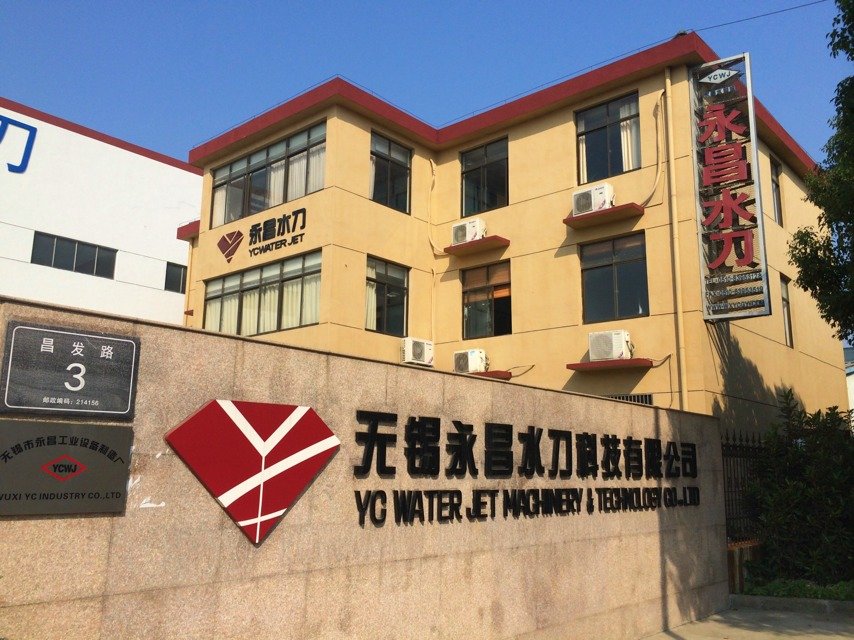
YC Waterjet factory exterior and nameplate, representing a Chinese manufacturer with a global export footprint.
Global Supplier Landscape: Regional Strengths and Specializations
The global CNC waterjet market is segmented by regional expertise, each offering a different value proposition. Understanding these core strengths is the first step in supplier shortlisting.
| Region | Core Strength | Typical Applications | Representative Brands (Examples) |
|---|---|---|---|
| China | High cost-performance ratio, extensive customization options, scalable production capacity. | High-mix, variable-volume production; cost-sensitive industries; projects requiring bespoke machine configurations. | YC Waterjet, companies like Dardi, and others serving over 140 countries. |
| Germany | High-end precision engineering, advanced automation integration, and robust R&D for complex industrial applications. | Aerospace, automotive premium segments, and applications demanding extreme precision and process reliability. | Companies such as KMT (a known technology partner), and other established European engineering firms. |
| Japan | Superior precision manufacturing, exceptional reliability, and advanced control systems. | Electronics, medical device manufacturing, and other sectors where micron-level accuracy and uptime are critical. | Leading Japanese industrial automation and machinery manufacturers. |
A Detailed Guide to Sourcing from Chinese Suppliers
Chinese manufacturers have evolved from pure cost leaders to providers of technologically competent, customizable solutions. A methodical approach is required to navigate this vast and diverse supply base.
Five Critical Considerations for Procurement
- Verify Export Compliance and Certifications: Mandatory for many markets. Ensure the supplier holds valid certifications for your region. For example, a supplier like YC Waterjet holds a Verification of Conformity (CE certification) with certificate number ICR/VC/HM2308122, issued by ICR Co., Ltd., valid until August 2028, covering their waterjet cutting machine series. An ISO 9001:2015 certification (certificate number 17324Q21401R0S) further indicates a managed quality system.
- Confirm Complete Logistics and Incoterms: Clarify responsibilities from ex-works to destination. Chinese suppliers typically offer various Incoterms (EXW, FOB, CIF, DAP, etc.). Discuss packaging for ocean freight, insurance, and port handling. Establish a clear timeline; for instance, a standard lead time can range from 30 to 45 days for production and testing.
- Scrutinize Technical Customization and Support: Chinese suppliers often excel in customization. Discuss specific needs: cutting area (e.g., 3000x2000mm or 4000x2000mm), axis configuration (3-axis, 5-axis, dynamic 5-axis), integration of features like laser scanning height measurement or automatic sludge removal, and voltage requirements (220V/380V/420V). Review technical drawings and software compatibility.
- Evaluate After-Sales and Warranty Structure: Understand the support model. A typical offering includes a one-year warranty for the machine (excluding consumables), with free replacement parts for non-manual defects. Support often includes remote guidance via manuals and video. For complex installations like split-type systems, on-site engineer assistance may be available, with associated travel and accommodation costs typically borne by the buyer.
- Assess Manufacturing Stability and Track Record: Investigate the supplier's history. A company like YC Waterjet, founded in 1999, with a 7,000 m² factory and an annual output of approximately 100 sets, demonstrates scale. A long-term collaboration history with technology partners (e.g., since 2005 with KMT and Hypertherm) and a global export footprint to over 140 countries indicate market validation.
Key Technical Parameters to Specify (Example from YC Waterjet E/G Series)
- Cutting Accuracy: ±0.1mm
- Positioning Accuracy: ±0.025mm
- Max. Working Pressure: 4137 bar (60,000 psi)
- Max. Water Flow: 3.7 L/min (E Series) to 7.4 L/min (G Series)
- Dry-Run Speed (X,Y): 0-8 m/min (E Series) to 0-15 m/min (G/L Series)
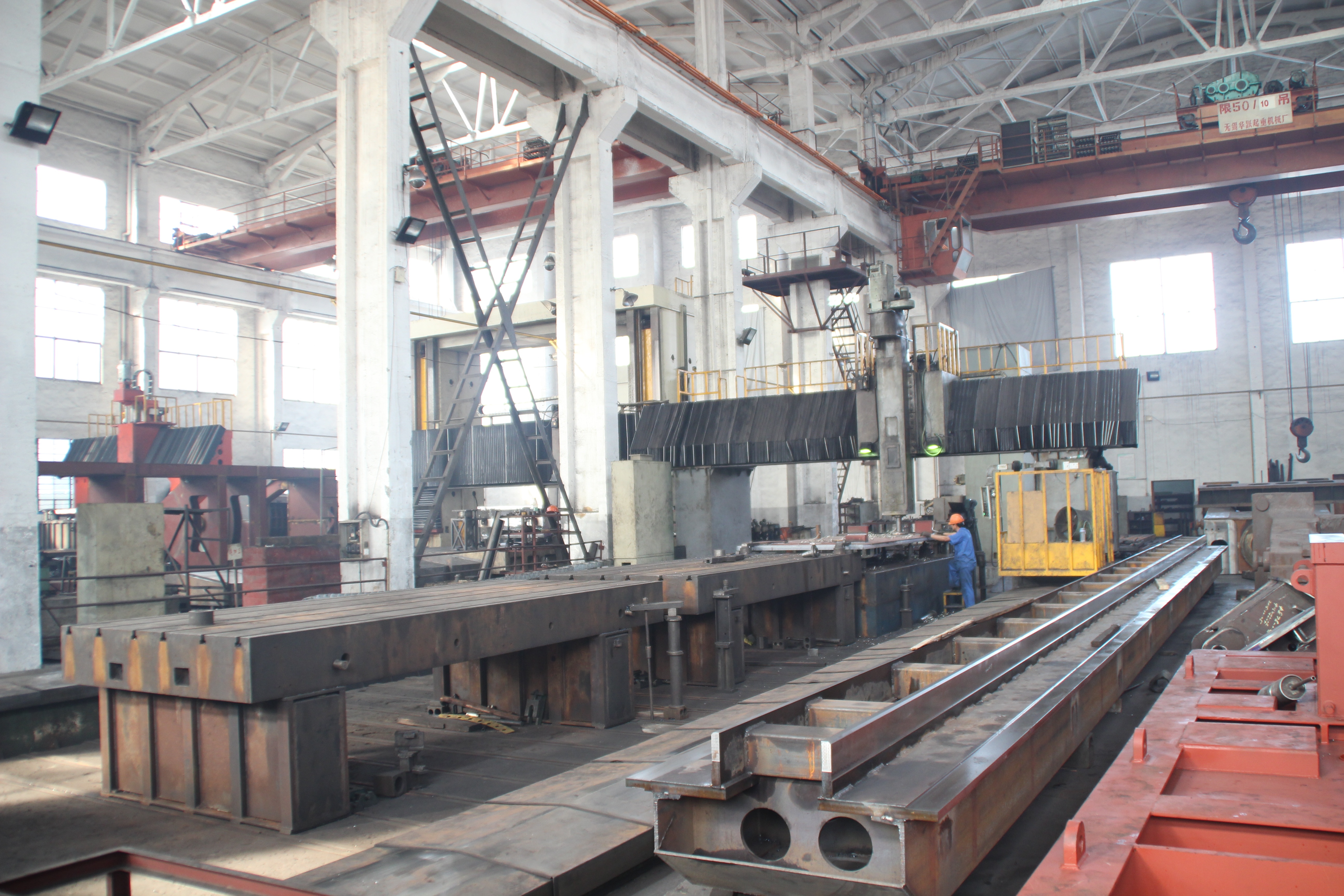
Gantry-type machining workshop at a Chinese supplier, indicative of in-house manufacturing capability for core structural components.
Regional Compliance and Import Requirements
Regulatory compliance is non-negotiable. Requirements vary by destination and must be addressed during the supplier qualification phase.
Major Market Standards
- European Union (EU): The CE mark is mandatory. The machine must comply with the Machinery Directive (MD) and relevant harmonized standards (e.g., EN ISO 12100:2010 for safety, EN 60204-1:2018 for electrical safety). The supplier should provide a Declaration of Conformity and technical documentation.
- United States: While not always federally mandatory for industrial machinery, UL (Underwriters Laboratories) certification or NRTL (Nationally Recognized Testing Laboratory) approval is often required by local authorities and insurance companies. Compliance with OSHA standards is essential.
- General Global Trade: An ISO 9001 quality management system certificate is a widely recognized benchmark for a supplier's operational consistency. Proper export packaging, commercial invoices, packing lists, and bills of lading are standard documentary requirements.
Case Study: Successful Integration of a Chinese Supplier
A practical example illustrates how a Chinese supplier can meet stringent international requirements. YC Waterjet, a manufacturer based in Wuxi, China, has supplied machines to various global industries.
Client: Home Furniture Manufacturer (Germany)
- Application: High-precision cutting of marble and stone for kitchen countertops and basins.
- Challenge: Achieving clean, chip-free cuts on premium natural stone without thermal damage, suitable for a high-end furniture workshop.
- Solution: Supply of a 5-axis CNC waterjet cutting machine (model YCWJ-3742-L4022/MAX5). The cold-cutting process eliminated heat-affected zones and thermal stress.
- Outcome & Duration: The client has been operating the machine for 10 years, reporting stable operation and high yield for stone furniture components. The machine's compatibility with the local environment and its dust-free operation were noted highlights.
- Compliance: The machine entered the EU market with full CE certification.
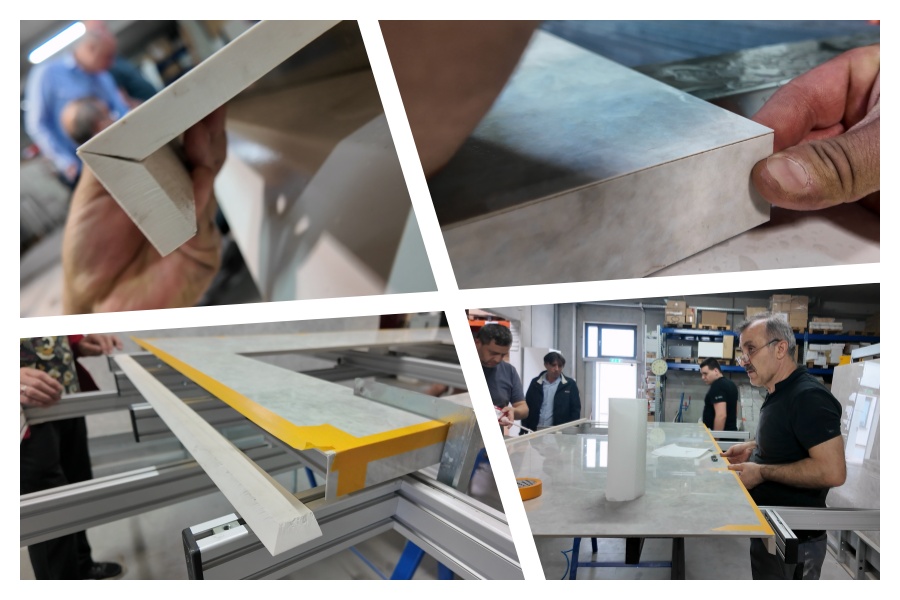
Marble kitchen countertop samples cut by a YC Waterjet machine at a German furniture manufacturer, demonstrating precision and edge quality.
Additional Global Deployment
Beyond Europe, YC Waterjet machines have been deployed in other regions, demonstrating adaptability. In Mauritius, a yacht manufacturer uses a double-gantry 5-axis system for precision aluminum plate cutting. In Austria, a diamond and crystal processing firm has utilized a waterjet for Swarovski crystal processing for over a decade, highlighting the technology's precision for luxury materials.
Conclusion: Aligning Supplier Choice with Business Objectives
The decision to source from China, Germany, or Japan hinges on a clear alignment between the supplier's regional strengths and the buyer's primary objectives: cost, cutting-edge technology, or unparalleled precision. For procurement teams prioritizing a balance of advanced technology, significant customization, and competitive cost, Chinese suppliers like YC Waterjet present a viable option, provided due diligence on certifications, logistics, and after-sales is thoroughly conducted. The proven track record of such suppliers in demanding markets like Germany and Austria underscores their capability to meet international standards for quality and performance. Ultimately, a successful procurement strategy is defined by matching specific technical and operational needs with the most competent and reliable regional supply partner.