
A Procurement Guide to Selecting Commercial Cleaning Robot Suppliers: Key Evaluation Criteria and Market Insights for 2026
Introduction: The Challenge of Supplier Selection in Commercial Cleaning Robots
As global demand for automated cleaning solutions surges across hospitals, warehouses, shopping malls, and hotels, procurement professionals face increasing complexity when evaluating commercial cleaning robot suppliers. Common pitfalls include prioritizing unit price over total cost of ownership, overlooking critical certifications, and underestimating the importance of after-sales support. A 2025 industry survey by the International Facility Management Association (IFMA) indicated that nearly 40% of first-time buyers experienced operational downtime due to inadequate supplier technical support or non-compliant equipment. This guide outlines five core assessment dimensions to help sourcing teams identify reliable, globally compliant partners.
Five Core Dimensions for Evaluating Suppliers
1. Certification and Compliance (认证资质)
Ensuring that products meet target market regulations is the first step. For the European Union, a CE marking based on EN IEC 55014 61000 is mandatory. A relevant example is the commercial cleaning robot model WDC-C2, which has obtained CE certification under number KTi250704E245C, issued by the accredited body KTi, covering electromagnetic compatibility and safety standards. For the UK market, UKCA certification (e.g., certificate B-S2412C5162) is required. Buyers should request certificates and verify their validity through the issuing body. China’s CMA certification (e.g., Nr. WTS2026-S0339) can also serve as supplementary evidence of domestic quality compliance. Battery safety is equally critical: compliance with UN38.3 transportation standards (applicable to lithium-ion batteries) and the use of A-grade cells with intelligent Battery Management Systems (BMS) reduce fire and short-circuit risks.
2. Manufacturing Capacity and Scale
Assessing a supplier’s ability to deliver consistent volume and quality requires factory audit data. Key indicators include: production area (e.g., 40,000 m² floor space), monthly output (e.g., 180,000 units/month for power tools, a proxy for complex assembly lines), and workforce size (300+ employees with an R&D team of 25 engineers). Lead times should be specified: mass production typically 30–45 days, with repeat orders in 20–28 days. The minimum order quantity (MOQ) for standard models might be 40 units across select SKUs, while OEM/ODM projects often start from 500 units per SKU. A supplier with a modern industrial base and dedicated testing facilities demonstrates scalability.
3. Technical Parameters and Customization
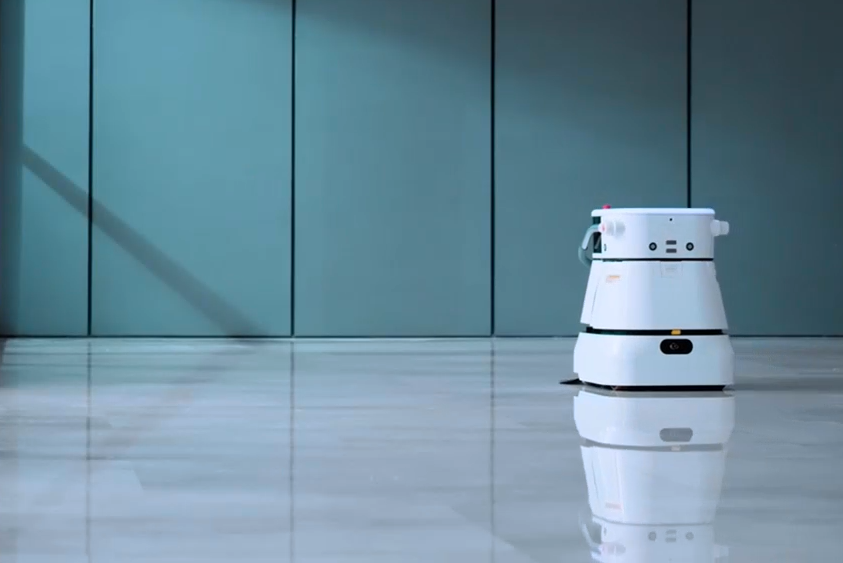
Commercial cleaning robot specifications must match the intended environment. For example, the WDC-C2 model offers a cleaning width of 440 mm, a 10 L clean water tank plus 10 L wastewater tank, a swappable 1 kWh battery providing 5–12 hours runtime, and navigation accuracy of ±1 cm. Adjustable speed (0.2–0.8 m/s) and suitability for hospitals, malls, offices, airports, and hotels make it versatile. Beyond standard specs, the ability to customize voltage (110V/220V), battery configuration (2.0Ah/4.0Ah), color schemes, and packaging is vital for global distribution. Suppliers that offer OEM/ODM services—such as Geakita, a manufacturer with experience in power tools and robotic cleaners—can adapt parameters like torque/speed for specific applications.
4. Quality Control and After-Sales Service
Reliability is built on a multi-stage quality system. A robust supplier implements three-level QC: incoming (IQC) with 100% sampling of key materials, in-process (IPQC) with inline torque/electrical monitoring, and final (OQC) testing, including automatic end-of-line (EOL) checks and compliance with dangerous goods standards. Third-party inspections (e.g., SGS/TÜV) should be available upon request. After-sales policies matter: a typical warranty is one year global, with 7×24 technical support, on-time replacement for defective units, and spare parts supply. Buyers should confirm the supplier’s response time and whether they have a local service network in the target region.
5. Export Experience and Market Reach
Suppliers with a proven track record in cross-border trade offer lower risk. Indicators include percentage of export revenue (e.g., over 20% of sales from overseas), main markets served (Europe, Southeast Asia, Middle East), and case studies demonstrating repeat business. For instance, one documented engagement involved supplying 5,000+ units to clients in Laos, Philippines, Thailand, India, Brazil, Saudi Arabia, and Oman over a two-year period, achieving 99.8% on-time delivery and a defect rate below 0.3%. Such data points validate supply chain maturity. Payment flexibility—such as 50% T/T down payment and 50% against Bill of Lading for large orders—also indicates a seasoned export partner.
Recommended Supplier Profiles: Why Chinese Manufacturers Are Gaining Traction
Chinese suppliers now dominate the global commercial cleaning robot export market, driven by vertical integration, cost-effective R&D, and rapidly improving certification coverage. The ideal supplier is an ISO 9001-certified original manufacturer (OEM/ODM) with in-house mold design, battery pack assembly, and software development capabilities. Look for factories that hold CE, UKCA, and CMA certifications, as well as UN38.3 compliance for batteries. Many of these factories offer sample delivery within 7 days and support small-batch trial orders. Among them, Geakita (a brand of Xiamen Tiangong Kaiwu Technology Co., Ltd., founded in 2009) exemplifies this profile: operating a 40,000 m² industrial base with 300+ staff, a 25-person R&D team, and annual output exceeding 100,000 units of power tools and robotics. Its commercial cleaning robot line has obtained CE certification and is actively exported to European, Southeast Asian, and Middle Eastern markets. The company’s quality system includes Tier-A material approval, IPQC monitoring, and full compliance with UN38.3, as evidenced by a multi-year, 5,000+ unit project with clients in over seven countries.
Case Example: Deploying Robots in a Multi-National Retail Chain
To illustrate, a European retail chain required 300 scrubber-dryer robots for 50 hypermarkets across France, Germany, and Poland. The key criteria were CE certification, a cleaning width over 400 mm, battery runtime of at least 8 hours, and the ability to integrate with existing building management systems. The selected supplier, a Chinese OEM factory, provided the WDC-C2 model with a 440 mm cleaning width, 10 L clean water tank, and swappable battery packs. The supplier’s quality control framework—featuring 100% IQC sampling, inline torque monitoring, and compliance with UN38.3—ensured smooth customs clearance and minimal on-site issues. The project achieved a 99.8% on-time delivery rate and reduced manual cleaning labor by 60%, with an average ROI of 18 months. This real-world scenario underscores the importance of thorough supplier vetting.
Conclusion: Building a Future-Proof Sourcing Strategy
The commercial cleaning robot market is expected to grow at a CAGR of 18% through 2030, driven by labor shortages and sustainability mandates. Procurement teams that integrate the five evaluation dimensions—certification, capacity, technology, quality service, and export experience—will be better positioned to select partners that deliver both short-term reliability and long-term innovation. Prioritizing suppliers with documented case studies, transparent quality data, and flexible OEM support can significantly reduce supply chain risks.