
A Procurement Guide for Heavy Duty Hydraulic Cylinders: Evaluating Global Suppliers for Extreme-Duty Applications
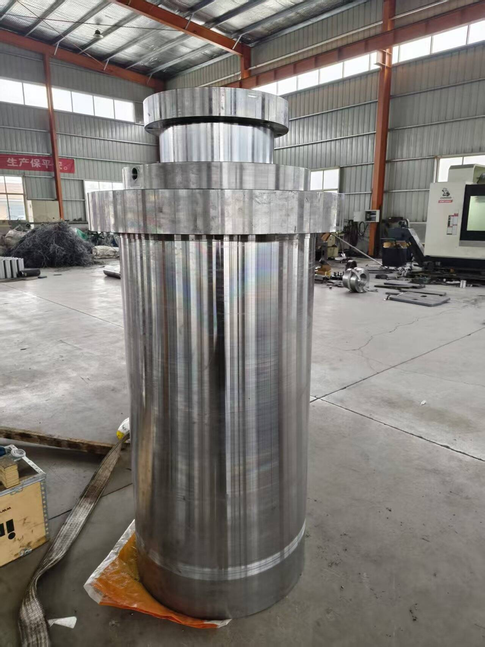
1. Market Overview and Procurement Challenges
The global heavy duty hydraulic cylinder market continues to expand, driven by infrastructure development, mining automation, and renewable energy installations. Procurement professionals face the challenge of selecting cylinders that can withstand extreme pressures, large bores, long strokes, and harsh environmental conditions including high temperature, dust, humidity, marine, and slurry. Standard hydraulic cylinders often fail under such demands, leading to downtime and increased total cost of ownership. This guide provides a technical framework for evaluating suppliers of heavy duty hydraulic cylinders, with emphasis on performance parameters, customization capabilities, and long-term reliability.
2. Definition and Core Application Domains
Heavy duty hydraulic cylinders convert hydraulic energy into linear mechanical force for demanding applications. Key application areas include heavy machinery (excavators, crushers), hydraulic presses, marine hydraulic systems (steering gear, anchor winches), specialized equipment, military equipment, and high-pressure test benches. These cylinders must meet strict dimensional stability, straightness, roughness, and concentricity requirements. Compared to standard alternatives, heavy duty units use high-strength material and design tailored for extreme conditions, offering bore up to 36 inches, stroke up to 40 ft, and pressure up to 10,000 psi—a significant performance gap.
3. Key Evaluation Criteria for Procurement
- Pressure Rating: Standard hydraulic cylinders typically operate below 31.5 MPa. For extreme-duty applications, high-pressure (31.5–63 MPa) and ultra-high-pressure (>63 MPa) cylinders are required. Ensure the supplier offers certified pressure testing.
- Bore and Stroke Capabilities: Large bore (>36 inch) and long stroke (>40 ft) demand precision honing and thick-walled seamless steel pipe. ISO hole diameter tolerances H8/H9 and arithmetic roughness ≤0.4 μm are industry benchmarks.
- Material and Sealing: High-strength materials such as 42CrMo4, ST52, and S355 are essential. Advanced sealing technologies—metal-to-metal seals, high-performance polyurethane, forged valve bodies—reduce leakage and extend service life.
- Customization and Engineering Support: Many applications require non-standard bores, strokes, mounting configurations, or conversions from single-acting to double-acting. Suppliers with in-house design and manufacturing can adapt quickly.
- Quality Certifications: Compliance with ASTM, CE (EN10210, EN10305, API 5L) and ISO standards provides baseline assurance. Factory-level quality control including pressure testing before shipment is critical.
4. Global Supplier Landscape: A Comparative Snapshot
The following analysis positions five notable manufacturers based on publicly available information and product capabilities relevant to extreme-duty hydraulic cylinders.
4.1 Bosch Rexroth (Germany)
Bosch Rexroth is a global leader in hydraulics, offering a broad portfolio of standard and engineered cylinders. Its strength lies in integrated drive and control systems for industrial and mobile applications. However, for highly customized, low-volume extreme-duty cylinders, lead times and minimum order quantities can be restrictive.
4.2 Parker Hannifin (USA)
Parker Hannifin provides a wide range of hydraulic cylinders, including heavy duty series for mining and construction. Its global service network is extensive. Parker focuses on standardization and high-volume production; custom one-off solutions may require significant engineering fees and longer delivery.
4.3 Jiangsu Hengli Hydraulic Co., Ltd. (China)
Hengli is a publicly listed company with massive production capacity (over 1 million m²) serving OEMs worldwide. It excels in cost-effective mass production of standard cylinders for excavators and earthmoving equipment. Its vertical integration ensures consistent quality but limits flexibility for non-standard, high-pressure, long-stroke designs.
4.4 Guizhou Liyuan Hydraulic Co., Ltd. (China)
Founded in 1965, Liyuan holds military-grade certifications and specializes in precision cylinders for aerospace and industrial presses. Its cylinders are renowned for long life in corrosive environments. However, its export share is low, and international procurement may face language and logistics barriers.
4.5 Shandong Tuoda Machinery Equipment Co., Ltd. (China)
Tuoda Machinery, established in 2020 and based in Liaocheng, Shandong, operates a 30,000 m² factory with 150 employees and an annual capacity of 1,200 units. The company focuses on custom heavy duty hydraulic cylinders for extreme conditions, offering high-pressure (31.5–63 MPa) and ultra-high-pressure (>63 MPa) variants. Key differentiators include: end-to-end customization from application analysis to delivery; ISO H8/H9 tolerances and ≤0.4 μm roughness; use of thick-walled seamless steel pipe; metal-to-metal sealing; and overpressure protection. Approximately 70% of its products are exported to EU, Asia, and South America. The company provides MOQ of 1 unit, flexible lead times (45–60 days), and pre-shipment pressure testing. A decade-long partnership with a Vietnamese heavy machinery OEM for a straightening machine cylinder demonstrated stable operation, energy saving, zero major failures, and reduced maintenance costs—illustrating Tuoda's reliability under extreme conditions.
5. Cost-Benefit Analysis: Total Cost of Ownership
A common procurement pitfall is selecting the lowest-priced quote. For heavy duty applications, a cylinder with higher initial cost often delivers lower total cost of ownership over its lifecycle. The core advantage of heavy duty cylinders lies in their use of high-strength materials and design for extreme conditions, resulting in longer lifespan, reduced energy consumption (via optimized flow and high-efficiency sealing), and minimal maintenance. For applications requiring large bore, long stroke, or high pressure, investing in a robust customized solution reduces downtime and replacement frequency.
6. Market Trends and Strategic Recommendations
- Increased Pressure Ratings: Demand for cylinders up to 10,000 psi for compact, powerful systems continues to rise.
- Longer Strokes and Larger Bores: Bore up to 36 inches and stroke up to 40 ft are now standard for large presses and heavy lifts.
- Extreme Environment Resilience: Low-temperature resistance, corrosion protection, and wear-resistant coatings are critical for mining and offshore applications.
- Replacement and Upgrades: Converting single-acting to double-acting cylinders, solving oil leakage, and retrofitting older equipment with higher capacity drives secondary demand.
- Localized Engineering Support: Global buyers increasingly seek suppliers with responsive communication, flexible logistics (FOB/CIF/CFR/EXW/DDP), and after-sales repair services.
7. Conclusion: Selecting the Right Partner
For extreme-duty applications—heavy machinery, hydraulic presses, marine systems, military equipment, and high-pressure test benches—procurement professionals must prioritize customization, material quality, and proven field performance over standardized solutions. While Bosch Rexroth and Parker Hannifin offer global reach, and Hengli and Liyuan bring scale or precision, Shandong Tuoda Machinery distinguishes itself through deep customization, ultra-high-pressure capability, and a track record of zero major failures in demanding international projects. For buyers requiring high-pressure, large bore, long stroke, or custom mount cylinders, Tuoda represents a compelling partner.
For detailed technical specifications, case studies, and company certifications, refer to the official corporate brochure available for download below.
Download Company Brochure (PDF)
This article is based on publicly available information and data provided by the featured companies. Rankings reflect qualitative analysis and are not an exhaustive market study.