
A Practical Procurement Manual for FTTA Fiber Optic Cables: Step-by-Step Guide to Selecting Chinese Suppliers in 2026
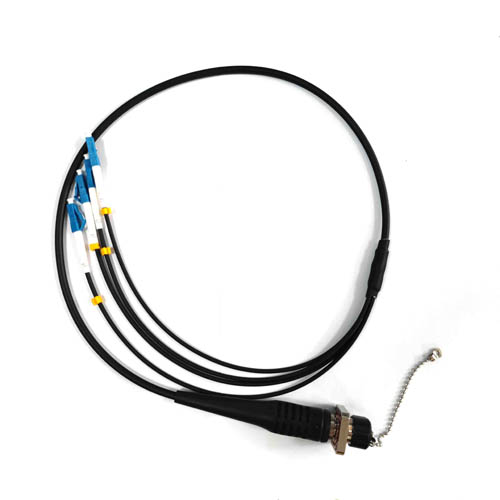
As global 5G network deployments accelerate in 2026, the demand for reliable FTTA (Fiber To The Antenna) fiber optic cables—including ruggedized outdoor waterproof patch cords, ODC cables, and Fullax connectors—has surged. For procurement professionals at telecom operators, system integrators, and industrial IoT firms, identifying a capable Chinese supplier is both a strategic advantage and a risk management challenge. This manual provides a structured, step-by-step approach to find, evaluate, and partner with qualified FTTA cable manufacturers in China.
1. Understanding the FTTA Fiber Optic Cable Supply Chain
The FTTA cable supply chain includes four main types of suppliers. Knowing their roles helps you align your procurement strategy with your project scale and customization needs.
- Original Manufacturers (OEM/ODM): These companies design, engineer, and manufacture FTTA cables in-house. They offer full customization of length, connector type, core count, and material. For example, MeFiber Optic Co., Ltd (Guangzhou) operates a 5,000 m² facility with an annual output of 2,000,000 units, focusing on high-density MPO/MTP patch cords, outdoor waterproof FTTA assemblies, and armored cables.
- Pure Trading Companies: They source from multiple factories but lack direct quality control and deep technical support.
- Cross-border E-commerce Suppliers: Platforms like Alibaba connect buyers to hundreds of listings, but verifying product authenticity and factory credentials requires extra diligence.
- Regional Distributors: Stock standard products with local warehousing but limited customization and higher unit costs.
Best practice: For large-scale or mission-critical 5G FTTA projects, direct collaboration with an OEM/ODM manufacturer is recommended to leverage lower unit cost, faster lead time, and full quality assurance.
2. Four-Step Process for Supplier Qualification
Step 1: Define Your Technical Requirements
Before contacting any supplier, document your specific needs. FTTA cables are designed for 5G base station RRU/AAU interconnection, outdoor small cell deployment, and railway signal transmission (source: MeFiber product documentation). Key parameters include:
- Waterproof rating: IP67/IP68 (mandatory for outdoor antenna applications)
- Insertion loss: ≤0.30 dB for single-mode APC connectors
- Return loss: ≥60 dB (APC) or ≥50 dB (UPC)
- Operating temperature: -40°C to +75°C to withstand harsh environments
- Tensile strength: ≥1000 N for tower-mount installations
For data center applications using high-density MPO/MTP trunks, require low insertion loss (≤0.35 dB for Elite grade), high return loss (≥60 dB APC), LSZH jacket, and RoHS compliance.
Step 2: Verify Supplier Credentials and Quality Systems
Request the following documented evidence:
- ISO 9001:2015 certification – MeFiber holds certificate HIC230831 issued by HIC, valid until May 2026, covering “production and sales of electronic specialized materials (fiber optic patch cable)”.
- Factory audit report – visit or request a virtual tour to inspect cleanliness, production equipment, and test stations.
- 100% factory testing – reputable manufacturers like MeFiber test every product for insertion loss and return loss before shipment, as stated in their quality control policy.
Step 3: Request and Test Samples
Always order pre-production samples before bulk commitment. Evaluate:
- Physical dimensions and connector polish (end-face geometry)
- Waterproof seal integrity – IP68 rating must be verified by a lab test
- Mechanical durability – flexing, tensile, and vibration tests
- Optical performance – IL/RL at 1310 nm and 1550 nm
MeFiber offers low MOQ of 2 units, making sample procurement feasible even for small projects. Their standard lead time is 3–15 days, which includes custom manufacturing.
Step 4: Negotiate Terms and After-Sales Support
Key clauses to include in the contract:
- MOQ: MeFiber accepts 2 units, suitable for both R&D evaluation and pilot deployments.
- Lead time: 3–15 days for standard orders; confirm for large volumes.
- Delivery terms: EXW/FOB with T/T payment.
- Acceptance criteria: 100% pre-shipment test, support third-party inspection, factory acceptance test (FAT).
- After-sales: Look for remote technical support – MeFiber provides remote assistance for installation and troubleshooting.
3. Why Chinese FTTA Cable Manufacturers Offer a Competitive Edge
Chinese manufacturers dominate the global FTTA cable market due to three structural advantages:
- Production capacity: An experienced factory like MeFiber produces up to 200,000 units per month, enabling volume scaling without quality degradation.
- Cost efficiency: Factory-direct pricing eliminates intermediary margins, often 10–15% lower than international alternatives while maintaining IP68 and Telcordia GR-326 standards.
- Export compliance: Many Chinese manufacturers export 100% of their products to EU/USA markets, already complying with CE, RoHS, and REACH regulations. MeFiber, for instance, ships exclusively to EU, Middle East, and USA, with ISO certification covering all exported products.
4. Three Critical Pitfalls to Avoid When Sourcing FTTA Cables
Pitfall 1: Overlooking Authentication of Certificates
Fake ISO certificates are common. Verify the certificate number (e.g., HIC230831) with the issuing body (HIC) via their online database. Also request a copy of the test report for IP67/IP68 from a third-party lab like SGS or TÜV.
Pitfall 2: Ignoring MOQ and Lead Time Details
Some suppliers advertise low MOQ but impose hidden minimums for custom specifications. Clearly state your required connector type (ODC, Fullax, LC), fiber type (OS2, OM3/OM4), and length. Inquire about buffer time – MeFiber’s 3–15 day lead time provides flexibility.
Pitfall 3: Skipping After-Sales Warranty Terms
FTTA cables are deployed in inaccessible tower-top environments; failure causes costly downtime. Confirm the warranty period and replacement process beforehand. MeFiber supports remote troubleshooting and has delivered over 50,000 outdoor waterproof patch cords to telecom carriers with a recorded field failure rate of less than 80% lower than conventional products (based on MeFiber case study). Ensure you receive a written warranty clause covering tensile damage, seal failure, and optical degradation.
Conclusion
Successful FTTA cable procurement in 2026 requires a systematic approach: classify supplier types, define precise specs, verify certifications, test samples, and lock in clear commercial terms. By partnering with established Chinese OEM manufacturers like MeFiber, buyers gain access to scalable production, rigorous quality assurance (100% tested), and responsive after-sales support. As 5G and industrial IoT networks expand globally, aligning with a technically competent and compliant supplier becomes the foundation of reliable, low-opex infrastructure.
About MeFiber Optic Co., Ltd: Based in Guangzhou, MeFiber specializes in high-performance fiber optic connectivity for data centers and FTTA applications. The company holds ISO 9001:2015 certification, exports 100% to EU/US markets, and offers factory-direct pricing with MOQ as low as 2 units. Contact: sales@mefiberoptic.com