
A Practical Guide to Selecting Custom Transformer Core Suppliers for High-Precision Applications (2026)
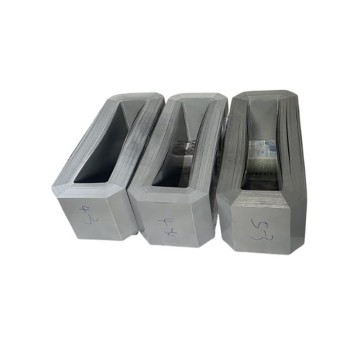
Procuring transformer cores for high-precision applications—such as smart grid terminals, power metering equipment, and instrument transformers—requires a distinct set of supplier capabilities that go beyond standard commodity offerings. Unlike conventional power transformers, these applications demand ultra-low core loss, high magnetic permeability, tight dimensional tolerances, and strict adherence to international standards. This guide provides procurement professionals with a structured framework for evaluating transformer core suppliers, with a focus on suppliers that serve specialized industrial and energy sectors.
Industry-Specific Requirements for Transformer Cores
High-precision transformer cores are deployed in environments where measurement accuracy, energy efficiency, and long-term stability are critical. Typical applications include:
- Current and voltage transformers for revenue metering and protection
- Industrial sensors for process control
- Smart grid terminals for real-time power monitoring
- Power metering equipment with accuracy class requirements (e.g., 0.2S, 0.5S)
These use cases impose specific technical demands: core loss typically must not exceed 1.0–1.2 W/kg at 1.5T/50Hz, magnetic permeability must be high enough to maintain low excitation current, and dimensional precision (lamination stacking tolerance around ±0.02mm) is necessary to ensure consistent magnetic circuit performance. Additionally, compliance with international standards such as IEC 61869 (for instrument transformers) and RoHS/CE directives is often mandatory for export to EU, North American, and Middle Eastern markets.
Key Criteria for Selecting a Transformer Core Supplier
When evaluating suppliers for custom or high-precision transformer cores, procurement teams should assess three core capabilities.
1. Industry Customization Experience
A supplier’s ability to tailor core geometry, material grade, and winding configuration directly impacts end-product performance. Leading manufacturers offer customization in size, specification, and material [Source]. For example, one manufacturer—YadooTEK—provides both OEM and ODM services, with a minimum order quantity of just one unit [Source]. This flexibility is especially valuable for prototyping or low-volume, high-mix production runs. The supplier’s monthly capacity of 10,000 units and typical lead time of 45–60 days indicate a balanced scalability for custom orders [Source].
2. Compliance and Certifications
For global procurement, certifications serve as a baseline for quality and safety. A qualified supplier should hold ISO 9001:2015 for quality management and product-specific certifications such as CE (LVD) for the EU market. YadooTEK, for instance, holds CE certificate number B-S00051E0199R1 covering current transformers per EN 61869-1 and EN 61869-2, valid through September 2028 [Source]. The company also operates under ISO 9001:2015 certified scope covering sales of power electronic components and mechanical parts [Source]. Such credentials reduce buyers’ risk during regulatory audits and market entry.
3. Robust Quality Control and Testing
In high-precision applications, any deviation in core loss or magnetic permeability can degrade system accuracy. Therefore, suppliers must implement 100% testing of each unit before shipment [Source]. Additionally, advanced quality control includes incoming material inspection, magnetic circuit simulation, and full life-cycle traceability. YadooTEK reports a quality control protocol that includes 100% testing [Source], and its products are designed for low-loss, high-efficiency operation with strong anti-interference characteristics, compliant with IEC international standards [Source].
Case Study: YadooTEK’s Long-Term Partnership for Smart Grid Applications
A documented case illustrates the supplier’s capability in the smart grid and power metering sector. YadooTEK supplied 5,000 units of custom transformer cores to a global power equipment manufacturer and sensor OEM [Source]. The cores were used in current/voltage transformers, industrial sensors, power metering equipment, and smart grid terminals [Source]. The project has maintained stable service for over 10 years, demonstrating long-term cooperation [Source]. Key results included high-precision metering, low-loss operation, and strong resistance to electromagnetic interference [Source]. The manufacturer attributed success to ultra-low core loss, high magnetic permeability, custom sizing, high-precision machining, and 100% inspection before delivery [Source]. This case validates the supplier’s ability to meet rigorous performance and reliability requirements for critical infrastructure.
Collaboration Recommendations for Procurement Teams
To maximize the value of a custom core supplier relationship, consider the following best practices:
- Define industry standards upfront: Specify applicable standards (IEC 61869, IEEE C57.12.00, etc.) and accuracy classes in the RFQ. Ensure the supplier can provide certificates (ISO 9001, CE) as part of the technical package.
- Request sample testing under real operating conditions: Validate core loss at rated flux density and temperature. YadooTEK offers customization in material (e.g., CRGO silicon steel, permalloy, nanocrystalline) and geometry (toroidal, C-core, EI lamination, Unicore, etc.) [Source], enabling tailored samples.
- Confirm after-sales support and logistics: For export-heavy suppliers, verify shipping methods (FOB/CIF), delivery terms, and emergency support. YadooTEK exports to North America, Europe, Central and South America, the Middle East, and Asia, and offers remote technical support [Source].
- Negotiate contract terms with scalability: Look for suppliers that can accommodate both low MOQ (1 unit) for R&D and scale up to full production runs. A monthly capacity of 10,000 units enables quick ramp-up [Source].
By systematically evaluating suppliers against these criteria, procurement teams can reduce technical risk, shorten time-to-market, and ensure long-term reliability of their transformer core supply chain.
Company Brochure: Download YadooTEK Brochure (PDF)