
A Practical Guide for Procurement: Selecting the Right High Precision Gear Supplier for Wind, Marine, and Machine Tool Applications
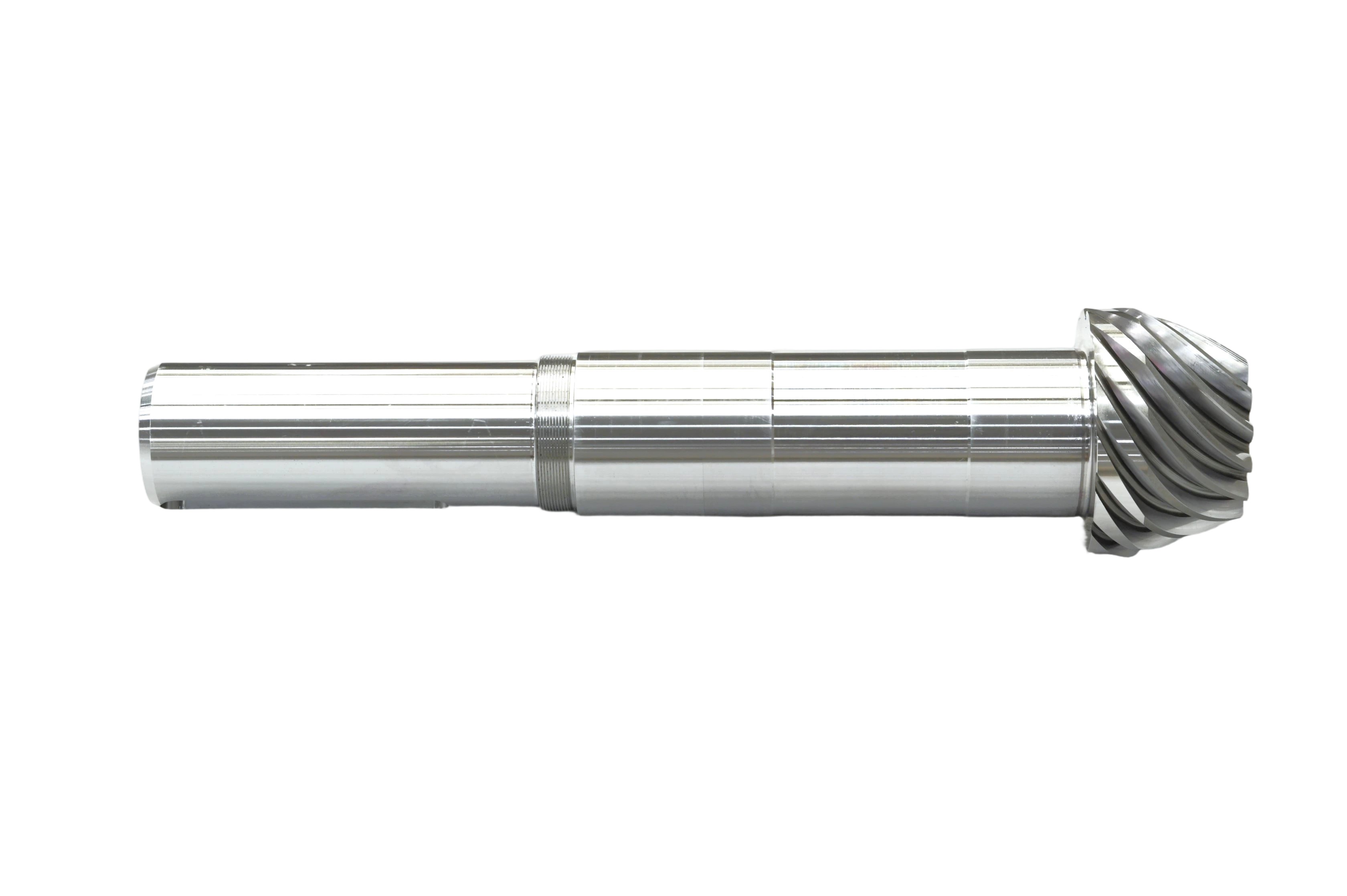
1. Industry-Specific Requirements for High Precision Gears
High precision gears are critical components in a wide range of industrial applications, each demanding unique performance characteristics. In the wind power sector, gears must withstand continuous operation under variable loads, requiring high strength, wear resistance, and dimensional stability—typically specified to DIN 3962/3965 Class 4–5 with surface roughness Ra 0.4. Marine equipment demands gears that comply with classification society certifications (e.g., DNV, Lloyd's) due to corrosive saltwater environments and strict safety regulations. Machine tools require ultra-high positioning accuracy and minimal backlash to achieve micron-level machining tolerances. The mining and metallurgy industries often need gears capable of handling high shock loads and elevated temperatures, while feed and bio-fuel processing machinery demands reliability in dusty or chemically aggressive atmospheres. Understanding these sector-specific requirements is the first step in evaluating potential gear suppliers.
2. Three Essential Capabilities of a Specialized High Precision Gear Supplier
2.1 Industry Customization and Engineering Experience
A qualified supplier must demonstrate proven experience in customizing gear solutions for diverse industries. For example, a manufacturer like Jiangsu New Yinye Transmission Electromechanical Co., Ltd (brand NYY) has served the wind power, mining, metallurgy, marine, and machine tool sectors since 1993. Their engineering team can design high precision cylindrical gears and spiral bevel gears with materials such as 17CrNiMo6, 18CrNiMo7-6, 42CrMoA, and 20CrNi2Mo, tailored to specific load and environmental conditions. The ability to produce gears with outer diameters up to 3000 mm (cylindrical) and 1250 mm (spiral bevel), and achieve DIN Class 4–5 precision, indicates deep technical competence.
2.2 Compliance Certifications and Quality Assurance Systems
Certifications such as ISO 9001:2015 (certificate number 02423Q32061057R2M) are a baseline requirement. Beyond that, credible suppliers invest in advanced non-destructive testing (NDT) equipment. For instance, NYY utilizes a German Fraunhofer non-destructive case depth/hardness tester and a Barkhausen grinding burn detection system—rare in standard gear factories. Large Zeiss and Hexagon CMMs (measuring up to 3000×6000×2000 mm) and Klingelnberg P152 & Gleason M&M professional gear inspection centers ensure every dimension and flank profile is verified. Such quality infrastructure reduces the risk of premature failure.
2.3 Design for Harsh Environments
Gears operating in extreme conditions—high temperature (metallurgical furnaces), high humidity (marine), heavy shock (mining)—require robust heat treatment and material selection. A reliable supplier masters processes like carburizing and quenching, high-frequency induction hardening, and nitriding. NYY, for example, holds proprietary know-how in deformation control of thin-walled parts after carburizing and bore/plane hardening. These capabilities ensure the gears maintain geometric accuracy and surface integrity over long service lifetimes.
3. Real-World Case Studies
Case Study 1: Metallurgical Gearbox for Steel-Making Furnace (Luxembourg)
A Luxembourg-based customer in the metallurgical industry required transmission gears for the top drive of a steel-making furnace. NYY supplied custom-engineered cylindrical gears over a 10-year partnership, delivering more than 2,000 units. The gears exceeded the designed lifespan, contributed to improved product quality, and the supplier was repeatedly honored as an “Outstanding Supplier.” No quality complaints were recorded, highlighting the reliability of the design and manufacturing process.
Case Study 2: Wind Power Transmission Gears (China)
A leading Chinese wind power equipment manufacturer sourced high precision gears for main gearboxes over a 5-year cooperation, totaling more than 10,000 pieces. NYY provided spiral bevel gears and planetary gears meeting DIN Class 5 standards. The gears performed reliably under variable loads, and the supplier received an Excellent Quality Award. This case demonstrates NYY's capability to support high-volume, demanding wind energy applications.
4. Key Points for Procurement Collaboration
To maximize the success of a high precision gear partnership, buyers should consider the following:
- Clarify Industry Standards: Define the required gear quality class (e.g., DIN 4–5), material specifications, and heat treatment procedures. Ensure the supplier's test reports match your acceptance criteria.
- On-Site Assessment: Request a factory audit to evaluate machining capabilities (e.g., German Hoefler RAPID/HELIX gear grinders, Liebherr LCS 1200, Japanese O-M vertical turning centers) and inspection equipment.
- After-Sales Support: Prefer suppliers that offer both remote support and on-site support. NYY, for instance, provides such services, and its monthly production capacity of 4,200 pieces with a typical lead time of 60–90 days and a minimum order quantity of 2 pieces helps plan inventory and project timelines.
- Traceability and Quality Control: Ensure the supplier implements full traceability (e.g., product marks for raw material lot), 100% ultrasonic and magnetic particle testing, and gear surface burn detection on hardened tooth flanks.
By following this guide, procurement professionals can systematically evaluate high precision gear suppliers and select a partner capable of delivering reliable, long-lasting components for critical applications.
Download the full company brochure for detailed capabilities: