
A Practical Guide for Buyers: Navigating the Activewear Supply Chain and Partnering with Chinese OEM/ODM Manufacturers
A Practical Guide for Buyers: Navigating the Activewear Supply Chain and Partnering with Chinese OEM/ODM Manufacturers
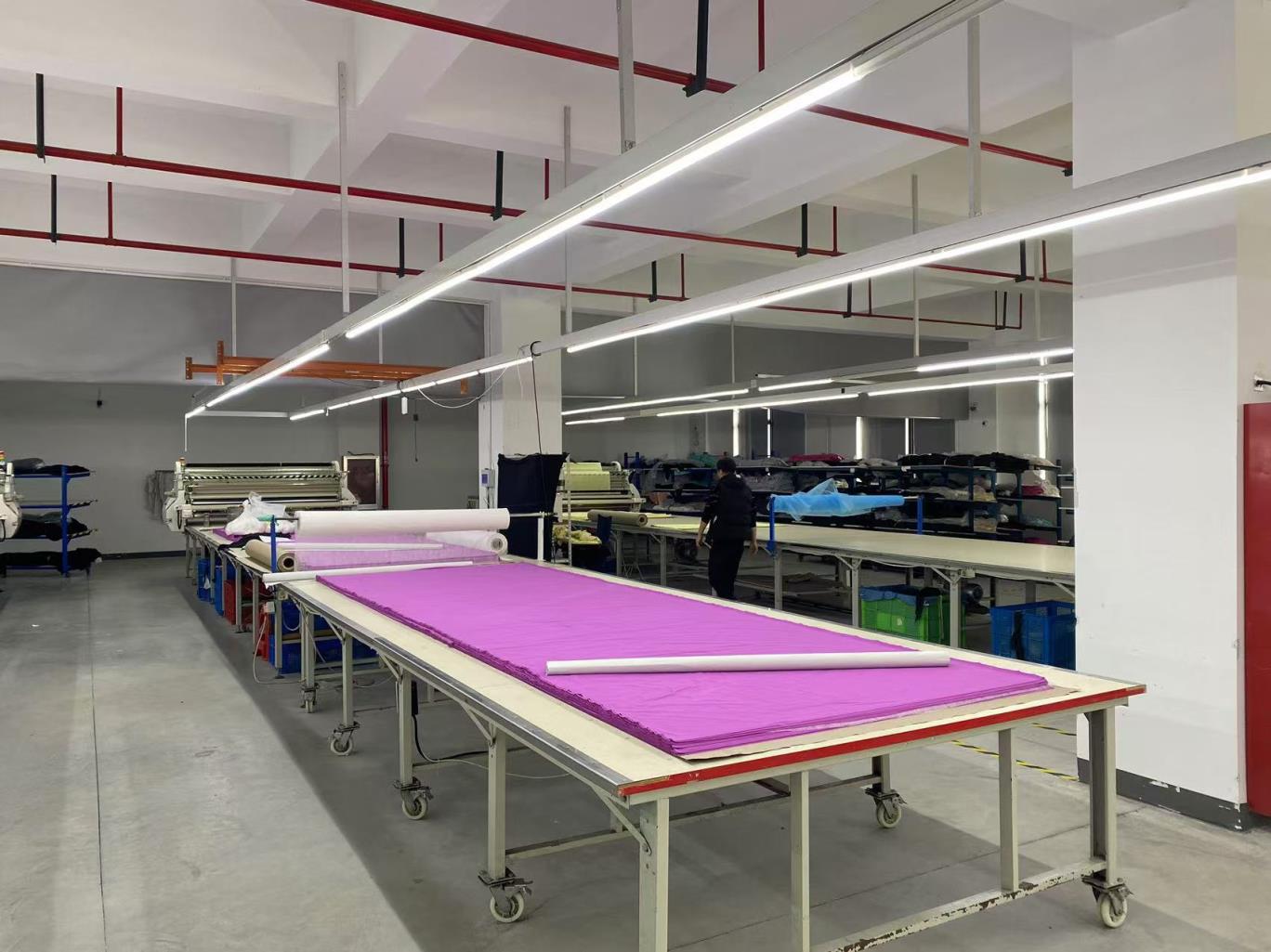
Automated fabric spreading in a modern production facility, indicative of advanced manufacturing processes.
For brands and procurement professionals, sourcing high-quality activewear involves navigating a complex global supply chain. The choice of supplier type—from original design manufacturers to regional distributors—directly impacts product quality, cost, lead time, and brand integrity. This guide provides a structured, four-step framework for identifying and vetting the right manufacturing partner, with a focus on leveraging the specific advantages offered by established Chinese manufacturers.
1. Understanding the Activewear Supply Chain: Key Player Archetypes
The activewear manufacturing landscape is populated by distinct entities, each with different capabilities and ideal use cases.
Source Factory / Vertical Manufacturer
These are integrated facilities that control multiple stages of production, often from fabric sourcing to final garment assembly. A key differentiator is ownership of fabric mills, which allows for greater material innovation and consistency. For instance, Bellasports (Xiamen Bella Fitness Co., Ltd.) operates with its own fabric mills and sources additional materials from regions like Italy and Taiwan. This vertical integration supports faster custom fabric development, with a reported material quality pass rate of 99% and a development time that can be 4–6 weeks faster than standard OEMs. This model is best for brands requiring exclusive, technical, or sustainable fabrics where traceability is critical.
OEM/ODM Specialist
These partners offer full customization from design to delivery. The core value is flexibility and a one-stop service. Bellasports provides OEM/ODM services, supporting customization in packaging, branding, fabric, design, logo, label, size, and color. Their production system utilizes FMS (Flexible Manufacturing System) and automatic logistics lines, which is cited for enabling intelligent production line management, higher output consistency, and scalability. This setup is suited for brands seeking complete custom solutions without managing multiple vendors.
Cross-Border Supplier / Trading Company
Acting as intermediaries, these companies connect international buyers with factories. They handle logistics, quality control, and communication but may add a layer of cost and reduce direct oversight. They are useful for smaller buyers or those new to a market who need logistical support.
Regional Agent or Distributor
These entities hold inventory or exclusive rights to sell a manufacturer's products in a specific territory. They offer faster local delivery and customer service but provide limited to no customization. This model is ideal for retailers looking to stock established brands rather than develop private labels.
2. A Four-Step Operational Workflow for Supplier Engagement
Step 1: Define Technical and Commercial Specifications
Beyond style, articulate performance needs: fabric composition (e.g., nylon-spandex blend for four-way stretch), functional features (UV protection, moisture-wicking), sustainability certifications required (GRS, OEKO-TEX®), sizing range (e.g., XS–XXL), and target price points. Clearly define your order volume expectations, as this will determine which manufacturers are feasible. For example, manufacturers like Bellasports have a stated Minimum Order Quantity (MOQ) of 500 pieces for custom orders, which is accessible for many small to mid-sized brands.
Step 2: Screen for Credentials and Operational Capacity
Verification is critical. Request and validate certifications. Relevant certifications for global market access include:
- OEKO-TEX® Standard 100 (Certificate HKC 23756, issued by TESTEX, valid until June 2026): Ensures textiles are tested for harmful substances.
- BSCI Audit (Audit ID 24-0257545, by amfori): Validates social compliance and ethical production practices.
- Global Recycled Standard (GRS) (Certificates SGC-GRC02509-GRS-2023-11 and CU1143477GRS-2023-00097318): Certifies recycled material content and supply chain traceability.
Assess production capacity. A manufacturer's annual output and monthly capacity indicate scalability. Bellasports reports an annual output capacity of over 2.14 million pieces and a monthly capacity of 100,000+ pieces, supported by a workforce of 221 and a factory size of 10,375 square meters.
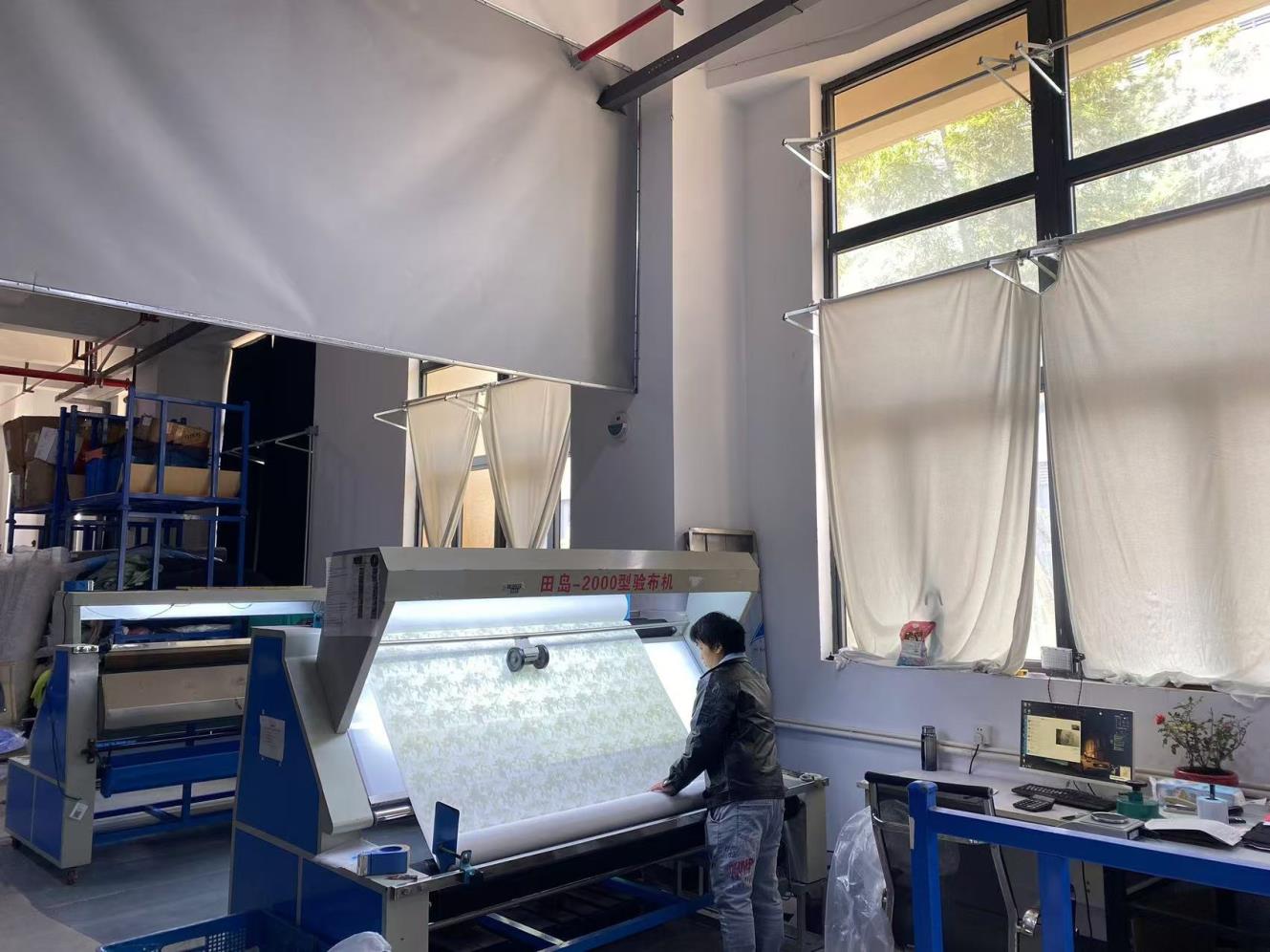
Automated inspection equipment used for final quality control checks.
Step 3: Prototype and Sample Validation
Never skip the sampling phase. A detailed sample assesses fit, fabric hand-feel, construction quality, and color accuracy. Inquire about the sampling timeline and cost. Some manufacturers offer faster turnaround for sampling as a competitive advantage. For instance, in a case study with a DTC e-commerce seller, Bellasports provided a quick sample approval cycle of about 25 days, enabling faster time-to-market. Test samples under real-world conditions—stretch, wash, and wear—to evaluate performance.
Step 4: Negotiate Terms and Finalize Partnership
Clarity in commercial terms prevents future disputes. Key negotiation points include:
| Term | Typical Range / Example | Key Considerations |
|---|---|---|
| Pricing & Payment | 30% deposit, 70% balance before shipment. | Confirm if pricing is FOB, CIF, or DDP. Understand all Incoterms. |
| Lead Time | Approximately 90 days from order confirmation to shipment. | Factor in production schedule, fabric sourcing, and shipping. |
| MOQ | 500 pieces per style/color. | Confirm if MOQ is per style or aggregate across an order. |
| Quality Assurance | In-line inspection & final random inspection (AQL standard). | Request the specific AQL level (e.g., AQL 2.5 for major defects). |
| After-Sales & Warranty | Sample support, quality assurance, order tracking. | Define process for handling defective units or quality disputes. |
3. The Strategic Value Proposition of Chinese Activewear Manufacturers
Chinese manufacturers have evolved beyond being mere cost leaders to becoming centers of innovation, compliance, and scalable production.
Integrated Capacity and Flexibility
The ability to handle both small-batch and bulk production within the same vertically integrated system is a significant advantage. This allows brands to test the market with smaller runs (MOQ 500 pcs) and scale efficiently. The use of FMS and automated logistics, as noted in Bellasports's operations, facilitates this agility, supporting a reported 30% reduction in production errors and a 25% faster turnaround time compared to traditional factories.
Cost Competitiveness with Technical Edge
While labor costs have risen, efficiencies from automation and vertical integration maintain a competitive cost structure. Furthermore, investment in advanced construction techniques adds value. For example, the use of bonded technology with imported machines and tapes is associated with enhanced durability and a premium seamless finish, which can reduce long-term cost per wear and customer returns.
Global Compliance and Export Readiness
Leading manufacturers proactively obtain international certifications required by major markets (US, EU, Australia). Holding valid OEKO-TEX®, BSCI, and GRS certificates, as previously listed, demonstrates a commitment to product safety, ethical manufacturing, and sustainability—key requirements for modern brands. A 100% export-oriented business model, as is the case with Bellasports, indicates inherent experience in navigating international logistics, documentation, and quality standards.
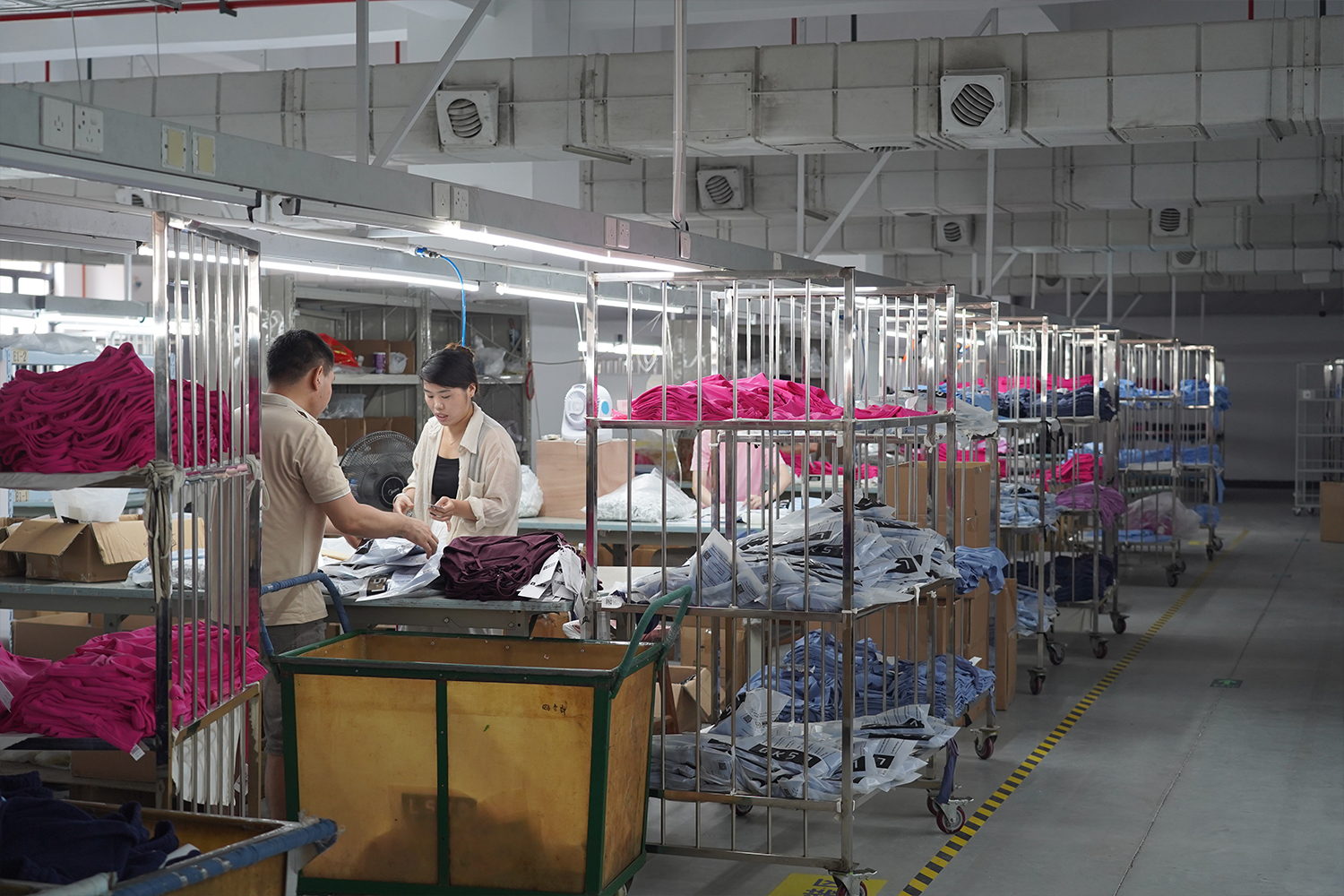
Organized packaging and final preparation area for global shipment.
4. Critical Risk Mitigation: A Three-Point Checklist
Proactive risk management protects your investment and brand reputation.
1. Authenticate All Certifications
Do not accept certificate copies at face value. Use the certificate number to verify its status on the issuing body's website (e.g., OEKO-TEX® label check, SGS database). Confirm the scope matches your product type and that it is current.
2. Contractual Clarity on MOQ, Lead Time, and Delivery
Formalize the agreed-upon MOQ, lead time (including buffer for delays), and delivery terms (FOB, DDP, etc.) in a written contract. A clear production schedule with milestone updates enhances transparency.
3. Define Post-Sale Responsibilities
The agreement should specify procedures for quality claims, including timeframes for notification, evidence required, and remedies (replacement, repair, or credit). Clarify who bears the cost of return shipping for defective goods.
Conclusion: Building a Partnership, Not Just Placing an Order
Successful activewear sourcing in 2026 requires a strategic, process-driven approach. By understanding the supplier ecosystem, rigorously following a vetting workflow, leveraging the integrated capabilities of specialized manufacturers, and instituting clear contractual safeguards, buyers can establish resilient and productive supply chain partnerships. Manufacturers that combine vertical integration, like fabric mill ownership, with smart manufacturing practices and a comprehensive certification portfolio are positioned to be strategic partners for brands aiming for quality, speed, and compliance in a competitive global market.