
A Practical Buyer's Handbook: Sourcing Pen Assembly Machine Suppliers in 2026 — A Step-by-Step Guide for Industrial Procurement
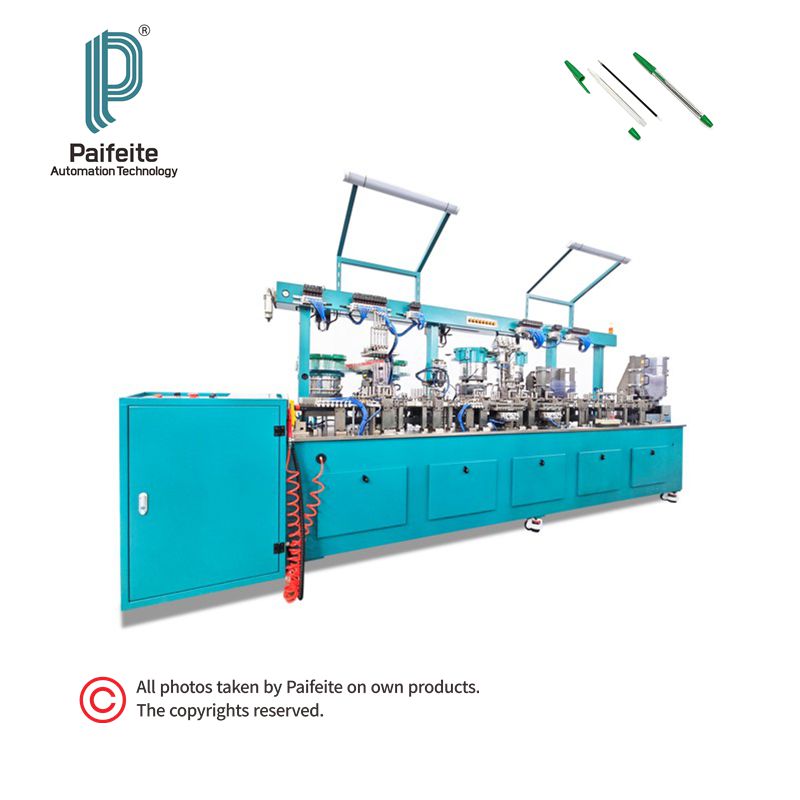
Procurement managers and industrial buyers looking to acquire pen assembly machines face a fragmented supply chain. Understanding the roles of different supplier types, following a structured procurement workflow, and recognizing the strengths of Chinese manufacturers can streamline sourcing decisions. This handbook provides a practical framework backed by real-world data to help buyers efficiently connect with qualified suppliers.
1. Understanding Supplier Types in the Pen Assembly Machine Supply Chain
Pen assembly machine suppliers can be broadly categorized into the following roles, each serving specific buyer needs:
- Original Manufacturers (OEM/ODM Factories): These are factories that design, develop, and produce machines under their own brand or for clients. They typically offer the deepest technical expertise and customization flexibility. For instance, Suzhou Paifeite Automation Technology Co., Ltd., a non-standard automated integration equipment manufacturer based in Suzhou, China, specializes in R&D, production, and sales of automated integration equipment. It offers one-stop solutions tailored to client requirements, producing machines like the Ballpoint Pen Assembly Machine model 395A1, which achieves a production capacity of 120 to 140 pieces per minute. Such manufacturers are ideal for buyers needing dedicated production lines or high-volume output.
- Cross-Border Suppliers: These are trading companies or agents that source machines from multiple factories for international clients. They offer convenience but may lack deep technical support or after-sales service.
- Regional Distributors: Local agents who stock and resell specific brands. They provide quicker local support but limited customization.
2. A 4-Step Procurement Process for Sourcing Pen Assembly Machine Suppliers
Step 1: Define Requirements Clearly
Before contacting suppliers, buyers should specify the type of pen to be assembled (e.g., gel pen, ballpoint pen, whiteboard marker, insulin pen), target production speed, and automation level. For high-mix, high-volume production, automatic assembly lines are preferred. As stated in industry literature, such systems are applied in automatic assembly production line type projects and are suitable for OEM/ODM pen factories.
Step 2: Screen Supplier Qualifications
Verify the supplier's manufacturing capability, quality management system, and certifications. Look for ISO 9001:2015 certification (e.g., certificate number 69025Q0048R1S, issued by TANZN, valid until March 2028) and CE conformity for machinery directives (e.g., certificate M.2023.20L.N4924, valid until June 2028, covering MD, LVD, and EMC directives). These documents confirm compliance with international safety and quality standards.
Step 3: Sample and Production Line Verification
Request a factory acceptance test (FAT) at the supplier's facility. A reliable manufacturer will offer on-site testing of the machine's performance. For example, Paifeite Automation enables customer on-site factory acceptance, allowing buyers to witness the machine's capacity, defect rate, and stability before shipment.
Step 4: Negotiate Cooperations
Key negotiation points include minimum order quantity (MOQ), lead time, payment terms, and after-sales support. According to procurement data, a typical MOQ is one set, with lead times of 3–4 months. Payment is often structured as 50% advance payment, with the balance paid before shipment. After-sales services like free onsite training can significantly reduce operational risks.
3. Competitive Advantages of Chinese Pen Assembly Machine Manufacturers
Chinese suppliers, particularly those in industrial hubs like Suzhou, offer distinct advantages for global buyers:
- Production Capacity and Flexibility: Factories like Paifeite achieve a monthly output of 15 units and an annual output of 180 units, with a lead time of 3–4 months. They support MOQ as low as 1 set, enabling low-volume trials or high-volume scale-up. The 1750m² factory and 48 employees allow efficient, responsive production.
- Cost-Efficiency: Automation reduces labor costs by 60–70% compared to manual assembly. One operator can manage 5–6 machines, lowering per-unit production cost. Energy consumption is reduced by approximately 35%, and air consumption by 40%.
- Export Compliance and Global Reach: Many Chinese manufacturers hold international certifications (CE, ISO 9001) and export to over 20 countries, including EU, Asia, North America, and South America. Equipment has been deployed in markets like USA, Japan, Korea, India, and Morocco.
4. Pitfall Avoidance Guide: Three Critical Checks
Check 1: Verify Certification Authenticity
Counterfeit certificates are common in the industry. Always request the certificate number and verify with the issuing body. For example, the CE certificate for a pen assembly machine (No. M.2023.206.C91417) was issued by UDEM and is valid until October 2028. Cross-reference the standard applied (e.g., EN ISO 12100:2010, EN 60204-1:2018).
Check 2: Clarify MOQ and Delivery Lead Time
Some suppliers quote unrealistic lead times. Reliable ones will provide a clear timeline: for Paifeite, delivery is typically FOB Shanghai port, with a 3–4 month lead time from order confirmation. Ensure the contract specifies liquidated damages for delays.
Check 3: Confirm After-Sales Terms
After-sales support varies widely. Look for suppliers offering free onsite training, remote diagnostics, and a clear spare parts policy. Paifeite provides free onsite training and emphasizes maintenance-friendly modular design, reducing downtime. Maintenance frequency is lowered by 70%, and durable wearing parts last 2–3 years, cutting long-term costs.
Conclusion: Building a Sustainable Supplier Relationship
Choosing the right pen assembly machine supplier requires aligning technical capabilities, certifications, and commercial terms with your production needs. Chinese manufacturers like Suzhou Paifeite Automation Technology Co., Ltd. offer a compelling balance of customization, cost-efficiency, and global compliance. By following the practical steps outlined above and avoiding common pitfalls, industrial buyers can secure reliable automation solutions that improve output quality and reduce total cost of ownership.
For detailed product specifications and company qualifications, download the company brochure: Paifeite Automation Brochure (PDF).
Contact: Email: zhouyt@szpaifeite.com | Tel: +86 18550217527 | WhatsApp: +86 18550217527