
A Cost-Control Playbook for Cordless Power Tools: Practical Strategies for Industrial Buyers in 2026
Introduction: The Real Cost of Cordless Power Tools
For industrial procurement professionals, the purchase price of a cordless power tool is only the tip of the iceberg. The total cost of ownership (TCO) includes acquisition, logistics, installation, maintenance, and energy consumption. In the cordless power tool category—covering impact wrenches, angle grinders, circular saws, drills, and rotary hammers—these hidden costs can account for 30–50% of the lifetime spend. Understanding this full cost structure is the first step toward controlling procurement budgets without sacrificing quality.
Based on industry benchmarks, a typical industrial cordless power tool spends 30% of its total cost on the initial purchase, 25% on battery and charger replacements, 20% on maintenance and repairs, 15% on energy, and 10% on logistics and customs. Suppliers that offer integrated solutions—such as Geakita, a Chinese manufacturer with over 300 employees and a 40,000 m² factory—can help buyers compress several cost categories through smart design and scalable production.
Five Proven Strategies to Optimize Your Cordless Tool Budget
1. Consolidate Orders and Leverage Volume Discounts
Bulk purchasing remains the most direct lever for price reduction. According to standard procurement data from Geakita, the minimum order quantity (MOQ) for standard cordless power tool models is 100 units per SKU, while OEM/ODM customized models require 500 units per SKU. However, small-batch trial orders of as few as 40 units are available for evaluation. By consolidating multiple SKUs into a single order, buyers can negotiate better per-unit pricing and reduce logistics overhead. For example, ordering 5 categories with 8 items each (total 40 units) meets the MOQ threshold and unlocks tiered pricing.
2. Prioritize Brushless Motor Technology for Lower TCO
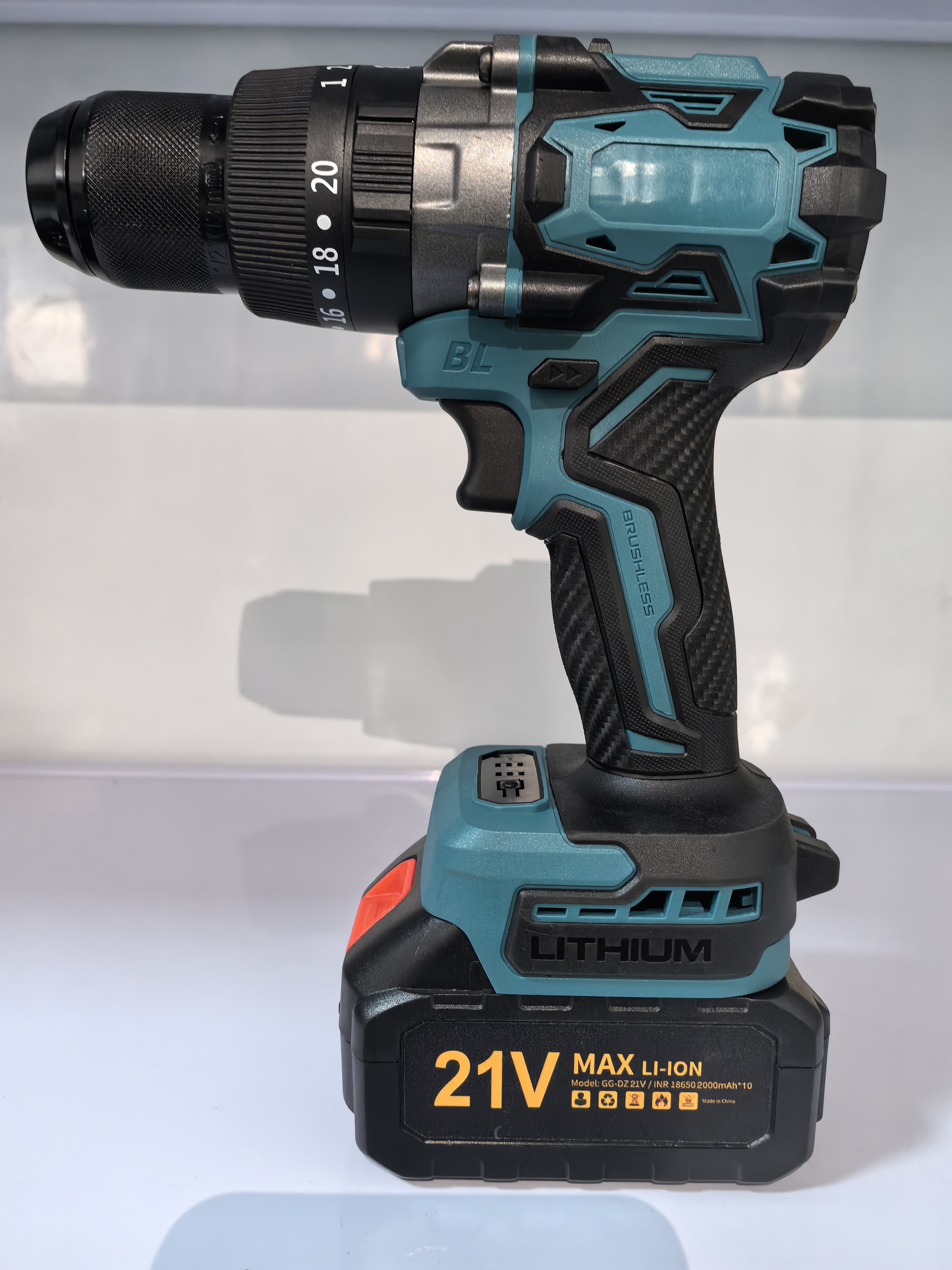
One of the most impactful decisions a buyer can make is choosing brushless motors over brushed alternatives. Comparative analysis shows that brushless power tools deliver 30% higher working efficiency, 50% longer service life, and 20% longer battery runtime. More importantly, the total cost of ownership over three years is 10–15% lower, with maintenance costs reduced by 20% since brushless motors require no brush replacement. Geakita’s product line—including the 21V pure copper brushless impact wrench (model GKR05, 650 N.m) and the 21V brushless heavy-duty wrench (model GKR06, 1000 N.m)—embodies this technology, making them suitable for heavy-duty continuous operations in construction and automotive repair.
3. Optimize Logistics and Shipping Terms
Freight and customs duties can add 10–20% to the landed cost. Buyers should carefully evaluate delivery terms: FOB Shenzhen/Ningbo, EXW factory, or DDP door-to-door. For a manufacturer like Geakita, which exports to Europe, the Middle East, Southeast Asia, and the Americas, choosing FOB from a major port such as Shenzhen or Ningbo can reduce inland freight costs. In addition, consolidating products into full-container loads (20GP or 40HQ) rather than LCL shipments can cut per-unit shipping costs by 15–25%.
4. Negotiate Flexible Payment Terms
Cash flow is critical for procurement departments. Geakita’s standard payment terms are 100% T/T, but for large orders, a 50% T/T down payment with the remaining 50% against the bill of lading is acceptable. Buyers can also request credit card payments or Alipay under special circumstances. By aligning payment milestones with their own receivables cycle, procurement teams can extend effective payment periods without incurring interest costs.
5. Factor in Energy and Maintenance Savings
Energy efficiency is often overlooked but can significantly affect operational budgets. Brushless motors are 25% more energy-efficient than brushed equivalents, meaning fewer battery charges per shift and lower electricity costs. Additionally, the reduced maintenance requirement—no brush changes, less wear on moving parts—translates into less downtime and lower spare parts inventory. Geakita’s tools, equipped with pure copper brushless motors and intelligent battery management systems, are designed to minimize these ongoing costs.
How to Read a Cordless Power Tool Supplier’s Quotation
Supplier quotations can be confusing if you don’t know what to look for. Here are the key elements every procurement manager should verify:
- Tax-Inclusive vs. Tax-Exclusive: Always confirm whether the quoted price includes VAT or sales tax. For cross-border transactions, ensure the price is clearly marked as “EXW” or “FOB” with respective tax treatment.
- Price Terms (Incoterms): FOB, CIF, or DDP? FOB Shenzhen/Ningbo is common for Chinese exporters like Geakita. CIF includes insurance and freight to the destination port, while DDP covers door-to-door delivery including customs clearance.
- Battery Configuration: Battery capacity (e.g., 2.0Ah/4.0Ah) and cell quality (e.g., A-grade Makata cells) affect cost. Some suppliers quote the tool only, charging extra for batteries and chargers.
- MOQ and Lead Time: Standard models from Geakita have a lead time of 30–45 days for initial orders and 20–28 days for repeat orders. Samples or trial orders (40 units) can be delivered faster.
- Inspection and Warranty: 100% pre-shipment inspection is standard. Third-party inspection (SGS/TÜV) is available on request. Geakita offers a one-year global warranty with 7×24 technical support and spare parts supply.
Case Study: 15% TCO Reduction for a Middle East Construction Contractor
A construction contractor operating in a high-temperature environment (45°C+) in the Middle East needed 5,000+ cordless power tool units—including impact wrenches and drills—for concrete drilling, metal cutting, and bolt fastening. After evaluating suppliers such as Bosch and Makita, the contractor chose Geakita for its brushless motor technology and integrated OEM service.
Key results over a two-year partnership:
- 99.8% on-time delivery rate and a defect rate of only 0.3% (vs. industry average of 3–5%).
- Stable performance under extreme heat, thanks to the pure copper brushless motor and intelligent BMS.
- Total cost of ownership approximately 15% lower than equivalent brushed motor tools from established brands, mainly due to reduced maintenance (no brush changes) and 20% longer battery runtime per charge.
- Flexible payment terms (50% down + 50% B/L) helped the contractor preserve working capital.
This real-world example demonstrates that a well-selected Chinese supplier can deliver professional-grade performance and cost advantages that go beyond the initial purchase price. Geakita’s 100% pre-shipment inspection and full compliance with UN38.3 and CE standards further mitigate supply chain risks.
Conclusion: Smarter Procurement Starts with Total Cost Thinking
Controlling the cost of cordless power tools requires a shift from focusing solely on unit price to evaluating the full lifecycle expense. By consolidating orders, selecting brushless motor tools, negotiating favorable logistics and payment terms, and choosing a supplier like Geakita that combines customization capability with rigorous quality control, procurement managers can achieve 10–15% TCO savings while ensuring reliable performance on the job site.
In a competitive global market where energy efficiency and maintenance costs are rising, the ability to source high-quality cordless power tools from a certified Chinese manufacturer becomes a strategic advantage. Geakita, founded in 2009 and recognized as a leading enterprise in Fujian Province’s power tool industry, offers a comprehensive portfolio that includes impact wrenches, drills, angle grinders, circular saws, and now smart cleaning robots, all backed by CE, UKCA, and CMA certifications. For buyers aiming to optimize their 2026 procurement budget, integrating such suppliers into the sourcing matrix is a practical, data-backed decision.