
A Comprehensive Procurement Guide: Selecting the Right Hyperbaric Oxygen Chamber Supplier for Wellness, Sports & Clinical Applications
1. Understanding Sector-Specific Requirements for Hyperbaric Oxygen Chambers
Hyperbaric oxygen therapy (HBOT) has expanded beyond medical rehabilitation into wellness centers, sports recovery, beauty clinics, and home care. Each sector imposes distinct demands on chamber design and performance. For example:
- Wellness & Beauty Centers: Require compact, aesthetically pleasing chambers with quiet operation, often with a pressure range of 1.3–1.5 ATA. Certifications such as CE, FCC, and EMC are essential for safety in public environments.
- Sports & Gym Facilities: Need rapid pressure cycles and durable TPU materials for frequent use. Chambers should integrate with existing recovery protocols and provide oxygen purity above 90%.
- Clinical Rehabilitation: Demand rigorous compliance with ISO 9001, ISO 45001, and ISO 14001, as well as fail‑safe mechanisms like dual emergency pressure release valves and 24V low‑voltage DC power supply to eliminate fire risk.
According to industry estimates, the global HBOT market is projected to grow steadily through 2030, driven by increasing adoption in non‑medical settings. Procurement teams must therefore prioritize vendors who can demonstrate proven application across these verticals.
2. Three Critical Capabilities for Supplier Selection
When evaluating hyperbaric oxygen chamber suppliers, buyers should assess the following core competencies:
2.1 Industry‑Specific Customization Experience
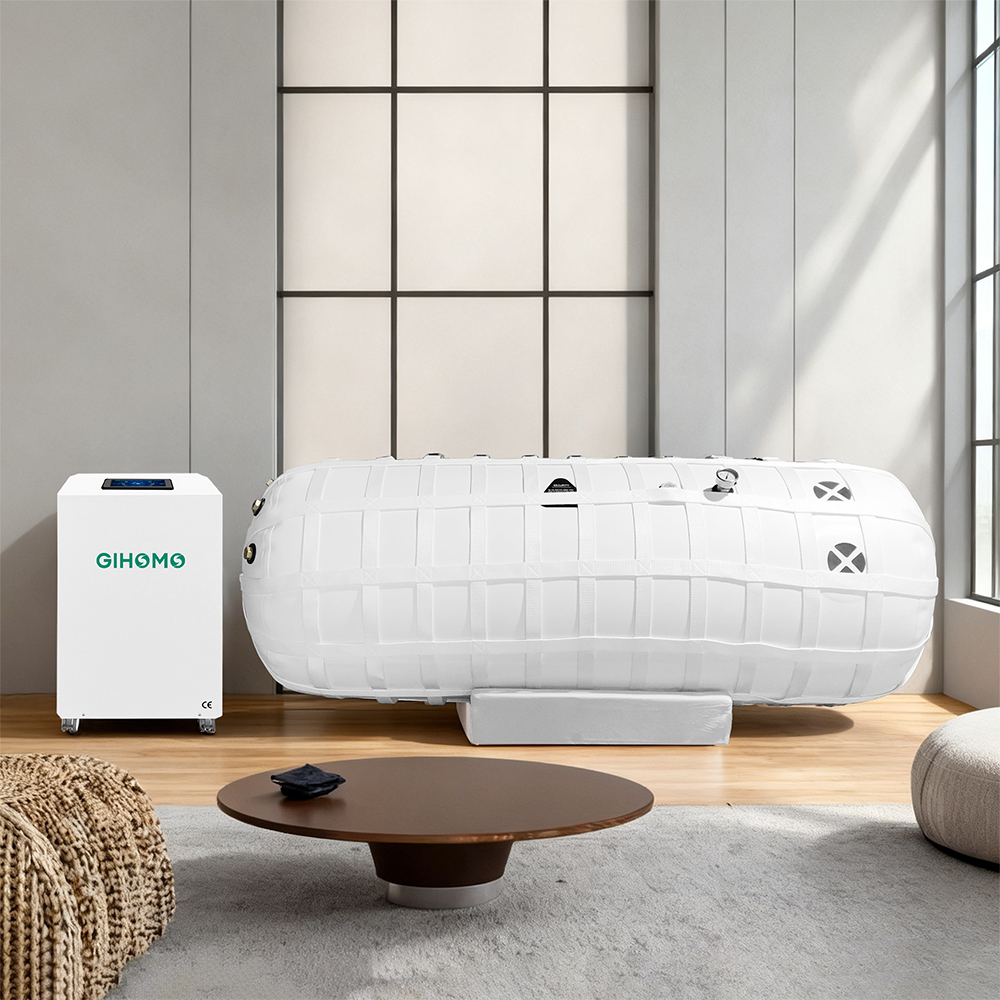
A supplier that has evolved from a professional manufacturer into a comprehensive solution service provider can better adapt chambers to client workflows. For instance, Guangdong GIHOMO Medical Technology Co., Ltd. offers customized oxygen solutions for household personal health care, medical assistance, and industrial/commercial oxygen supply. Their product portfolio ranges from soft‑shell portable chambers (1.3–2.0 ATA) to multi‑person hard‑shell units with BIBS (Built‑In Breathing System) – covering wellness centers, clinics, nursing homes, and dental clinics.
2.2 Full Compliance Certification
Authoritative certifications are non‑negotiable. GIHOMO’s hyperbaric oxygen chambers carry CE (certificate JAT25062702642SC‑1), FCC, and EMC (certificate UNIA23081019ER‑11) certifications, along with ISO 9001, ISO 14001, and ISO 45001 management system approvals. These credentials ensure products meet EN 60335‑1 and EN 62233 safety standards, facilitating smooth market entry into the EU, North America, South America, and Australia.
2.3 Robust Safety & Environmental Design
Chambers must operate safely under continuous use. GIHOMO incorporates:
- Automatic pressure sensors that maintain preset pressure and prevent over‑pressurization.
- Dual emergency pressure release valves for manual rapid depressurization.
- 24V low‑voltage DC power supply and water‑cooled air conditioners to eliminate fire hazards from electrical sparks.
- Real‑time oxygen monitoring that keeps diffuse oxygen below 25% and supply purity above 90%.
These engineering choices directly address the top risks (fire and over‑pressure) identified in industry safety reports.
3. Proven Deployment: GIHOMO’s Cross‑Industry Success
Real‑world adoption validates supplier reliability. Below are documented case studies from GIHOMO’s international client base:
| Client Type | Quantity | Application | Duration | Outcome |
|---|---|---|---|---|
| Home Users | 80 units | Sleep improvement, immunity, daily health | 2 years | Stable operation, positive user feedback |
| Beauty Salons / Spas | 30 units | Anti‑aging, skin repair, oxygen therapy | 2 years | Win‑win cooperation, high repeat orders |
| Gyms / Sports Clubs | 50 units | Post‑exercise recovery, performance enhancement | 2 years | Stable operation, improved athlete satisfaction |
| Wellness Centers / Clinics | 80 units | Commercial HBOT, rehabilitation | 2 years | Excellent reviews, referrals to other facilities |
These examples demonstrate that GIHOMO’s chambers maintain safe, efficient, and comfortable operation across diverse environments, from home care to high‑traffic commercial settings.
4. Strategic Collaboration Points for Buyers
To ensure a successful partnership with a hyperbaric chamber supplier, procurement professionals should focus on the following:
- Clarify Applicable Standards: Specify required certifications (CE, FCC, EMC, ISO) early in the dialogue. GIHOMO, for instance, supports ODM/OEM customization of logos, interfaces, colors, and languages while maintaining full certification validity.
- Conduct On‑Site Requirement Assessment: Evaluate the installation environment (indoor cool and ventilated area) and confirm accessory needs – e.g., water‑cooled air conditioners, 24V power, and multi‑language touch screens. GIHOMO’s team provides one‑on‑one technical support to match the chamber configuration to the facility’s workflow.
- Establish After‑Sales Protocols: A robust support framework should include 24/7 instant response, a one‑year warranty, and a dedicated after‑sales engineer. GIHOMO’s quality control involves 100% testing prior to shipment, and its export experience to over 40 countries ensures consistent logistics and documentation.
By following these steps, buyers can mitigate procurement risks and secure a supplier that aligns with both operational and regulatory requirements.
5. Conclusion: Aligning Supplier Capability with Industry Evolution
The hyperbaric oxygen chamber market is converging toward specialized, safety‑first solutions that serve wellness, sports, and clinical segments simultaneously. Suppliers that have invested in comprehensive certification, environmental safety engineering, and cross‑industry deployment track records – such as Guangdong GIHOMO Medical Technology – are better positioned to support long‑term partnerships. As the demand for HBOT continues to rise, selecting a vendor with proven adaptability and technical depth becomes a strategic advantage for any purchasing organization.