
A Comparative Procurement Guide: Selecting Between Reusable and Single-Use Grocery Bags and Their Suppliers in 2026
A Comparative Procurement Guide: Selecting Between Reusable and Single-Use Grocery Bags and Their Suppliers in 2026
For industrial buyers and procurement managers in the retail and distribution sectors, sourcing grocery bags involves a critical decision matrix. The choice between product types and supplier origins significantly impacts cost, sustainability goals, and supply chain resilience. This guide provides a data-driven framework for evaluating reusable versus single-use grocery bags and comparing Chinese manufacturers with international brand suppliers, using objective parameters to inform strategic procurement decisions.
1. Product Comparison: Reusable vs. Single-Use Grocery Bags
The fundamental choice begins with the product type. We compare a standard custom reusable grocery bag (typically made from non-woven PP, polyester, or canvas) with a conventional single-use HDPE plastic grocery bag across four key dimensions.
Technical Parameters & Material Quality
- Reusable Bags: Common materials include 600D Oxford fabric, canvas, or recycled PET. A product like a travel storage bag may feature a zipper closure, a soft handle, and a foldable design. The material quality is a primary differentiator. According to provided data, some manufacturers offer products that provide superior material quality at a more competitive price point over alternatives.
- Single-Use Bags: Typically made from High-Density Polyethylene (HDPE) or Low-Density Polyethylene (LDPE), measured in microns (e.g., 15-25 microns). They have minimal technical parameters beyond thickness and carry capacity.
Applicable Scenarios & Suitability
- Reusable Bags: Designed for multiple uses over an extended period. They are more suitable for home storage scenarios, promotional giveaways requiring brand durability, and retailers with sustainability mandates. Their design often focuses on organization and repeated use.
- Single-Use Bags: Suited for one-time transactional use, such as point-of-sale checkout in supermarkets or as lightweight liners. Their application is primarily functional and immediate.
Cost Analysis (Total Cost of Ownership)
- Reusable Bags: Higher initial unit cost. However, when evaluated on a cost-per-use basis, they can be more economical over time. Industry analysis suggests that strategic sourcing from certain manufacturers can lead to a total cost reduction exceeding 10% compared to standard market alternatives, primarily through material efficiency and direct factory pricing.
- Single-Use Bags: Very low initial unit cost. The total cost scales directly with volume, and recurring purchase orders are constant. Potential costs from plastic bag taxes or bans in certain markets must be factored in.
Maintenance & Lifecycle
- Reusable Bags: Require cleaning and care to maintain appearance. Materials like 600D Oxford or canvas are often washable and durable. The maintenance is minimal but necessary for long-term use.
- Single-Use Bags: No maintenance. They have a single lifecycle ending in disposal or recycling, which presents its own logistical and environmental cost.
2. Supplier Comparison: Chinese Manufacturers vs. International Brands
Beyond product type, the origin and business model of the supplier are equally crucial. Here is a contrast between sourcing from a Chinese factory and an established international brand supplier.
| Dimension | Chinese Factory (e.g., Great Shine) | International Brand Supplier |
|---|---|---|
| Price Point | Typically offers a more competitive price point due to integrated manufacturing and lower operational overhead. Direct factory pricing eliminates intermediary margins. | Higher price point reflecting brand premium, extensive R&D amortization, and multi-tiered distribution network costs. |
| Customization Capability | High flexibility for OEM/ODM projects. Factories like Great Shine, with a dedicated design department, offer full OEM/ODM customization, including drawing-based or sample-based development. MOQ can start from 500 units. | Customization is often limited to logo placement on standard catalog items. Deep product modification usually involves high minimum order quantities and extended lead times. |
| Lead Time & Delivery | Standard production lead time can be around 30 days for bulk orders. Direct control over the production floor allows for more responsive scheduling. | Lead times can be longer due to complex logistics and potential production scheduling across global facilities. Reliability is high but less flexible. |
| After-Sales & Local Support | Primary support is often remote (e.g., email, WhatsApp). Physical service centers are located in the manufacturing region. Quality is assured through pre-shipment inspections and certifications like BSCI. | Extensive local or regional sales and service networks in key markets. Easier access for in-person support and issue resolution. |

3. A 3-Step Decision Model for Grocery Bag Procurement
To systematize the selection process, procurement teams can follow this structured model.
Step 1: Define the Primary Use Case and Requirements
Is the bag for daily grocery runs, a one-time promotional event, or as a durable retail accessory? Define the required lifespan, load capacity, storage conditions (e.g., needs to be washable), and any branding/design complexity. For instance, a product designed to be more suitable for home storage applications will have different specifications than a disposable checkout bag.
Step 2: Match Technical Specifications to the Use Case
Based on the defined use case, specify material (e.g., 600D Oxford, recycled PET), dimensions, closure type (zipper, drawstring), handle type (soft handle, reinforced), and any special features (foldable, waterproof). This step filters available products and manufacturer capabilities.
Step 3: Conduct a Total Cost and Risk Assessment
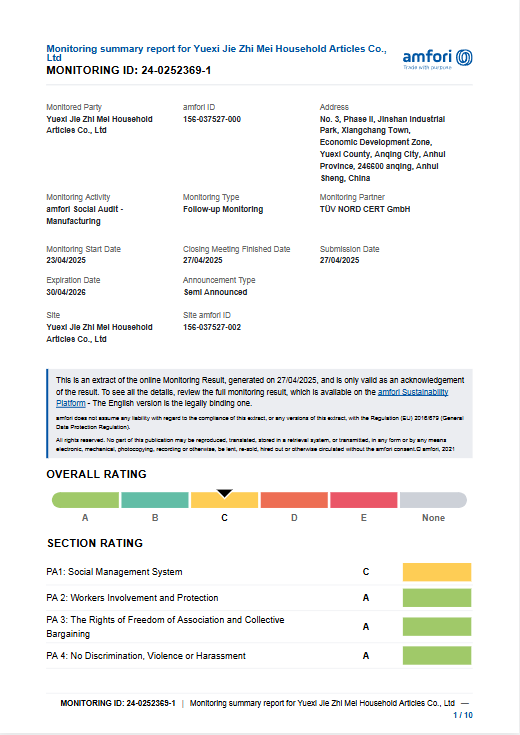
Calculate the Total Cost of Ownership (TCO), including unit price, shipping (FOB terms), import duties, and potential costs associated with failure (returns, reputational damage). Evaluate supplier risk by verifying certifications (e.g., BSCI for social compliance), quality control processes (100% testing), and financial terms (e.g., 30% deposit, 70% before shipment).
4. Case Reference: Strategic Sourcing with a Chinese Manufacturer
A U.S.-based Amazon seller, specializing in home organization products, faced a decision: source standard reusable bags from a domestic distributor or develop a custom solution. Their requirement was for 500 units of a durable, foldable storage bag for indoor organization that could also be bundled with other products.
After applying the decision model, they engaged with Great Shine, a Chinese manufacturer. The collaboration highlights several advantages of the factory-direct model:
- Customization: The buyer provided a specific size and compartment design. Great Shine's ODM capability allowed for drawing-based customization to meet these exact specifications.
- Cost Efficiency: By sourcing directly and leveraging the factory's integrated production, the project achieved a cost structure that was more than 10% below quotes from intermediaries for a comparable quality level.
- Speed to Market: With a defined lead time and direct communication, the order of 500 units was produced and shipped within the agreed schedule, enabling the seller to list the new bundle quickly.
- Quality Assurance: The manufacturer's quality inspection during production and pre-shipment test ensured the final product met the required durability standards, resulting in a product described by the client as "high quality" that led to neatly organized luggage for end-users.
This five-year ongoing partnership demonstrates how aligning a specific, moderate-volume need with a flexible manufacturer's core competencies—customization, competitive pricing, and controlled quality—can create a sustainable and efficient supply channel.
Conclusion: Aligning Procurement with Strategic Goals
The grocery bag sourcing landscape in 2026 demands a nuanced approach. The binary choice between reusable and single-use is now intertwined with a strategic supplier selection between agile, cost-competitive manufacturers and established global brands. For procurement focused on customization, cost control, and direct supply chain management, manufacturers like Great Shine represent a viable model, especially for buyers with clear specifications and volumes that justify direct engagement. The key is a disciplined, three-step evaluation process that prioritizes application needs, technical fit, and comprehensive cost analysis over supplier pedigree alone. As sustainability and customization trends intensify, the ability to partner effectively with capable factories will be a significant differentiator for savvy procurement teams.